Garganta del Diablo, Tilcara: Hike, Waterfall and How to Get There, Jujuy, Argentina
Destinations

Garganta del Diablo, Tilcara: Hike, Waterfall and How to Get There

Hike to Garganta del Diablo in Tilcara, Jujuy: 4 km trail or 8 km drive, elevation gain, 15 m waterfall, community entry fee, best season and what to bring.

The Garganta del Diablo ("Devil's Throat") in Tilcara is a narrow canyon carved by the Río Huasamayo, with a waterfall of about 15 meters at the end. It sits about 8 km from Tilcara town by gravel road, or about 4 km on an uphill footpath that starts in the village. The entrance hut is at 2,890 meters (about 9,480 ft), roughly 400 meters above Tilcara, and the site is managed by the Ayllu Mama Qolla Indigenous community, which charges a cash entry fee. Heads-up: this is not the Devil's Throat at Iguazú Falls, nor the one near Cafayate. This guide explains how to get there on foot or by car, how hard it is, when to go and what to pack.

In this guide

Where Is the Garganta del Diablo in Tilcara?

The Garganta del Diablo lies in the gorge of the Río Huasamayo, in the hills above Tilcara, in the heart of the Quebrada de Humahuaca. Locals used to call it El Chorro ("the spout"). It is a deep cut in the rock, shaped by tectonic movement and river erosion, with sheer walls in red and terracotta tones.

According to the community that manages the site, the rocks also hold fossilized trilobites, among the earliest evidence of hard-bodied aquatic life.

The canyon is part of the territory of the Ayllu Mama Qolla Indigenous community, about 80 people living in hamlets such as El Chorro, Alfarcito, Casa Colorada, Ovejería and Cieneguito. The community registers visitors, maintains the trail and railings and gives directions on site. It is one of the favorite outings for anyone spending more than a day in Tilcara; for more ideas, see our guide to things to do in Tilcara.
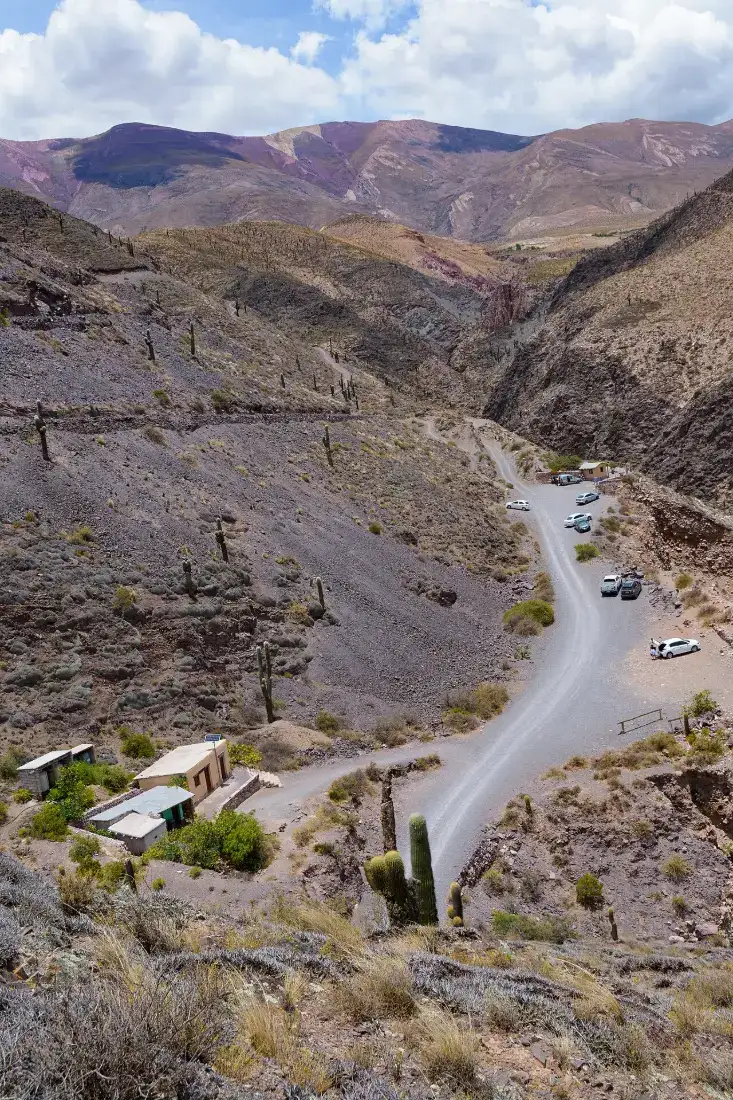
Cliffside track to the Garganta del Diablo, Tilcara
The Garganta del Diablo site sits at about 2,890 m and is managed by the Ayllu Mama Qolla indigenous community.Photo: Marcelo Toconás / Wikimedia Commons · CC BY-SA 4.0

Not to Be Confused with Iguazú or Cafayate

"Garganta del Diablo" is a name that pops up all over Argentina, and mixing them up is very common when you search online:

  • Devil's Throat at Iguazú: the largest and most famous cascade of Iguazú Falls, in Misiones province on the Brazilian border, at the opposite end of the country. You see it from walkways inside Iguazú National Park
  • Garganta del Diablo near Cafayate: a rock formation in the Quebrada de las Conchas along National Route 68 in Salta province. It is a dry rock gorge and a roadside stop between Salta city and Cafayate
  • Garganta del Diablo in Tilcara: the Río Huasamayo canyon in Jujuy, with a waterfall, reached on foot or by car from Tilcara

When you book a tour or read reviews, always check that they are talking about Tilcara. This guide covers only the Jujuy one.

How to Hike There from Tilcara

The best way to get there is on foot. The traditional path, once used by locals to walk to Alfarcito, starts near the iron bridge (the old railway bridge that leads to the Pucará). Do not cross it: take the road heading left, running alongside the Río Huasamayo. About 700 meters on there is a parking area where the signposted hiking trail begins.

Trail facts:

  • Distance to the entrance hut: about 4 km (2.5 miles) from the bridge, or 3 to 4 km depending on your starting point
  • Elevation gain: from about 2,460 m in Tilcara to 2,890 m at the hut, so roughly 400 meters (1,300 ft) of climbing
  • Time up: 1 to 2 hours depending on your pace
  • Canyon loop including the waterfall: about 1.5 hours at an easy pace
  • Total round trip: allow 3.5 to 5 hours
  • Shade: almost none

The first 20 minutes are the steepest, zigzagging over rocky ground; after that the gradient eases. Near the end the trail joins the vehicle road and reaches the hut. The return is almost all downhill, with superb views over Tilcara. Close to town, a few homes and stalls sell food and drinks.

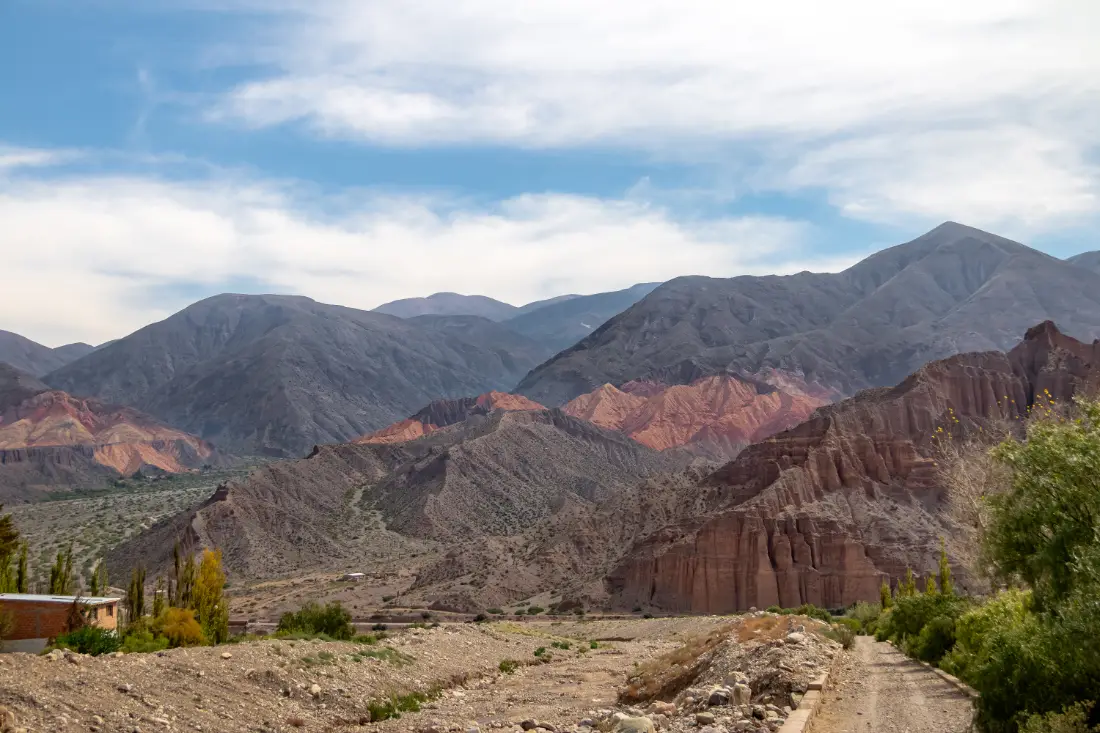
Mountains around Tilcara

Getting There by Car or Taxi

By car the route is longer: about 8 km (5 miles) on a single-lane gravel road that clings to the hillside with tight hairpins, climbing to a parking area near the entrance hut. A regular car can usually make it if you drive very carefully, but it is not for anyone with a fear of heights, and you may meet other cars or hikers on the bends. In the rainy season, ask in town about road conditions.

If you would rather not drive, remis (local taxis) wait at Tilcara's main square and will take you up to the entrance. Agree on the price and waiting time before you set off, as it is not cheap. A great combination is to ride up and hike down: the descent is easy on the legs and has the best views.

Some Tilcara agencies also include the Garganta del Diablo in their outings. Browse options on our Jujuy tours page.

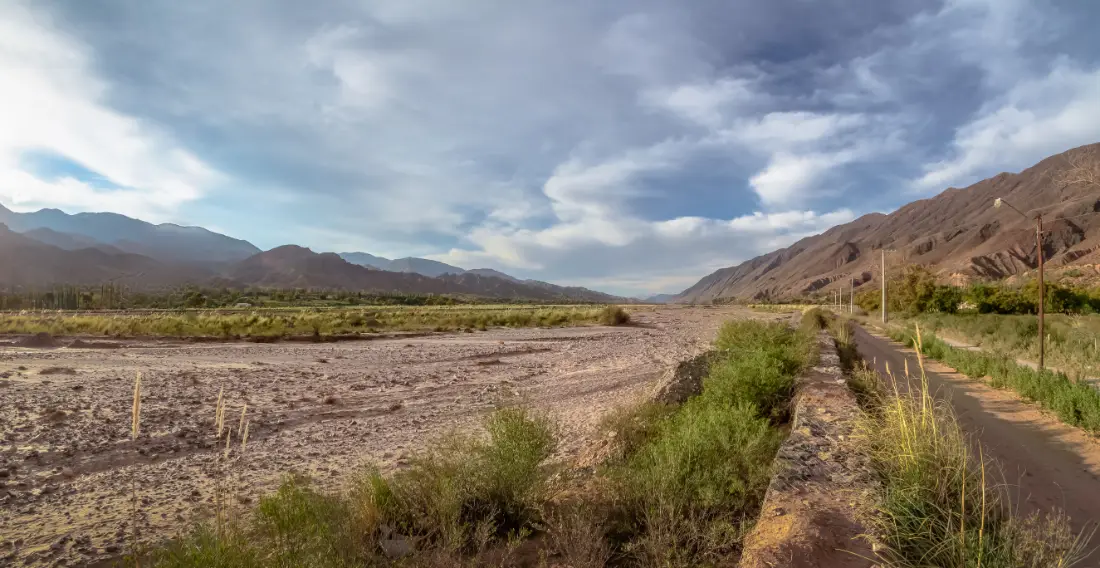
Road and Río Grande riverbed near Tilcara

The Route: Canyon, Walkways and Waterfall

At the entrance hut (a small yellow building) you pay the fee and sign a register: the community logs who goes in and who comes out as a safety measure. The loop from there is about 2 km in total.

  • First you go down a flight of steps to a small dam at the mouth of the canyon
  • A metal staircase leads into a section between the rock walls, beside a channel cut into the cliff and protected by railings, up to a lookout
  • From the dam area, heading upstream along the Alfarcito gorge, you reach the natural waterfall in 15 to 25 minutes (about 600 meters)

The way to the waterfall follows the riverbed: there is no marked path, just loose stones and several stream crossings on stepping stones. Some are slippery, so go slowly and watch your footing. There are a couple of short scrambles, so this stretch is not ideal for anyone unsteady on their feet.

The waterfall drops about 15 meters (50 ft). It is not a giant cascade, but the setting, with the sound of the water and the towering rock walls, is the real reward.

Difficulty and Safety

For anyone who exercises regularly, the hike is easy to moderate. For less active travelers, the initial climb and the altitude make it more demanding. What really tires you is the mix of gradient, strong sun and thin air.

Safety tips:

  • Acclimatize first: if you arrived from sea level that day, save the hike for your second or third day. More advice in our guide to acclimatizing to altitude in Jujuy
  • Keep to the railings and marked paths along the walkways
  • In the riverbed, do not hop across wet stones without looking
  • If it is raining or a storm is building over the hills, stay out of the riverbed: the river can rise quickly. Ask at the hut whether the loop is open
  • Avoid going alone if you are not an experienced hiker, and let your accommodation know where you are going
  • Plan to be back in daylight: access generally runs during the day, roughly 9 AM to 6 PM

The community also asks visitors not to swim, litter, leave graffiti, smoke or take rocks or cacti.

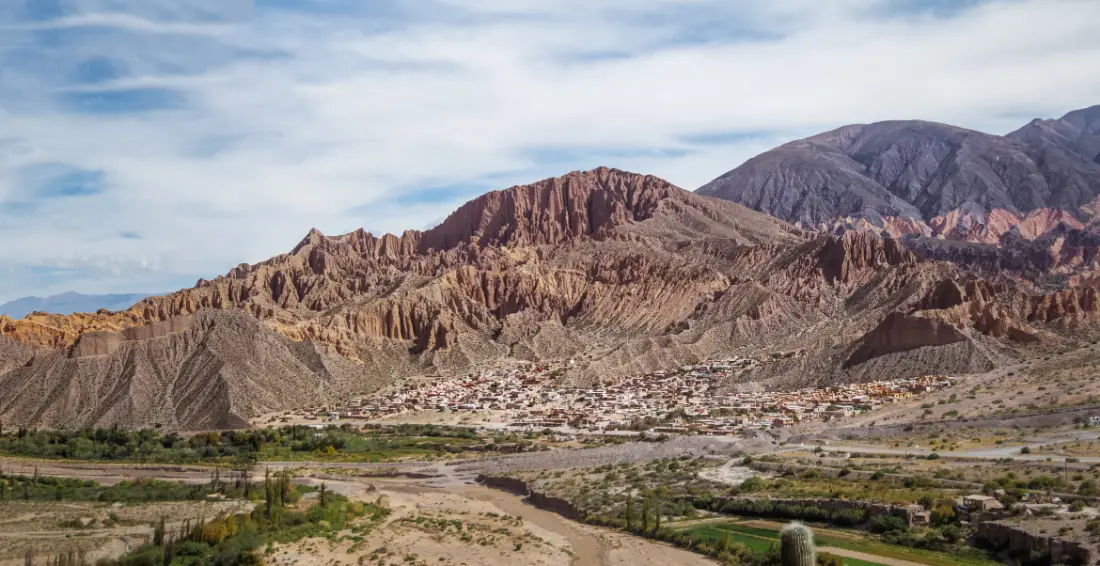
Aerial view of Tilcara and the Río Grande

When to Go: More Water in Summer, Dry in Winter

You can visit year-round, but the experience changes with the seasons (remember they are reversed in the Southern Hemisphere):

  • Summer (December to March): the rainy season. The waterfall carries more water and the hills turn green, but river crossings get tricky and you may have to wade barefoot. Rain can make the riverbed hard to access, and storms tend to build in the afternoon, so start early
  • Autumn (April and May): a good balance of water in the falls, dry trails and pleasant temperatures
  • Winter (June to August): dry, sunny days and a thinner waterfall; it gets cold in the shade of the canyon. Peak season due to Argentine school holidays
  • Spring (September to November): warm middays and little water until the first rains arrive

Whatever the month, start walking early in the morning to avoid the midday sun on the climb. For a month-by-month breakdown, see our guide to the best time to visit Jujuy.

Entry Fee and What to Bring

You pay at the hut, and the fee goes to the Ayllu Mama Qolla community, which uses it to maintain the trail and keep the loop safe. The amount is updated often: in March 2024 it was ARS 2,000 per person, and in early 2026 visitors reported around ARS 5,000. Bring cash, since cards are not always accepted and there are no ATMs nearby.

What to pack:

  • At least 1.5 liters of water per person
  • A hat, sunglasses and high-SPF sunscreen
  • Hiking boots or sneakers with good grip
  • A light jacket: it gets cool in the canyon and in the wind
  • Snacks, or a thermos for a break by the waterfall
  • Trekking poles if you use them, handy in the riverbed
  • A bag to carry your trash back out

After the hike, round off the day at the Pucará de Tilcara ruins, a few minutes from the bridge, and spend the night in town: see our picks for where to stay in Tilcara.

Frequently Asked Questions

How far is the Garganta del Diablo from Tilcara?

On foot it is about 4 km (2.5 miles) along a trail from the iron bridge in town. By car it is about 8 km (5 miles) on a narrow gravel road to a parking area near the entrance hut.

How long is the hike to the Garganta del Diablo in Tilcara?

The climb takes 1 to 2 hours depending on fitness. Including the canyon loop, the waterfall and the walk back, allow 3.5 to 5 hours in total.

How much is the entrance fee?

The Ayllu Mama Qolla community charges a per-person fee, paid in cash at the entrance hut. In early 2026 visitors reported around ARS 5,000, but the amount is updated often.

Is the Garganta del Diablo hike difficult?

It is easy to moderate: about 400 meters of elevation gain, no shade and at altitude. The final stretch to the waterfall follows the riverbed, with slippery stones and stream crossings.

Can you drive to the Garganta del Diablo in Tilcara?

Yes, on a narrow, cliff-edge gravel road of about 8 km. If you prefer not to drive, take a local taxi from the main square and walk back down.

When does the waterfall have the most water?

In the rainy season, December to March, the waterfall is at its fullest. River crossings are harder then, so start early to avoid afternoon storms.

Is this the same Devil's Throat as Iguazú Falls?

No. Tilcara's Garganta del Diablo is a canyon with a 15-meter waterfall in Jujuy, while Iguazú's Devil's Throat is the main cascade of Iguazú Falls in Misiones. There is also a rock formation of the same name near Cafayate, in Salta.

Ready to travel?

Compare hotels, car rentals and tours in Jujuy.