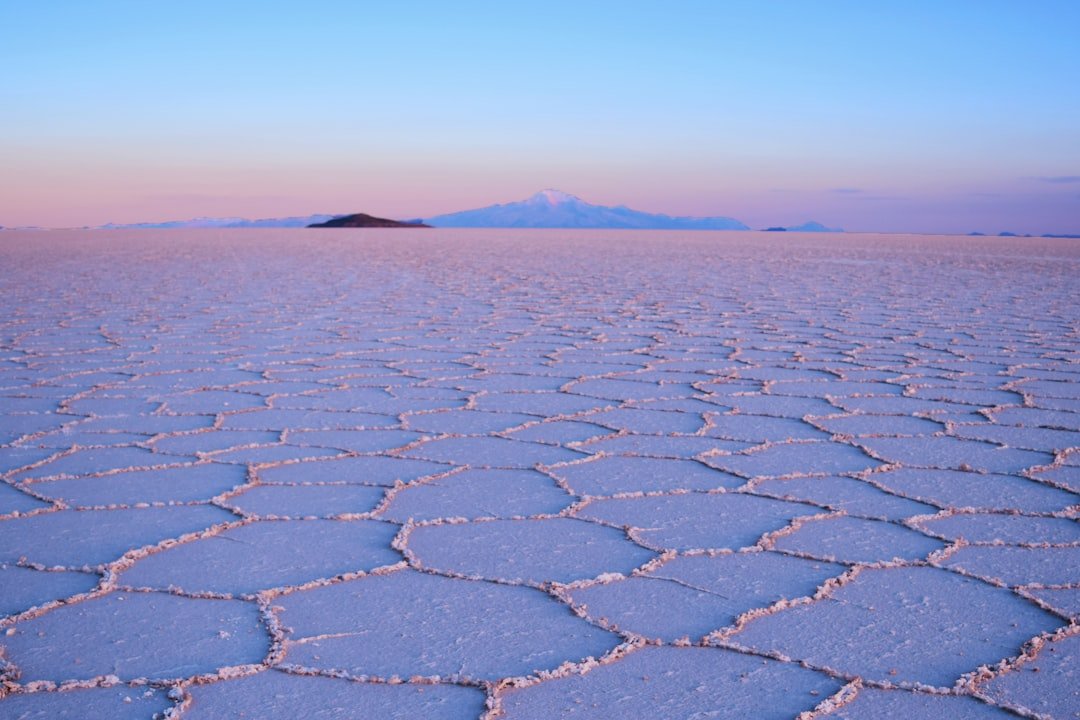
At 3,450 meters above sea level, two hours from Purmamarca along the winding Lipán pass, the Salinas Grandes of Jujuy unfold across 212 square kilometers of white salt with no visible horizon. It is not just one of Argentina's most photogenic landscapes: it is a unique ecosystem managed for decades by an indigenous cooperative. This guide tells you exactly how to get there, what to expect and how to behave when you arrive.
Geography and Origin of the Salt Flat
The Salinas Grandes of Jujuy and Salta form the third largest salt flat in Argentina, after the Arizaro and Hombre Muerto salars. They spread across an endorheic basin — with no outlet to the sea — at 3,450 meters above sea level, straddling the border between both provinces. The depth of the salt layer varies between 1 and 40 meters depending on the sector, over a hardened crust that covers salt water below.
The salar formed approximately 10,000 years ago as a large Andean saline lake retreated. Today its surface displays the characteristic hexagonal evaporation pattern — cells 1 to 5 meters in diameter — that gives it that look of infinite white tiles so beloved by photographers.
Surface temperature can exceed 40°C at noon due to solar reflection, while air temperature rarely surpasses 20°C at that altitude. At 7 AM it can be below 0°C. The salt reflection and the absence of visual references create intense optical illusions: objects appear closer and a different size than they actually are. That effect is the basis of the perspective photos that have become iconic of this destination.
Beneath the Salinas lie significant lithium reserves that are a source of tension between indigenous communities, the provincial government and international mining companies.
The salar formed approximately 10,000 years ago as a large Andean saline lake retreated. Today its surface displays the characteristic hexagonal evaporation pattern — cells 1 to 5 meters in diameter — that gives it that look of infinite white tiles so beloved by photographers.
Surface temperature can exceed 40°C at noon due to solar reflection, while air temperature rarely surpasses 20°C at that altitude. At 7 AM it can be below 0°C. The salt reflection and the absence of visual references create intense optical illusions: objects appear closer and a different size than they actually are. That effect is the basis of the perspective photos that have become iconic of this destination.
Beneath the Salinas lie significant lithium reserves that are a source of tension between indigenous communities, the provincial government and international mining companies.
How to Get There from Purmamarca and San Salvador de Jujuy
From Purmamarca the route is Provincial Route 52, known as the Lipán pass. It covers 64 km while climbing 1,200 meters of altitude through tight curves above a precipice, with pavement in good condition for almost the entire stretch. Estimated driving time is 1 hour 15 minutes at a relaxed pace — and you should drive relaxed, both for safety and because the landscape is extraordinary. At the top of the Lipán, around 4,170 m, there is a viewpoint overlooking the entire Quebrada de Humahuaca to the south.
From San Salvador de Jujuy the total distance is approximately 170 km, about 2 hours 30 minutes without stops.
There is no regular direct public transport to the Salinas. The only bus serving that route goes to Susques or the Puna and does not stop at the salt flat. Without a car, organized day-trip excursions from Purmamarca or Tilcara are the only practical option: local operators run full-day trips that include the Lipán pass, time at the Salinas and sometimes an alternative return route. See also: car rental guide for Jujuy.
From San Salvador de Jujuy the total distance is approximately 170 km, about 2 hours 30 minutes without stops.
There is no regular direct public transport to the Salinas. The only bus serving that route goes to Susques or the Puna and does not stop at the salt flat. Without a car, organized day-trip excursions from Purmamarca or Tilcara are the only practical option: local operators run full-day trips that include the Lipán pass, time at the Salinas and sometimes an alternative return route. See also: car rental guide for Jujuy.
What to Do at the Salt Flat: Step by Step
Upon arrival, the Atacameños de la Puna cooperative has its welcome post at the edge of the salt flat, about 300 meters from the parking area. Entry to the salar is free, but a voluntary contribution is expected [recommended amount to verify at the post]. There are bathrooms [paid, verify availability], a crafts shop and the option to hire a local guide to walk or cycle across the salt.
The walk to the center of the most photogenic hexagon is about 15 minutes on the salt crust. During the dry season (May-October) the ground is completely firm. During the rainy season (December-March) there may be a few centimeters of water covering some areas, restricting access.
Perspective photos — where you play with distance to create optical illusions — are the signature experience of the place. Bring small, colorful objects for contrast.
The Puna sun is brutal: wear [SPF 50+] sunscreen, high-UV-protection sunglasses (salt reflection is equivalent to snow glare) and a wide-brimmed hat. Arrive before 10 AM to avoid peak solar reflection hours and the largest tour group concentrations.
The walk to the center of the most photogenic hexagon is about 15 minutes on the salt crust. During the dry season (May-October) the ground is completely firm. During the rainy season (December-March) there may be a few centimeters of water covering some areas, restricting access.
Perspective photos — where you play with distance to create optical illusions — are the signature experience of the place. Bring small, colorful objects for contrast.
The Puna sun is brutal: wear [SPF 50+] sunscreen, high-UV-protection sunglasses (salt reflection is equivalent to snow glare) and a wide-brimmed hat. Arrive before 10 AM to avoid peak solar reflection hours and the largest tour group concentrations.
The Cooperative and Responsible Tourism
The Salinas Grandes are the territory of the Atacameño and Kolla communities that have inhabited the Puna since pre-Columbian times. In 2010 these communities obtained a landmark court ruling recognizing their right to prior consultation on any project affecting their territory — including lithium extraction projects that threaten the salar's ecosystem.
Tourism arriving at the salt flat passes obligatorily through the Atacameños de la Puna cooperative post, which redistributes income among the families of the surrounding communities. Buying crafts directly from local vendors — llama wool textiles, salt-carved figures, handmade jewelry — is a direct and meaningful form of economic support.
Responsible visit guidelines:
• Do not collect salt from the flat: it is a resource managed by the community.
• Do not step on the edges of the interior pools that form the hexagonal cells — the crust can give way.
• Respect access signage and do not stray from the marked area without a guide: orientation is easily lost without visual references.
• If visiting the Salinas as part of your Quebrada de Humahuaca tour, plan to return to lower altitudes before nightfall: the Lipán pass at night, in fog and sub-zero temperatures, is dangerous.
Tourism arriving at the salt flat passes obligatorily through the Atacameños de la Puna cooperative post, which redistributes income among the families of the surrounding communities. Buying crafts directly from local vendors — llama wool textiles, salt-carved figures, handmade jewelry — is a direct and meaningful form of economic support.
Responsible visit guidelines:
• Do not collect salt from the flat: it is a resource managed by the community.
• Do not step on the edges of the interior pools that form the hexagonal cells — the crust can give way.
• Respect access signage and do not stray from the marked area without a guide: orientation is easily lost without visual references.
• If visiting the Salinas as part of your Quebrada de Humahuaca tour, plan to return to lower altitudes before nightfall: the Lipán pass at night, in fog and sub-zero temperatures, is dangerous.
Best Season and How Rain Affects the Visit
The dry season (May to October) is ideal. During those months the crust is firm and fully accessible, weather conditions are stable and visibility is perfect. July draws the largest crowds — it coincides with Argentine winter school holidays — so you will encounter more groups. May, June and September offer a quieter experience.
The rainy season (November to March) can leave the flat covered by a thin sheet of water just a few centimeters deep. Paradoxically, that layer creates a spectacular mirror effect: the sky and clouds reflect on the salt surface and the landscape becomes absolutely surreal. The photos are different from those of the dry season but equally striking. The problem is that heavy rain complicates access and part of the salt flat may be temporarily closed. Check access conditions with the cooperative before traveling in the wet season.
Winter temperatures on the salar can drop to -15°C at night. During the day with sunshine they typically stay between 5 and 12°C. Always bring a warm jacket even if you leave Purmamarca in warm weather, and do not attempt camping on the salar outside of an organized circuit.
The rainy season (November to March) can leave the flat covered by a thin sheet of water just a few centimeters deep. Paradoxically, that layer creates a spectacular mirror effect: the sky and clouds reflect on the salt surface and the landscape becomes absolutely surreal. The photos are different from those of the dry season but equally striking. The problem is that heavy rain complicates access and part of the salt flat may be temporarily closed. Check access conditions with the cooperative before traveling in the wet season.
Winter temperatures on the salar can drop to -15°C at night. During the day with sunshine they typically stay between 5 and 12°C. Always bring a warm jacket even if you leave Purmamarca in warm weather, and do not attempt camping on the salar outside of an organized circuit.
Where to Eat and Stay Near the Salt Flat
There is no accommodation inside the salt flat. The nearest infrastructure is in Purmamarca, 64 km away via the Lipán pass, where options range from simple guesthouses to high-end boutique inns. Booking in advance is essential during peak season: Purmamarca is one of the most in-demand destinations in northwest Argentina.
On the route toward Susques — north of the salar — there are basic food stalls with irregular hours [do not count on them being open without prior confirmation]. The cooperative's post at the salt flat offers herbal teas and occasionally empanadas during peak season [verify availability upon arrival].
The most practical lunch option is bringing your own food: fresh bread, goat cheese and cured meats from the NOA region are easy to find in the markets of Purmamarca or Tilcara. The return from the Salinas in the early afternoon — with the low-angle light illuminating the Lipán pass and the Hill of Seven Colors as you re-enter Purmamarca — is one of those travel moments you do not forget. Staying overnight in Purmamarca that evening to catch the next morning's sunrise is absolutely worth it.
On the route toward Susques — north of the salar — there are basic food stalls with irregular hours [do not count on them being open without prior confirmation]. The cooperative's post at the salt flat offers herbal teas and occasionally empanadas during peak season [verify availability upon arrival].
The most practical lunch option is bringing your own food: fresh bread, goat cheese and cured meats from the NOA region are easy to find in the markets of Purmamarca or Tilcara. The return from the Salinas in the early afternoon — with the low-angle light illuminating the Lipán pass and the Hill of Seven Colors as you re-enter Purmamarca — is one of those travel moments you do not forget. Staying overnight in Purmamarca that evening to catch the next morning's sunrise is absolutely worth it.
Frequently Asked Questions
Ready to travel?
Compare hotels, car rentals and tours in Jujuy.
Related Articles
Destinations
Quebrada de Humahuaca: Complete 2026 Guide — What to See, How to Get There & Where to Stay
Updated guide to the Quebrada de Humahuaca. UNESCO Heritage, towns, routes, accommodation and practical tips for your Jujuy trip.
Read more →
Destinations
Salinas Grandes: How to Get There, Prices & Practical Tips
Everything about Jujuy's Salinas Grandes: routes, costs, best season, tours and tips for the perfect excursion from Purmamarca.
Read more →