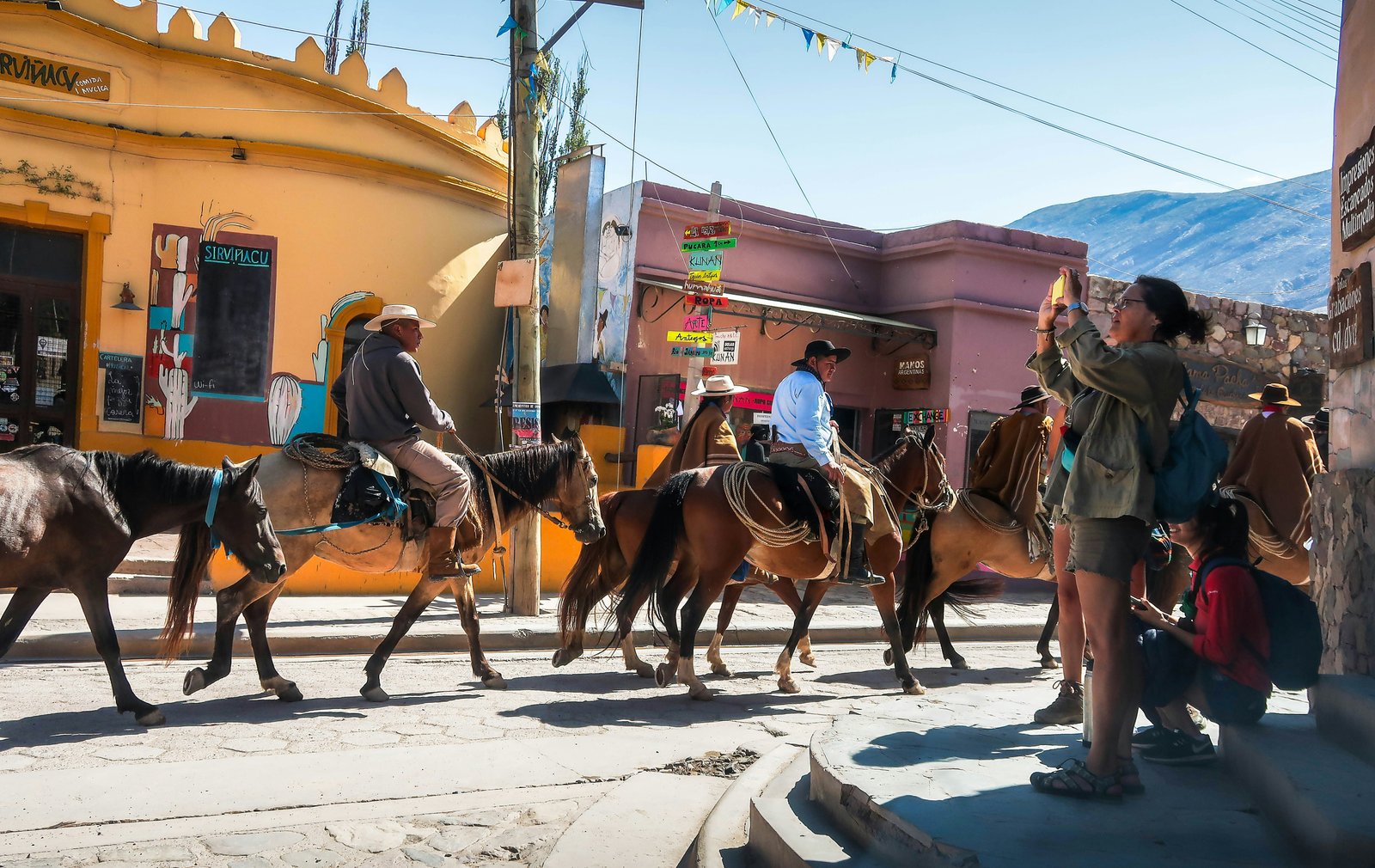
Tilcara travel guide
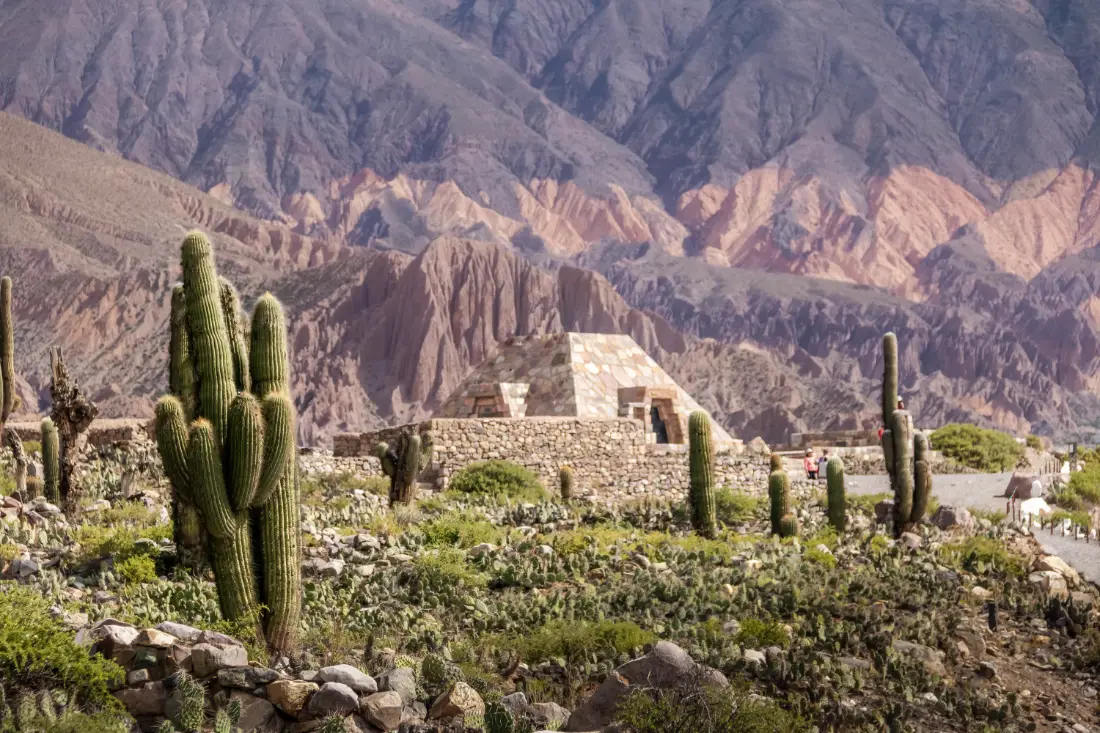
Tilcara, known as the archaeological capital of the Quebrada, is a vibrant town at 2,465 meters combining pre-Hispanic ruins, contemporary art, and a growing food scene. Its main attraction is the Pucará de Tilcara, a restored pre-Inca fortress overlooking the valley. The town also houses the Eduardo Casanova Archaeological Museum, art galleries, folklore venues, and the famous Tilcara Carnival in February. It's the most touristic town in the Quebrada, with the best accommodation and restaurant infrastructure.
Plan your visit to Tilcara
Must-sees
- 1Pucará de Tilcara
- 2Devil's Gorge (Garganta del Diablo)
- 3Dr. Eduardo Casanova Archaeological Museum
- 4Folk music venues (peñas) in town
- 5Enero Tilcareño and Carnival
How many days?
2 or 3 nights: one day for the town, the Pucará and museums, and one or two for Purmamarca, Humahuaca or the Devil's Gorge.
Where to stay
Town centre (walk everywhere, restaurants and peñas) or the upper streets (quiet, views). The widest choice in the Quebrada; book weeks ahead for July, Easter and Carnival.
Getting there
84 km from San Salvador de Jujuy on RN 9: 1 h 20 to 1 h 30 by car, with daily buses from the terminal. About 3 h from Salta.
Private transfer · JUJ Airport
From Jujuy Airport to Tilcara, door to door
- We meet you in the arrivals hall with a sign bearing your name.
- Private car with driver: Toyota Etios 1.5 XLS or Fiat Mobi.
- San Salvador, Purmamarca, Maimará, Tilcara, Huacalera and Humahuaca.
Tilcara: quick facts
- From San Salvador de Jujuy
- 84 km (52 mi) on RN 9 · about 1 h 20–1 h 30 by car · 1 h 20–1 h 45 by bus
- From Salta
- 185–215 km (115–135 mi) depending on the route · about 3 h by car
- Without a car
- Daily buses from the San Salvador de Jujuy bus terminal (Evelia, Balut, Jama Bus and others)
- Altitude
- 2,465 m (8,087 ft) above sea level
- How long to stay
- 2 or 3 nights
- Best time to go
- April–May and September–November; July is peak season
- Average temperature
- 17 °C (63 °F) in January, 7 °C (45 °F) in July; nights are cool year-round
- Best for
- A base for the Quebrada, archaeology, museums and live folk music
- Don't miss
- The Pucará ruins (Tuesday–Sunday, 9 am–6:30 pm; last entry 5:15 pm)
What to see in Tilcara beyond the Pucará
The Pucará is the must-see. It opens Tuesday to Sunday from 9 am to 6:30 pm (last entry 5:15 pm), closes on Mondays and shuts when it rains. You pay at the gate in Argentine pesos. In October 2026 the general ticket was ARS 12,000, Argentine residents paid half, and children up to 12 got in free. Guided tours are booked through a weekly online form on the university's website. Our Pucará de Tilcara guide covers the fortress in depth.
For a village this size, Tilcara has a surprising number of museums:
- Dr. Eduardo Casanova Archaeological Museum, run by the University of Buenos Aires, with finds from the Pucará digs.
- José Antonio Terry Regional Painting Museum, devoted to the artist who painted the Quebrada.
- Ernesto Soto Avendaño Sculpture Museum, honoring the man behind Humahuaca's Independence monument.
- The High-Altitude Botanical Garden, visited on the same route as the Pucará.
Two classic walks start right from town: the Garganta del Diablo hike, a gorge with a waterfall on the Huasamayo River, and the quieter Pucará de Juella ruins. Festivals matter too: the Enero Tilcareño in January, the Holy Week pilgrimage to the Punta Corral sanctuary and Carnival all fill the town.
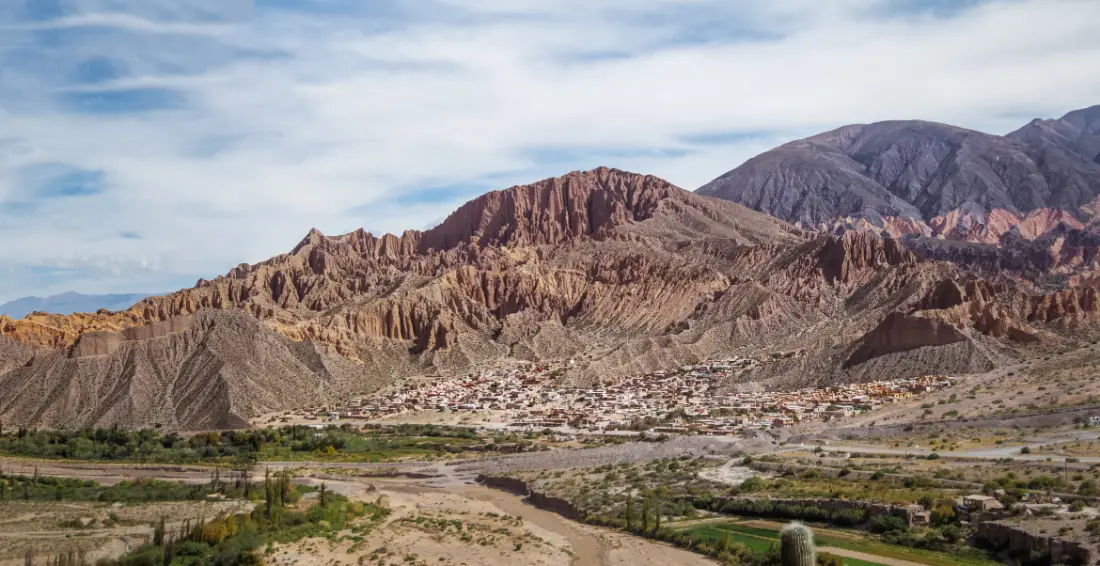
How to get to Tilcara: bus, car or tour
From San Salvador de Jujuy it's 84 km (52 miles) north on RN 9, paved all the way. Driving takes 1 h 20–1 h 30 without stops. Buses leave the city's main bus station (Terminal Nueva) almost every hour, run by companies such as Evelia, Balut and Jama Bus. Direct services take about 1 h 20; local ones that stop in every village take around 1 h 45. Tilcara has its own small bus station a few blocks from the main square.
From Salta you have two options. The highway route via San Salvador de Jujuy is about 215 km (134 miles); the old RN 9 through La Caldera, a narrow mountain road, is about 185 km (115 miles) but slower. Either way, allow around 3 hours. Some buses run straight from Salta's terminal to the Quebrada; otherwise, change in Jujuy.
Flying in, Jujuy's Gobernador Horacio Guzmán Airport (JUJ) is in Perico, 33 km (21 miles) south of the capital. City bus line 15 runs to the bus station (cash only), where you catch an onward bus to Tilcara. You can also book a private transfer (remís) or rent a car at the airport. Every option is laid out in how to get to Jujuy.
The Tren Solar de la Quebrada, a solar-powered train, runs 42 km between Volcán and Tilcara with stops in Tumbaya, Purmamarca, Posta de Hornillos and Maimará. It works as a guided sightseeing ride, not regular transport, so it's no help with luggage. If you'd rather not plan anything, most Quebrada day tours from Jujuy or Salta include a stop in Tilcara.
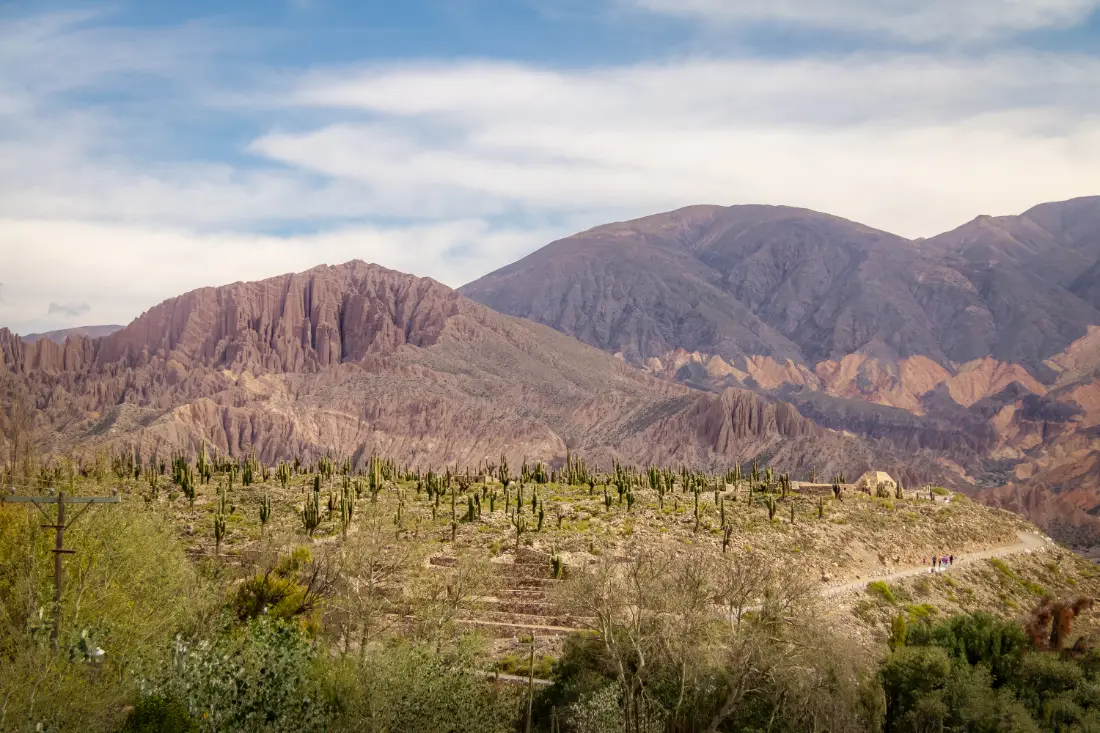
Where to stay in Tilcara: areas and hotels
Tilcara has the biggest choice of places to stay in the Quebrada. Pick the area first:
- Around the main square: everything within walking distance, plenty of restaurants and folk-music venues, and the bus station nearby. It can get noisy at night in peak season.
- Upper streets and the edges of town: quieter, with better views, but you'll walk a few blocks uphill.
- Huacalera, about 16 km (10 miles) north: a rural setting for travelers with a car who want peace and quiet.
A few well-known options, all confirmed on Booking, Tripadvisor or their own websites:
- Posada de Luz (Ambrosetti 661): cabin-style rooms around a large garden with a pool, close to the center.
- Las Terrazas Hotel Boutique: on a hillside, with balconies overlooking the valley.
- El Reposo del Diablo (Alverro 1049): about five blocks from the square, built from adobe, cane and cactus wood, with a heated pool and restaurant.
- Las Marías Hotel Boutique: a small hotel with a spa and pool.
- Posada Don Juan: little cabins on the edge of town, still walkable to the center.
For July, Holy Week and Carnival, book several weeks ahead. Check rates and availability on our Jujuy hotels page, and see the full list by budget in where to stay in Tilcara.
Where to eat in Tilcara
Tilcara's food scene blends classic Andean home cooking with a few chef-driven kitchens. Four established places:
- El Nuevo Progreso (Lavalle 351): creative cooking with regional ingredients, led by chef Florencia Rodríguez. One of the most popular dinner spots, so book ahead.
- Khuska (Ernesto Padilla 533): a homestyle regional restaurant with big portions and several llama dishes. Dinner only; check opening days before you go.
- Los Puestos (corner of Belgrano and Padilla): grilled meats and regional dishes, easy for groups and families.
- La Picadita (Belgrano 672): sharing boards with goat cheese, cured llama and tiny Andean potatoes.
For a cheap lunch, market stalls and small eateries around the center serve empanadas, tamales, humitas (steamed corn parcels) and locro, a hearty corn and meat stew. Worth trying at least once: grilled llama, goat cheese with cayote squash preserve, and api, a hot purple-corn drink.
Meal times run late by US, UK or Australian standards. Many kitchens close between lunch and dinner, and in July tables fill early. To avoid queues, eat lunch before 1 pm or dinner before 9 pm.
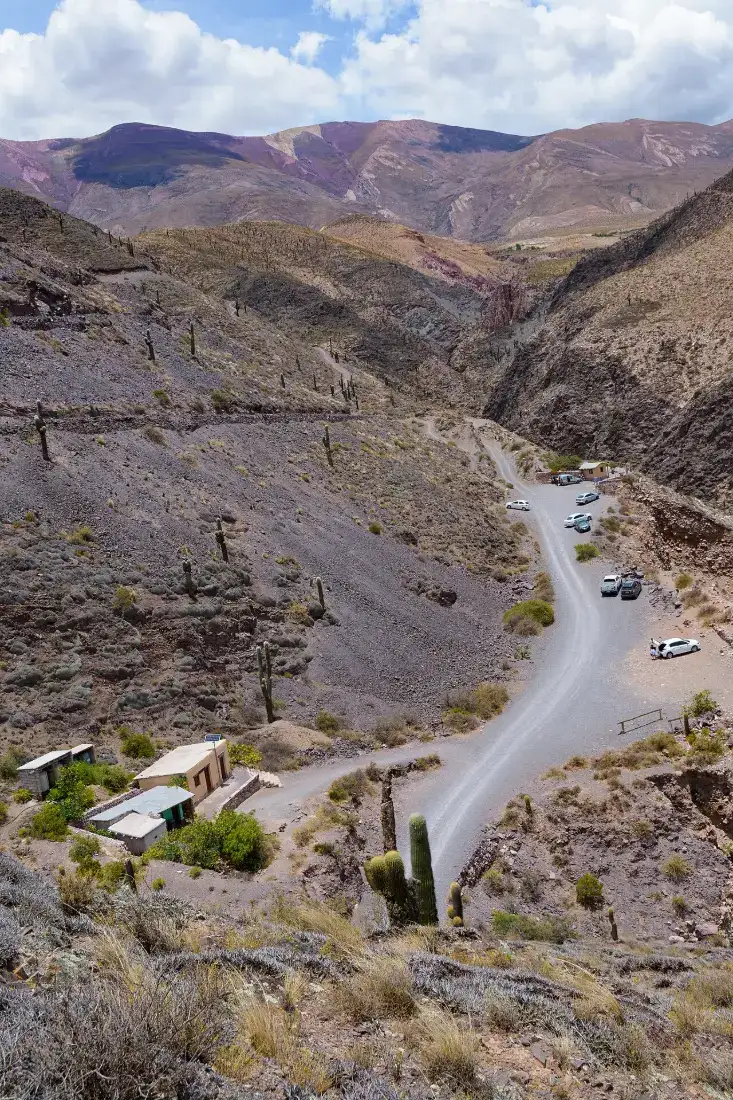
Tilcara weather by season
Tilcara has a dry mountain climate: lots of sun, little rain and big swings between day and night. Data from Argentina's agricultural research institute (INTA) puts the average temperature at 17 °C (63 °F) in January and 7 °C (45 °F) in July. Annual rainfall is only about 140 mm (5.5 in), nearly all of it between December and March.
- Summer (December–March): mild days, green hills and afternoon storms. Heavy rain can trigger mudslides that close roads for a few hours, so check conditions before setting out.
- Fall (April–June): clear skies, no rain and fewer visitors. One of the best times to go.
- Winter (June–August): sunny days and frosty nights. July, Argentina's winter school break, is the busiest and most expensive month.
- Spring (September–November): dry, pleasant and quiet, except on Argentine long weekends.
Even in summer, pack a warm layer for the evening. The month-by-month breakdown for the whole province is in the best time to visit Jujuy.
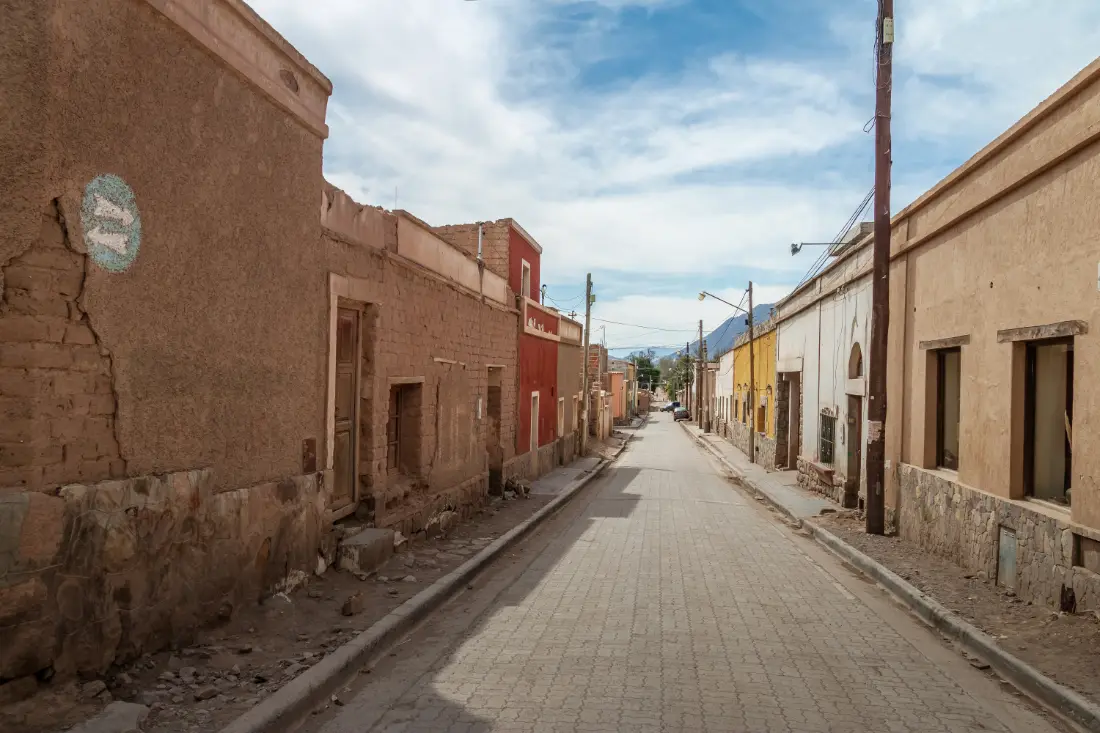
Day trips from Tilcara
Tilcara sits in the middle of the Quebrada, which makes it the best base for heading off in a different direction each day:
- Purmamarca, 26 km (16 miles) south: the Hill of Seven Colors and the Paseo de los Colorados loop. Pair it with the Salinas Grandes via the Cuesta de Lipán for a full day.
- Maimará, a few kilometers south: the "Painter's Palette" hills and a hillside cemetery.
- Huacalera and Uquía, to the north: the Tropic of Capricorn marker and a colonial church famous for its paintings of armed angels.
- Humahuaca, about 40 km (25 miles) north: the old town in the morning and the Hornocal, the 14-colors mountain, in the afternoon, when the light brings out the colors.
- Iruya: a Panamericano bus leaves Tilcara at 8:00 am and arrives at 11:40 am. A same-day return is possible but long, and most people stay the night.
Local buses on RN 9 run often enough for Purmamarca, Maimará and Humahuaca. For the Hornocal or the salt flats you'll need a car, a private driver or a tour.
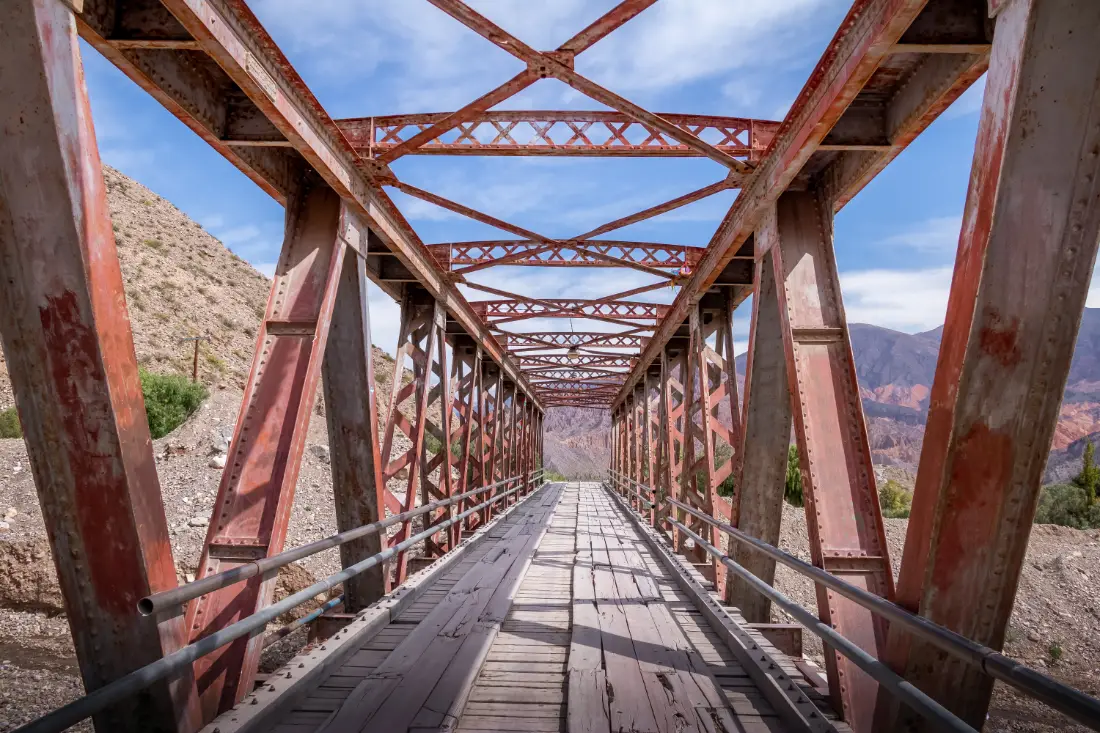
How high is Tilcara, and will you feel it?
Tilcara sits at 2,465 meters (8,087 feet) above sea level, according to Argentina's national tourism board. The University of Buenos Aires research center that runs the Pucará uses 2,461 m, which makes no practical difference. Coming up from San Salvador de Jujuy (1,259 m / 4,131 ft), you gain about 1,200 m (3,900 ft) in a little over an hour on the road.
That counts as moderate altitude. Most visitors only notice it on a steep walk, such as the path up the Pucará or the hike to the Garganta del Diablo, which tops out near 2,890 m. A mild headache, tiredness or a restless first night are the usual symptoms.
- Keep day one easy: stroll the village and save the climbs for day two.
- Drink plenty of water and eat a light dinner; alcohol hits harder up here.
- Coca-leaf tea (mate de coca) is a local custom and you'll find it at most hotel breakfasts.
- If you have a heart or lung condition, check with your doctor before the trip.
Tilcara is also a good place to acclimatize before you go higher: the Salinas Grandes salt flats lie at 3,450 m (11,319 ft) and the Hornocal viewpoint at 4,350 m (14,272 ft). Our Jujuy altitude guide compares every town and explains how to prevent altitude sickness.
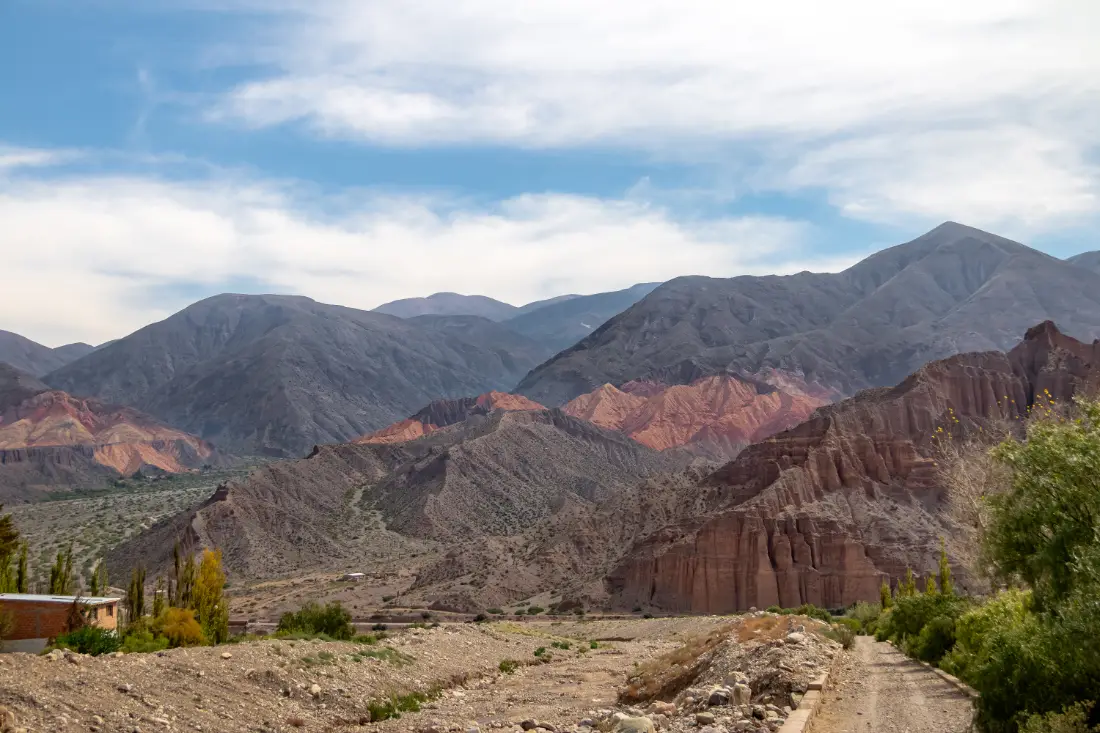
Practical tips for your visit
- Cash: in October 2025 Banco Macro opened a branch with three ATMs at Jujuy 651, but machines can run dry on long weekends and in peak season. Foreign cards also pay a hefty fee per withdrawal at Argentine ATMs, so arrive with pesos from San Salvador de Jujuy or Salta.
- Payments: many shops take cards and bank transfers, but community-run sites such as the Garganta del Diablo and market stalls usually want cash.
- Mondays: the Pucará is closed. Use the day for the Garganta del Diablo or an excursion.
- Peak season: July, Holy Week, the Enero Tilcareño and Carnival. In 2027 Carnival Monday and Tuesday fall on February 8 and 9, with celebrations starting the weekend before.
- Sun: UV is intense here all year. Wear sunscreen, sunglasses and a hat, even in winter.
- Roads: RN 9 is paved, but the drive to the Garganta del Diablo is a narrow gravel track. If you're not comfortable on mountain roads, walk or hire a local driver.
Tilcara photos
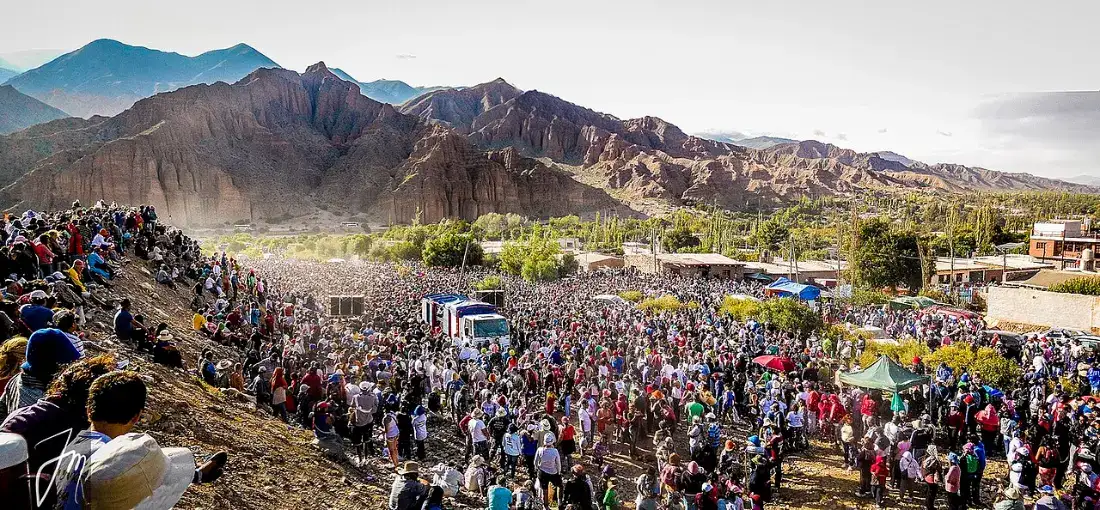
Tilcara travel guides
- Tilcara: What to See and Do — Complete Guide to the Quebrada's Most Vibrant Town →
- Where to Stay in Tilcara: Best Hotels, Hostels and Cabins →
- Garganta del Diablo, Tilcara: Hike, Waterfall and How to Get There →
- Pucará de Tilcara: History, Hours, Tickets and How to Visit →
- Tilcara Weather Month by Month: Temperatures, Rain and Forecast →
- Enero Tilcareño 2027: Tilcara's January Festival Guide →
- Holy Week 2027 in Tilcara: Punta Corral Pilgrimage and Ermitas →
A quiet base in the Quebrada
Cabañas 4 Elementos, in Huacalera
If you would rather sleep away from the bustle, Huacalera sits in the middle of the Quebrada, between Tilcara and Humahuaca.
Four new cabins for 4 or 5 people, with a kitchen, heating, a porch facing the mountains and breakfast included, 300 metres from the Tropic of Capricorn. Run by the owners, Lili and Luis.
Frequently Asked Questions
How to get to Tilcara without a car?
Take a bus from the main bus station in San Salvador de Jujuy. Services leave almost hourly and take 1 h 20 (direct) to 1 h 45 (local). From Salta there are a few direct buses; otherwise, change in Jujuy.
How many days do you need in Tilcara?
Two or three nights is ideal: one day for the village, the Pucará and the museums, and one or two for trips to Purmamarca, Humahuaca or the Garganta del Diablo. One night covers the highlights, but it's rushed.
Is Tilcara worth it, or should I stay in Purmamarca?
Tilcara has more hotels, restaurants and nightlife, and it sits mid-valley, 26 km from Purmamarca and about 40 km from Humahuaca. Purmamarca is smaller and quieter. For several nights and day trips, Tilcara is usually the more practical base.
When is the best time to visit Tilcara?
April, May and September to November bring clear skies, no rain and smaller crowds. July has great weather but it's peak season. December to March brings afternoon showers and green hills.
What is the altitude of Tilcara? Will I get altitude sickness?
Tilcara sits at 2,465 m (8,087 ft). That's moderate altitude: most visitors only feel short of breath on steep walks such as the path up the Pucará. Take the first day easy and drink plenty of water.
How much is the Pucará de Tilcara entrance fee?
In October 2026 the general ticket was ARS 12,000, with half price for Argentine residents and free entry for children up to 12. You pay at the gate. It opens Tuesday to Sunday, 9 am to 6:30 pm, and is closed on Mondays.
Is Tilcara cold?
Days are usually mild and sunny, but nights are cool all year. July averages around 7 °C (45 °F) with frost; January about 17 °C (63 °F). Pack a warm layer even in summer.
Can I get to Tilcara by public transport from Jujuy airport?
Not directly. From the airport in Perico, take city bus line 15 to the San Salvador de Jujuy bus station, then a bus to Tilcara. A private transfer or a rental car from the airport is the direct alternative.
What to do in Tilcara?
Pucará de Tilcara fortress. Archaeological Museum. Devil's Gorge. Tilcara Carnival (February). Folklore venues.
Nearby Destinations
Huacalera
Huacalera is a small, quiet village in the Quebrada de Humahuaca, 2,641 metres above sea level, right on the Tropic of Capricorn. A sundial beside Route 9 marks the imaginary line; a few blocks away stand the colonial chapel of the Immaculate Conception, a National Historic Monument, and the old staging post where Belgrano and Güemes once rested. It sits in the middle of the Quebrada, between Tilcara and Humahuaca, which makes it a calm and convenient base for exploring the valley.
Explore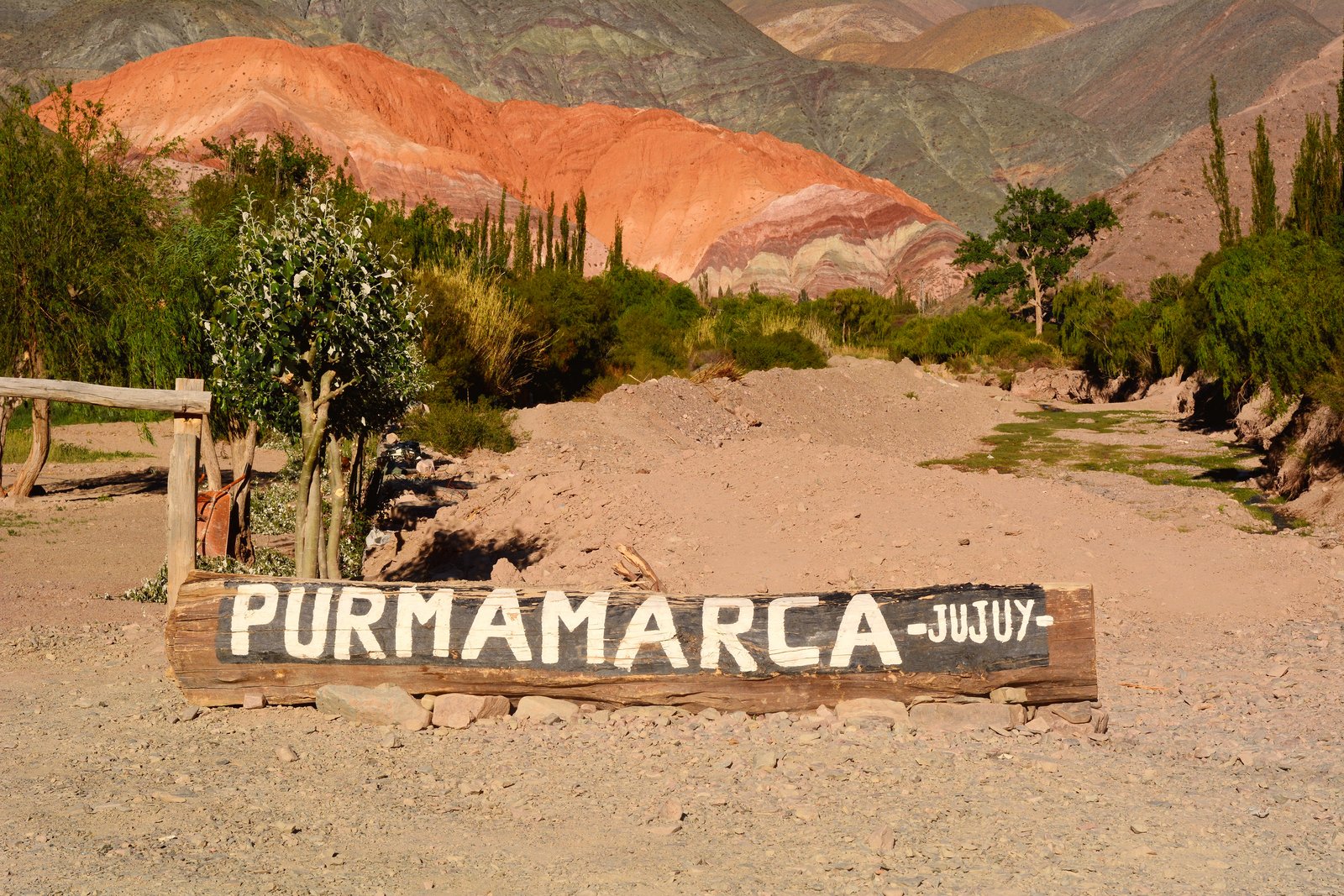 Town2.324 m
Purmamarca
Purmamarca is a small gem nestled at the foot of the legendary Hill of Seven Colors, at 2,324 meters altitude and just 65 km from San Salvador de Jujuy. This town of dirt streets and adobe houses preserves its colonial and pre-Hispanic essence like few places in Argentina. Its central plaza, surrounded by a permanent artisan market, is the starting point for the Paseo de los Colorados (a 3 km circuit around multicolored rock formations), visiting the Santa Rosa de Lima church (17th century), and watching the sunset over the hill. Purmamarca is also the gateway to the Salinas Grandes via the spectacular Cuesta de Lipán, ascending to 4,170 meters.
Explore
Humahuaca
Humahuaca is the town that gives the Quebrada its name and marks its northern end, at 2,939 meters altitude. Its historic center, declared a World Heritage Site, features cobblestone streets, the Cathedral Church, and the iconic Monument to Independence Heroes carved into the hillside. From here you can reach Cerro Hornocal (14 Colors Mountain Range), one of Argentina's most spectacular landscapes, at 4,350 meters. Humahuaca is less touristy than Purmamarca or Tilcara, giving it a special authenticity.
Explore