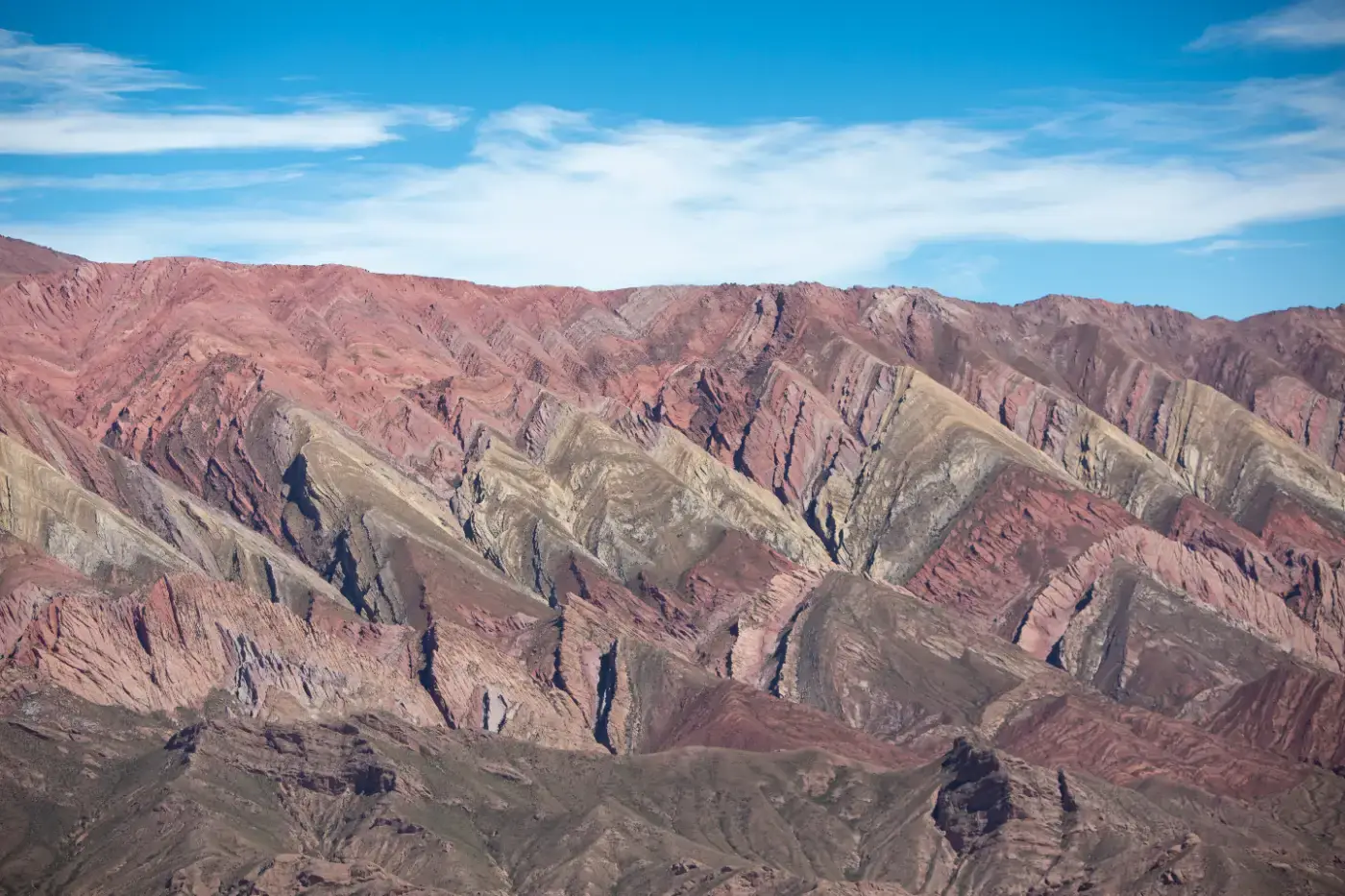
The best time to visit Jujuy is the dry season, April to November: it barely rains, skies are clear and the roads through the Quebrada de Humahuaca and the Puna are in their best shape. In Tilcara and Humahuaca, days are mild all year (highs of 20 to 24 °C / 68 to 75 °F), but winter nights drop below freezing. December to March is the summer rainy season, with afternoon storms and occasional road closures.
Jujuy has three very different climates depending on altitude, so there is no single answer to "what is the weather like in Jujuy". This guide covers the three climate zones, monthly temperatures for the Quebrada and the capital, wind and sun on the Puna, what to pack and when the crowds arrive.
If you've picked a base, see the month-by-month detail for Tilcara weather, Humahuaca weather and Purmamarca weather.
Jujuy's three climate zones
The province drops from over 4,000 m (13,000 ft) on the Puna to a few hundred meters in the Yungas, and each step has its own climate:
- Yungas (east): subtropical cloud forest. Hot, very wet summers with 800 to 1,500 mm (31 to 59 in) of rain a year depending on the area, plus mist that can linger for days. Winters are dry and mild.
- Valleys and the capital (around 1,200 m / 4,000 ft): subtropical with a dry season. Hot, humid summers and dry, sunny winters with cool nights. The hottest days usually come between October and December, just before the rains.
- Quebrada and Puna (2,000 m to over 4,000 m / 6,500 to 13,000+ ft): high-altitude desert. Little rain, almost all of it in summer, intense sun and huge swings between day and night.
That is why you can have lunch in a T-shirt in San Salvador de Jujuy and need a down jacket in Humahuaca that same night. If your trip covers several zones, pack for the coldest one. Our Jujuy altitude guide shows how high each town is.
The rainy season: December to March
In the Quebrada de Humahuaca almost all the rain falls between December and March, according to Jujuy's Ministry of Culture and Tourism. In the capital and the Yungas the wet season is longer, roughly November to April, and much heavier: the National University of Jujuy weather station records about 950 mm (37 in) a year, with around 190 mm (7.5 in) in January alone.
The issue is not so much the rain itself as what happens after a big storm. The Quebrada's dry streambeds fill with water, rocks and mud within minutes and can block National Route 9 and Route 52 toward Purmamarca and the Salinas Grandes. Argentina's national roads agency keeps crews on standby and usually reopens roads within hours, but some seasons have seen several closures on the same day between Volcán, Tumbaya, Purmamarca, Tilcara and Humahuaca.
- Check the forecast every morning: storms usually build in the afternoon.
- Check road conditions on the Vialidad Nacional website before setting off.
- Avoid driving at night and in the rain, as the roads agency advises.
- Never drive through a dip with running water, even if it looks shallow.
- Leave a buffer day before your flight home.
Summer has its upside too: the hills turn green, there are fewer visitors than in July (except at Carnival) and the Salinas Grandes may hold a thin layer of water that creates the famous mirror effect.
Jujuy weather month by month (January to December)
Typical daily high / low, rounded. Quebrada: Humahuaca station (2,939 m / 9,642 ft, 1961-1970 series, data from Argentina's Mining Secretariat). Capital: 1991-2020 normals from Argentina's National Weather Service (SMN), National University of Jujuy station. Remember that the seasons are reversed from the Northern Hemisphere.
- January: Quebrada 24 °C / 8 °C (75 / 46 °F); capital 27 °C / 17 °C (81 / 63 °F). Wettest month; afternoon storms.
- February: Quebrada 23 °C / 9 °C (73 / 48 °F); capital 26 °C / 16 °C (79 / 61 °F). Still rainy; usually Carnival month.
- March: Quebrada 23 °C / 7 °C (73 / 45 °F); capital 25 °C / 16 °C (77 / 61 °F). Rains start to ease.
- April: Quebrada 23 °C / 3 °C (73 / 37 °F); capital 22 °C / 13 °C (72 / 55 °F). Dry season begins; hills still green.
- May: Quebrada 22 °C / -1 °C (72 / 30 °F); capital 20 °C / 9 °C (68 / 48 °F). Dry and clear; first frosts up high.
- June: Quebrada 20 °C / -3 °C (68 / 27 °F); capital 19 °C / 6 °C (66 / 43 °F). Crystal-clear skies, very cold nights.
- July: Quebrada 20 °C / -3 °C (68 / 27 °F); capital 19 °C / 5 °C (66 / 41 °F). Coldest month and busiest, due to Argentine winter school holidays.
- August: Quebrada 21 °C / -2 °C (70 / 28 °F); capital 22 °C / 6 °C (72 / 43 °F). Frequent warm north wind; Pachamama month.
- September: Quebrada 23 °C / 1 °C (73 / 34 °F); capital 24 °C / 9 °C (75 / 48 °F). Warm days, few crowds.
- October: Quebrada 24 °C / 3 °C (75 / 37 °F); capital 26 °C / 13 °C (79 / 55 °F). Hot in the valleys; first rains appear.
- November: Quebrada 24 °C / 6 °C (75 / 43 °F); capital 27 °C / 15 °C (81 / 59 °F). Lovely in the Quebrada; more storms in the capital.
- December: Quebrada 24 °C / 8 °C (75 / 46 °F); capital 28 °C / 16 °C (82 / 61 °F). Rainy season starts.
Nights are much colder on the Puna. In La Quiaca (3,442 m / 11,293 ft), SMN's 1991-2020 normals show highs of about 21 °C (70 °F) and lows of 8 °C (46 °F) in January, and 16 °C (61 °F) and -6 °C (21 °F) in July.
Weather in Tilcara, Humahuaca and Purmamarca
Tilcara (2,465 m / 8,087 ft). Slightly milder than Humahuaca, as it sits about 500 m lower. Argentina's agricultural research institute (INTA) gives a mean temperature of 17 °C (63 °F) in January and 7 °C (45 °F) in July for 1934-1990, with only 137 mm (5.4 in) of rain a year, almost all between November and March. In winter the midday sun lets you walk around in light layers, but temperatures plunge at sunset. Plan your visit with our Tilcara guide.
Humahuaca (2,939 m / 9,642 ft). The coldest large town in the Quebrada. Lows in June and July hover around -3 °C (27 °F), and the provincial tourism ministry records a low of -18 °C (0 °F) in July 2010. Afternoons, by contrast, are pleasant most of the year. If you are heading up to Hornocal, bring a warm jacket even if it is hot in town. More on our Humahuaca page.
Purmamarca (2,324 m / 7,625 ft). There is no reference weather station with public data, but given its altitude and location the climate is similar to Tilcara's: dry, sunny and cool at night. The key point is that Purmamarca is where you start the drive up the Cuesta de Lipán to the Salinas Grandes, which are much colder and windier. See our Purmamarca guide.
Snow is very rare across the Quebrada de Humahuaca: the provincial ministry says it falls roughly once every 10 to 15 years, except around Volcán and on the peaks.
Temperature swings, Puna wind and UV radiation
Daily temperature range. The gap between the afternoon high and the overnight low easily exceeds 20 °C (36 °F) in the Quebrada in winter: a 20 °C (68 °F) July afternoon in Humahuaca can end in a -3 °C (27 °F) dawn. On the Puna, the provincial ministry reports daily swings of more than 20 °C and winter lows down to -20 °C (-4 °F).
Wind. Almost every afternoon in the Quebrada a cold valley breeze picks up and temperatures drop fast. In winter, especially August, a warm, dry north wind can blow. On the Puna, according to the provincial ministry, most days bring winds over 70 km/h (43 mph) from midday to midnight, kicking up dust. That is why it pays to visit the Salinas Grandes and Hornocal in the morning or early afternoon.
UV radiation. Altitude and dry air mean the sun burns far faster than at sea level, even in winter and on cloudy days, and the salt flats reflect it back at you. Wear high-SPF sunscreen, sunglasses and a hat all year round, and reapply every few hours.
What to pack for Jujuy by season
Layers are everything: you will go from warm to cold several times in a single day.
- All year: sunglasses, a brimmed hat, sunscreen, moisturizer and lip balm, comfortable shoes with good grip and a reusable water bottle.
- April to November (dry season): T-shirts for the day, a fleece and a warm jacket for the evening. From June to August add a beanie, gloves and thermal base layers, especially for the Puna.
- December to March (rainy season): light clothes, a waterproof jacket, something warm for Quebrada evenings and insect repellent for the Yungas.
- Trips above 4,000 m / 13,000 ft (Lipán, Hornocal, Jama): a warm, windproof jacket even if you set off in the heat.
If you are driving in summer, keep water and snacks in the car in case a road closure holds you up.
Peak seasons: July, Carnival and Easter
Weather is not the only factor: crowds matter too. These are the dates with the highest demand for rooms and tours:
- Winter school holidays (July): the busiest time of year. In 2026 they ran July 13-24 in Jujuy and July 20-31 in Buenos Aires; 2027 dates are set in each province's school calendar.
- Carnival (February): in 2027 the Carnival public holidays are Monday 8 and Tuesday 9 February, and in the Quebrada the festivities run from Saturday 6 to Sunday 14. Tilcara, Humahuaca and Purmamarca fill up; read our Jujuy Carnival guide.
- Holy Week: in 2027 Maundy Thursday is 25 March and Easter Sunday is 28 March. There are processions throughout the Quebrada, and the pilgrimage to Punta Corral draws thousands of pilgrims.
- Argentine long weekends: occupancy and prices rise.
If you are traveling on any of these dates, book weeks or even months ahead through our hotels page. May, June (before the holidays), September, October and November combine good weather with fewer people.
So when is the best time to visit Jujuy?
- For a hassle-free Quebrada and Puna trip: April to November.
- For photos under clear skies: May to September.
- For mild days and less frigid nights: April, October and November.
- For local culture: February for Carnival, Holy Week, or August, the month of the Pachamama.
- For the Yungas: May to October, when trails are dry.
- To avoid crowds: September to November, outside Argentine long weekends.
If you can only travel in the Southern Hemisphere summer (December to March), do not rule it out: build in extra time, sightsee early and save afternoons for the villages. And if you visit in winter, a warm layer for the evening matters as much as sunscreen for the day.
Frequently Asked Questions
Ready to travel?
Compare hotels, car rentals and tours in Jujuy.
Related Articles
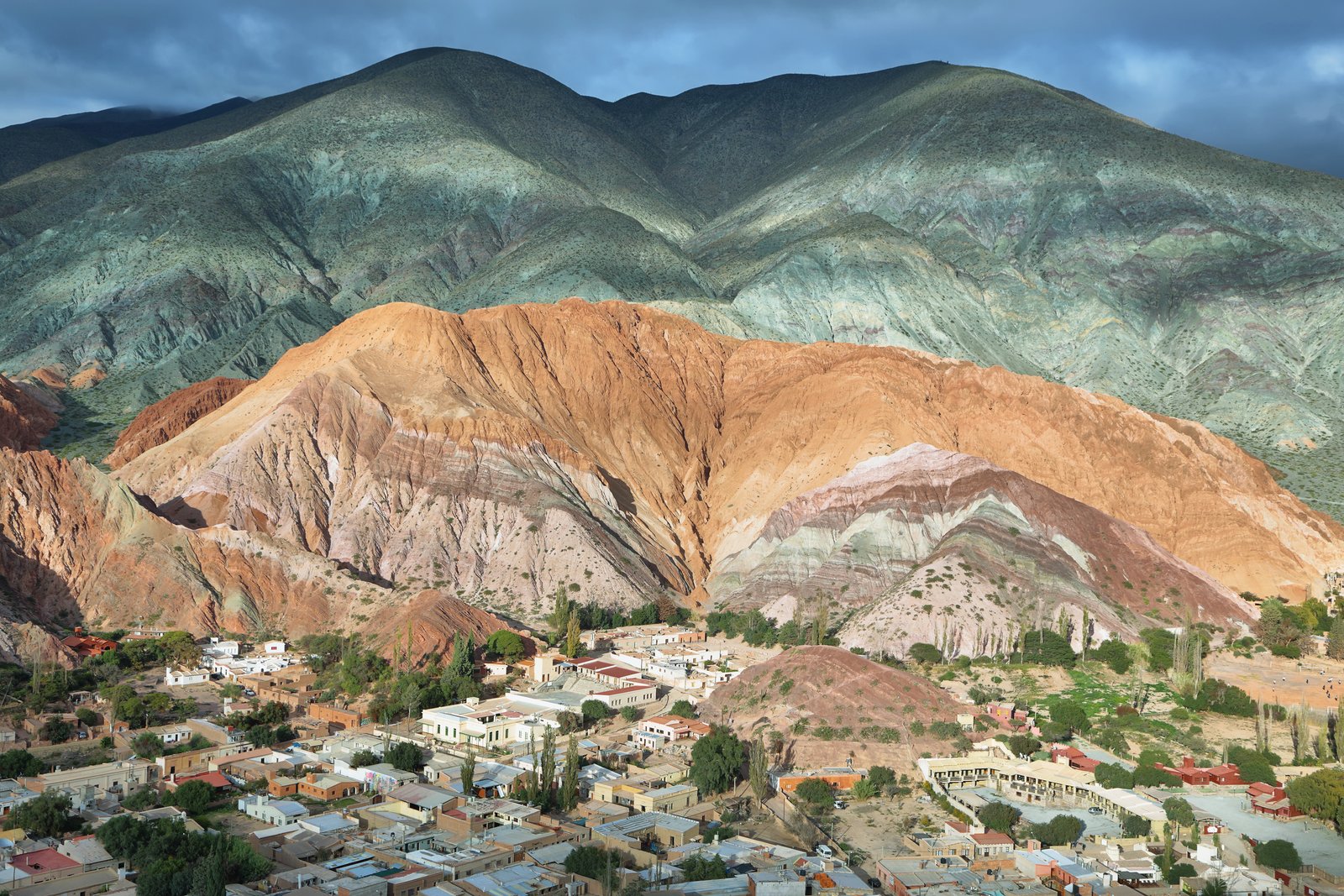
Quebrada de Humahuaca: Complete 2026 Guide — What to See, How to Get There & Where to Stay
Updated guide to the Quebrada de Humahuaca. UNESCO Heritage, towns, routes, accommodation and practical tips for your Jujuy trip.
Read more →
Salta & Jujuy in 5 Days: Complete Day-by-Day Itinerary
Optimized itinerary for touring Salta and Jujuy in 5 days. Routes, accommodation, transport and updated 2026 budget.
Read more →High-Altitude Wines of Jujuy: Quebrada de Humahuaca Wineries and the Secrets of Andean Malbec
Jujuy's high-altitude wines come from vineyards above 2,600 meters in the Quebrada de Humahuaca. Complete guide: wineries, altitudes, grape varieties, visits and where to buy.
Read more →