
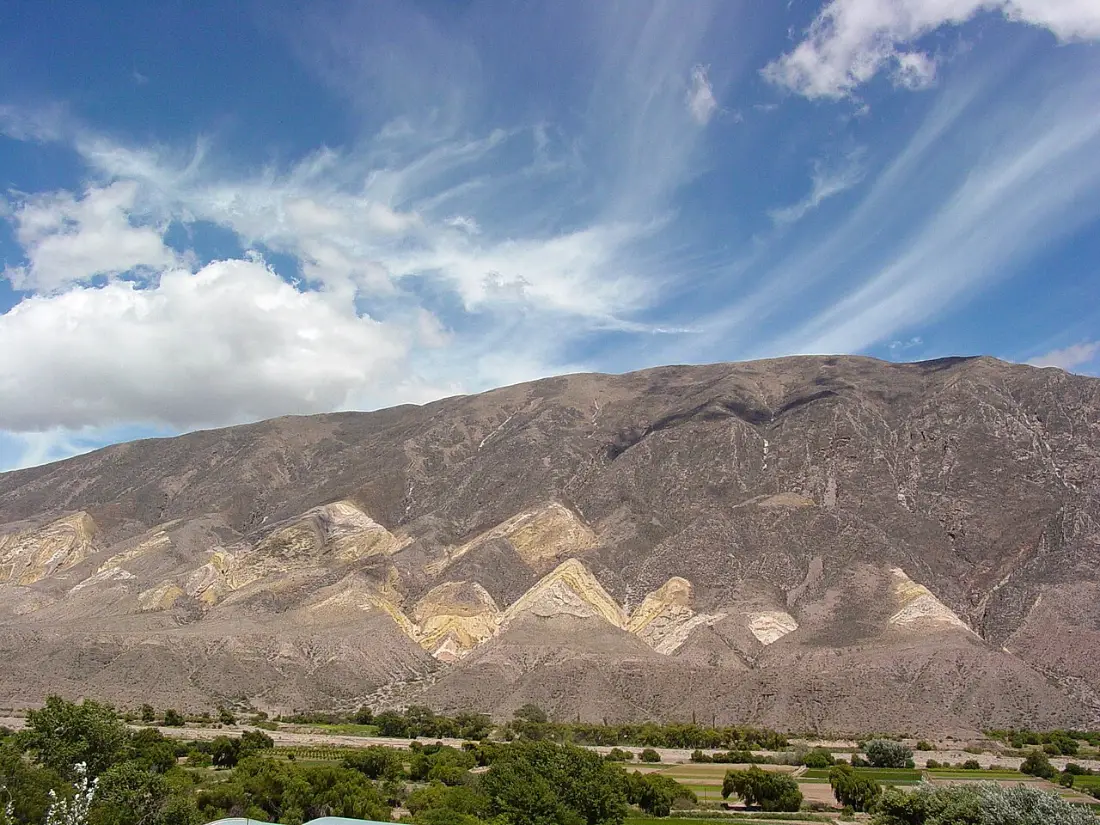
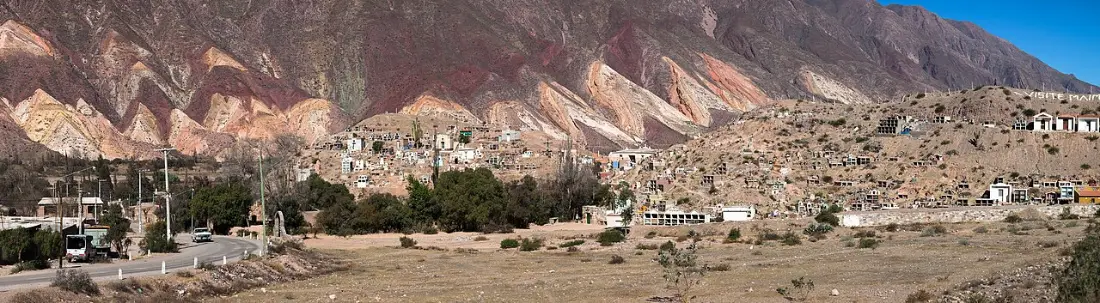
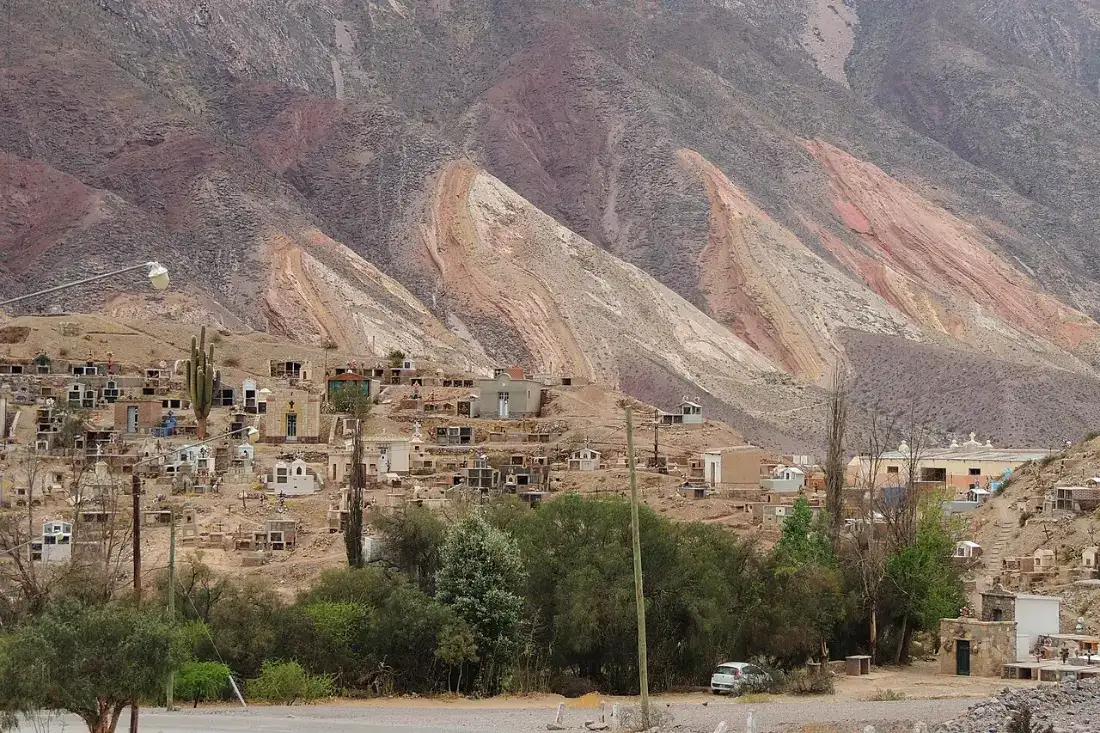
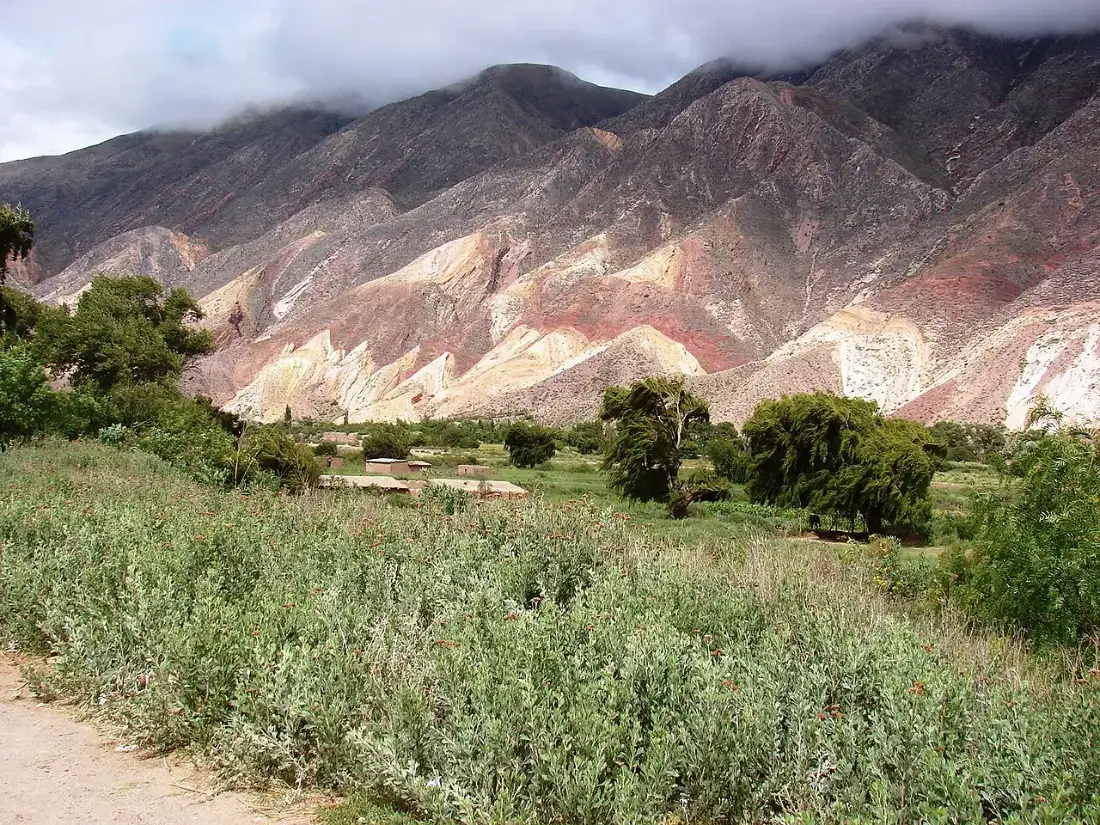
Maimará is a small town at 2,383 meters famous for the Painter's Palette, a hillside of multicolored strata resembling a natural work of art. Less visited than its neighbors, Maimará offers a more authentic and peaceful experience. Its hillside cemetery, with colorful flowers, is one of the most photographed in Argentina. Located between Purmamarca and Tilcara, it makes a perfect stop on the Quebrada route.
Plan your visit to Maimará
Must-sees
- 1Painter's Palette
- 2Nuestra Señora del Carmen cemetery
- 3Rural Life Museum
- 4Hornillos Post Museum
- 5Natural Bridge, on a short walk
How many days?
A morning for the essentials; 1 or 2 nights if you want a quiet, cheaper base 8 km from Tilcara.
Where to stay
Owner-run guesthouses, hostels and cabins, with more than 400 licensed beds. Quieter and usually cheaper than Tilcara or Purmamarca.
Getting there
About 77 km from San Salvador de Jujuy on RN 9 (1 h 10 by car). 8 km south of Tilcara and 19 km north of Purmamarca.
Private transfer · JUJ Airport
From Jujuy Airport to Maimará, door to door
- We meet you in the arrivals hall with a sign bearing your name.
- Private car with driver: Toyota Etios 1.5 XLS or Fiat Mobi.
- San Salvador, Purmamarca, Maimará, Tilcara, Huacalera and Humahuaca.
Maimará: quick facts
- Location
- Quebrada de Humahuaca, on Route 9, Tilcara department
- From San Salvador de Jujuy
- about 77 km (48 mi), around 1 h 10 min by car
- From Tilcara
- 8 km (5 mi) south
- Altitude
- 2,383 m (about 7,800 ft) above sea level
- From Purmamarca
- 19 km (12 mi) north
- From Humahuaca
- 50 km (31 mi) south
- Population
- around 3,500
- Recognition
- UN Tourism Best Tourism Villages 2025
- Climate
- dry mountain climate; rain from December to March
Things to do in Maimará
Most tour buses stop for five minutes at the highway viewpoint and drive on. If you get out and walk, Maimará easily fills a morning, or a couple of relaxed nights:
- The Painter's Palette: the striped Sierras de Alfarcito form the backdrop to the whole village. Best light and photo spots are in our guide to Maimará and the Painter's Palette.
- Nuestra Señora del Carmen cemetery: the classic postcard, on a hillock by the northern entrance. It is an active cemetery, so visit respectfully.
- Nuestra Señora de la Candelaria church: the village church, a few blocks from the square.
- Museo de la Vida Campesina: a small museum on Route 9 at the northern entrance about the work and customs of Quebrada farming families. Jujuy Turismo lists it as open Wednesday to Sunday, 10 am to 6 pm.
- Posta de Hornillos museum: a former staging post on the colonial Camino Real, about 2 km south, with rooms on colonial life and Argentina's wars of independence.
- Puente Natural: a natural rock arch about 3.5 km from the village, good for a short hike.
- Molino de Chicapa: an 1888 flour mill on the far side of the Río Grande.
- Hilltop viewpoint: a moderate hike of about 3 km climbs to a balcony over the river, vineyards and village. Going with a local guide is recommended.
- High-altitude wine: Bodega Fernando Dupont, across from the village, offers tastings Monday to Saturday by reservation, and Jujuy's official wine route lists other wineries in Maimará.
Many local families also run bike rides, cooking or craft workshops and farm days; ask at the village tourist office for what is on.
How to get to Maimará
By car: from San Salvador de Jujuy follow paved Route 9 north for about 77 km, around 1 h 10 min. The village has two entrances: one to the south past the Posta de Hornillos museum, and one to the north opposite the cemetery.
By bus: several daily services leave San Salvador de Jujuy's bus terminal for the Quebrada. On the Evelia timetable the ride to Maimará takes about an hour and a half. Many buses stop on the highway rather than entering the village, so expect a 450-meter walk to the center.
On the Solar Train (Tren Solar de la Quebrada): this solar-powered train runs 42 km between Volcán and Tilcara and stops in Maimará. There is a full-day guided experience and a short round trip between Purmamarca and Maimará. Schedules and fares change by season, so book on the official website before you go.
From Salta: about 205 km, roughly 3 hours via the toll highway to Jujuy and then Route 9. You can also take a bus from Salta to San Salvador and change there.
From the airport: Jujuy's airport is in Perico, about 33 km south of the city; allow a little over an hour and a half by car to Maimará. International travelers usually connect via Buenos Aires; all the options are in how to get to Jujuy. To explore at your own pace, compare car rental in Jujuy.
Maimará hotels and where to stay
Maimará has more than 400 licensed beds, almost all in small inns, hostels and cabins run by their owners. It is quieter and usually cheaper than Tilcara or Purmamarca, and you are only ten to twenty minutes from both. A few options we have confirmed:
- Winu Maimará: hotel with a restaurant and pool on Avenida Belgrano, with rooms facing the Painter's Palette.
- Casa Los Molles Hostel: hostel with a shared kitchen, bar and terrace, also on Avenida Belgrano.
- Hostería Maimará: a traditional inn on Avenida Belgrano at the entrance to the village.
- La Casa Chica Hostel: simple hostel opposite the cemetery, with shared bathrooms.
- Cabañas Maimará: self-catering cabins on the Route 9 service road, handy if you are driving or traveling as a family.
The municipality publishes a list of licensed accommodation on its tourism website, which is the best way to avoid informal rentals. Carnival fills the village, so book well ahead. If you would rather have more restaurants and nightlife, see where to stay in Tilcara, just 8 km away, or check availability for your dates in Jujuy hotels.
Weather by season
Maimará has a dry, mild mountain climate, which is why many people from the provincial capital escape here in summer. Seasons are the reverse of North America and Europe. According to the local tourist office:
- Winter (June to August): early-morning lows around 4 °C (39 °F) and about 20 °C (68 °F) at midday. Dry, sunny days and cold nights.
- Summer (December to March): lows near 10 °C (50 °F) and highs up to 30 °C (86 °F). This is the rainy season, with showers mostly in the afternoon and evening.
- Fall and spring: mild temperatures and clear skies; spring tends to be windier.
In the rainy season avoid driving the Quebrada at night and check Route 9 conditions after heavy storms. Power or internet outages lasting a few hours are common during wind or lightning storms. Month-by-month details are in our best time to visit Jujuy guide.
Festivals and traditions
Maimará's calendar follows the Andean farming cycle, and a few dates are worth planning around:
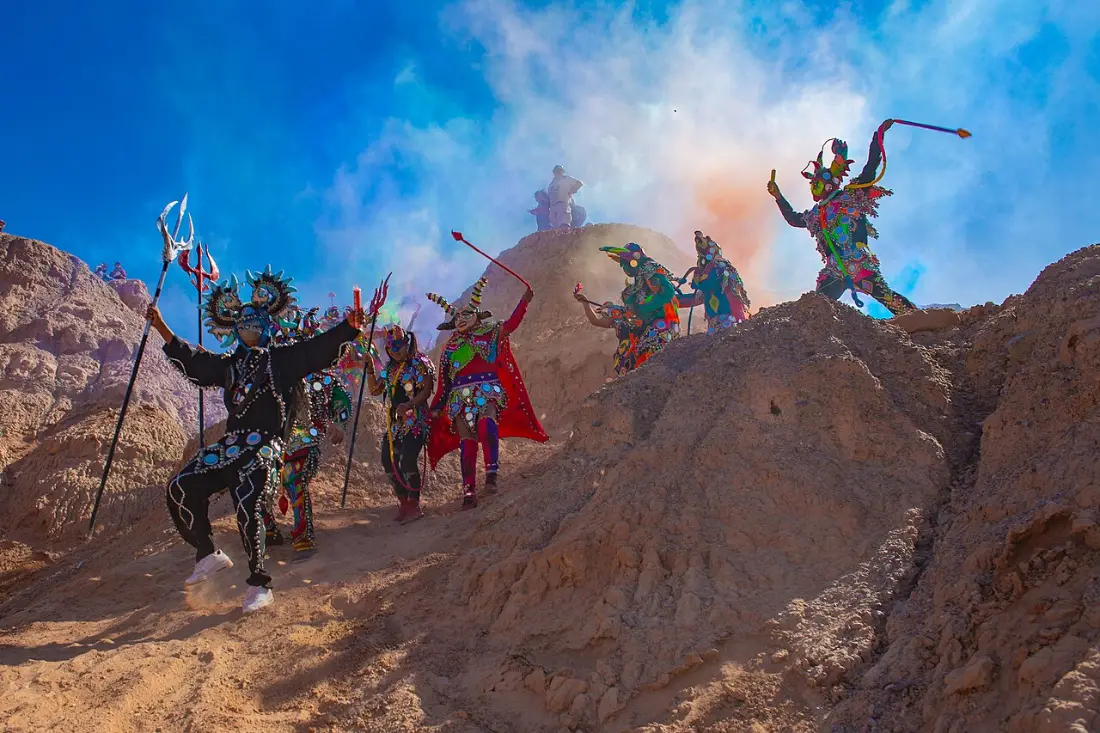
- Carnival: the village's biggest celebration. Thousands join the comparsas (carnival troupes) and finding a bed becomes very hard. Dates and customs are in our guide to the Jujuy carnival in the Quebrada.
- Holy Week: pilgrims and sikuri pan-pipe bands climb the trail above Maimará toward the sanctuary of the Virgin of Punta Corral.
- Pachamama: in August families give thanks and make offerings to Mother Earth.
- All Saints' and All Souls' Days (November 1 and 2): families prepare offerings and visit the cemetery. If you are there, keep your distance and ask before taking photos.
On these dates village life spills onto the streets, with tamales, humitas and empanadas, all built around corn.
Day trips from Maimará
Sitting in the middle of the Quebrada, Maimará makes a very convenient base by car, bus or tour:
- Tilcara (8 km): the Pucará de Tilcara ruins, the high-altitude botanical garden and the hike to the Garganta del Diablo gorge.
- Purmamarca (19 km): the Hill of Seven Colors, the Paseo de los Colorados loop and the craft market on the square.
- Salinas Grandes: another 66 km beyond Purmamarca over the Lipán pass, a half-day or full-day outing.
- Huacalera and Uquía: the Tropic of Capricorn marker and Uquía's church with its paintings of musket-bearing angels.
- Humahuaca (50 km): the Independence Monument and, in the afternoon, the Hornocal "14 colors" range.
With a car, a classic day is the cemetery and the Palette in morning light, lunch in Tilcara and back to Maimará for sunset, when the western sun lights up the hillside.
Maimará altitude and location
Maimará sits at 2,383 meters (about 7,800 feet) above sea level, according to Argentina's national tourism office. Some sources, such as Jujuy Turismo, round it to 2,390 m; the difference simply depends on where in town you measure, since the village stretches along the highway. In practical terms it is about 80 meters lower than Tilcara and a gentle place to start acclimatizing.
The village lies on Route 9, on the banks of the Río Grande between Purmamarca and Tilcara, right in the middle of the Quebrada de Humahuaca. Road distances:
- San Salvador de Jujuy: about 77 km (48 mi)
- Purmamarca: 19 km (12 mi)
- Tilcara: 8 km (5 mi)
- Humahuaca: 50 km (31 mi)
In October 2025 Maimará was named one of UN Tourism's Best Tourism Villages, chosen from more than 270 applications across 65 countries. The award recognizes its rural tourism model: family-run guesthouses, farmers who open their fields to visitors and village life that still follows the Andean farming calendar. To compare altitudes across the province, see our Jujuy altitude guide.
Practical tips
- Cash: there is one ATM in the village, on Belgrano and Martín Rodríguez, but it sometimes runs out. Most shops take digital payments; foreign cards can be hit and miss, so carry some pesos.
- Fuel: the nearest gas station is in Tilcara, about 7 km away.
- Cell signal: Claro and Personal work well most of the year.
- Banking: the nearest bank branch is in Tilcara.
- Respect: the cemetery and the farms are community spaces. Ask before entering a field or photographing people.
- Altitude: Maimará is lower than Humahuaca, but if you have flown in from sea level, drink water and eat light on your first day.
Maimará travel guides
Frequently Asked Questions
What is there to do in Maimará?
Photograph the Painter's Palette and the hillside cemetery, visit the Posta de Hornillos and rural life museums, hike to the natural rock arch and taste high-altitude wines at local wineries.
Are there hotels in Maimará?
Yes. There are small inns, hostels, cabins and a hotel with a pool, mostly family-run, with over 400 licensed beds in total. Book well ahead for Carnival.
How far is Maimará from Tilcara and Purmamarca?
Tilcara is 8 km north on Route 9, about ten minutes by car. Purmamarca is 19 km south and San Salvador de Jujuy about 77 km.
Can I get to Maimará by public transport?
Yes. Several daily buses from San Salvador de Jujuy's terminal stop in Maimará, taking about an hour and a half; many drop you on the highway, a 450-meter walk from the center.
What is the altitude of Maimará?
Maimará sits at 2,383 meters (about 7,800 feet) above sea level, according to Argentina's national tourism office; some local sources give 2,390 m. It is slightly lower than Tilcara and well below Humahuaca.
Does the Solar Train stop in Maimará?
Yes. The Tren Solar de la Quebrada runs 42 km between Volcán and Tilcara with a station in Maimará, and offers a short round trip between Purmamarca and Maimará. Book on its official website.
Is Maimará worth an overnight stay?
If you like quiet villages, yes: it is calmer and often cheaper than Tilcara or Purmamarca, and sits right between them, so it works well as a base with a car.
When is the best time to see the Painter's Palette?
Late afternoon, when the western sun hits the hillside head-on and the colors glow. Early in the morning part of the slope is still in shadow.
How to get to Maimará?
From Tilcara: 6 km south. From Purmamarca: 22 km north.
What to do in Maimará?
Painter's Palette. Hillside cemetery. Route 9 viewpoint. Terraced crops.
Nearby Destinations
 Town2.465 m
Tilcara
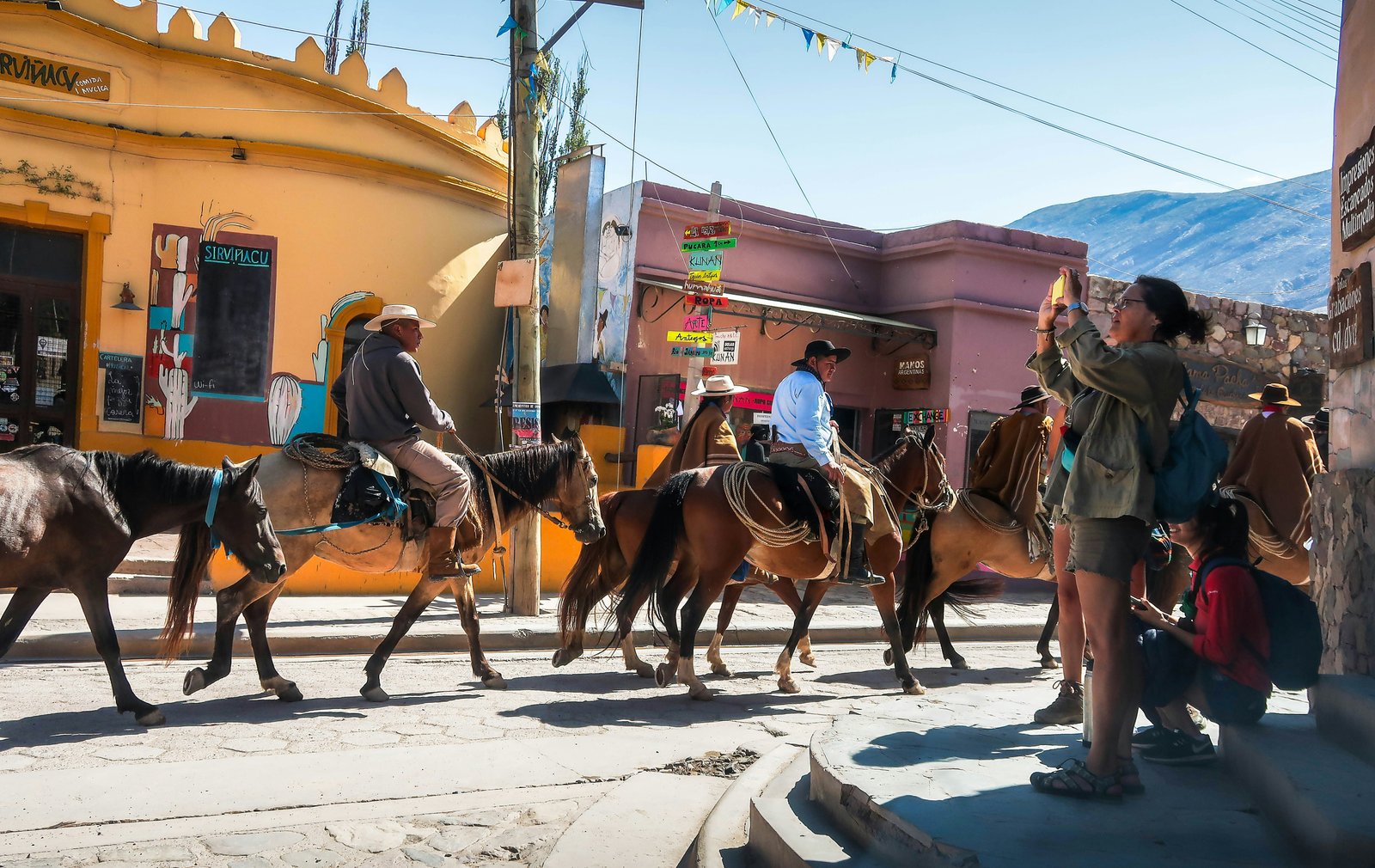
Tilcara, known as the archaeological capital of the Quebrada, is a vibrant town at 2,465 meters combining pre-Hispanic ruins, contemporary art, and a growing food scene. Its main attraction is the Pucará de Tilcara, a restored pre-Inca fortress overlooking the valley. The town also houses the Eduardo Casanova Archaeological Museum, art galleries, folklore venues, and the famous Tilcara Carnival in February. It's the most touristic town in the Quebrada, with the best accommodation and restaurant infrastructure.
Explore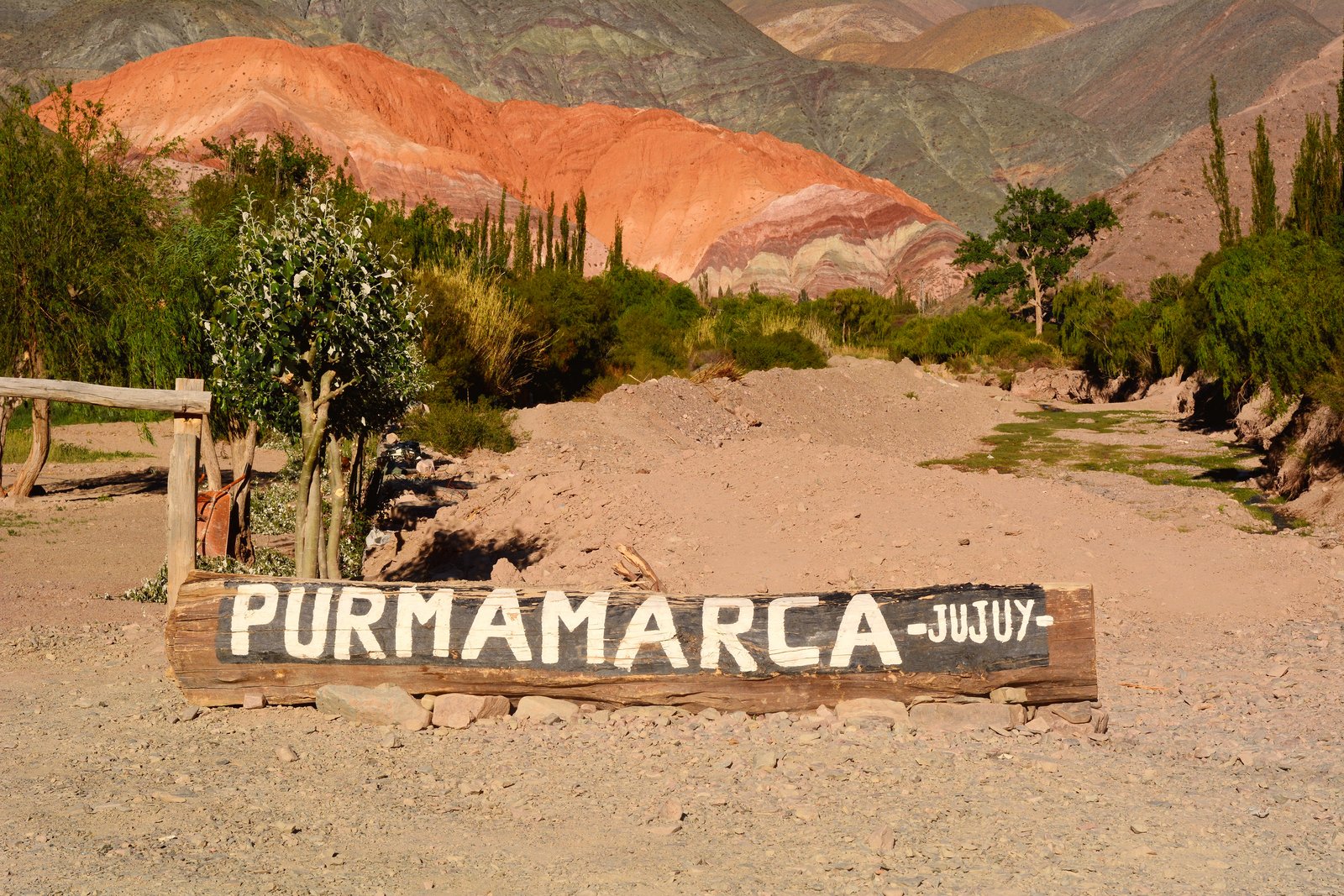 Town2.324 m
Purmamarca
Purmamarca is a small gem nestled at the foot of the legendary Hill of Seven Colors, at 2,324 meters altitude and just 65 km from San Salvador de Jujuy. This town of dirt streets and adobe houses preserves its colonial and pre-Hispanic essence like few places in Argentina. Its central plaza, surrounded by a permanent artisan market, is the starting point for the Paseo de los Colorados (a 3 km circuit around multicolored rock formations), visiting the Santa Rosa de Lima church (17th century), and watching the sunset over the hill. Purmamarca is also the gateway to the Salinas Grandes via the spectacular Cuesta de Lipán, ascending to 4,170 meters.
Explore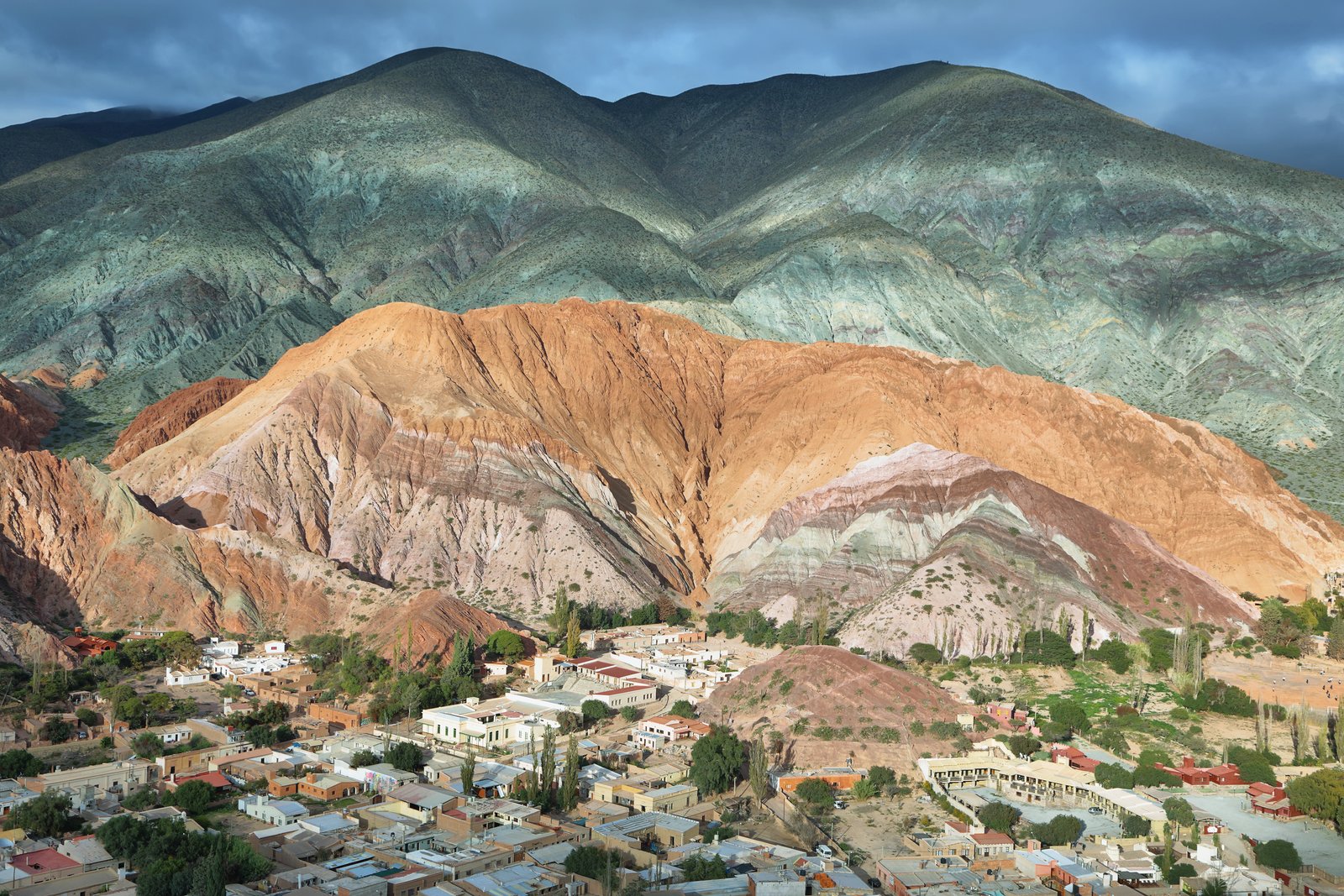 UNESCO Heritage1.640 – 3.690 m
Quebrada de Humahuaca
The Quebrada de Humahuaca, declared a UNESCO World Heritage Site in 2003, is a stunning 155 km valley stretching along the Río Grande, surrounded by multicolored mountains reaching over 4,000 meters. This natural corridor was part of the Inca Trail and today connects Jujuy's most iconic towns: Purmamarca, Tilcara, Maimará, and Humahuaca. Its geological formations, millions of years old, paint a landscape of reds, ochres, greens, and purples that shift with daylight. The Quebrada combines pre-Columbian archaeology, colonial architecture, living indigenous culture, and unique Andean gastronomy. It is the essential destination of any trip to northwestern Argentina.
Explore