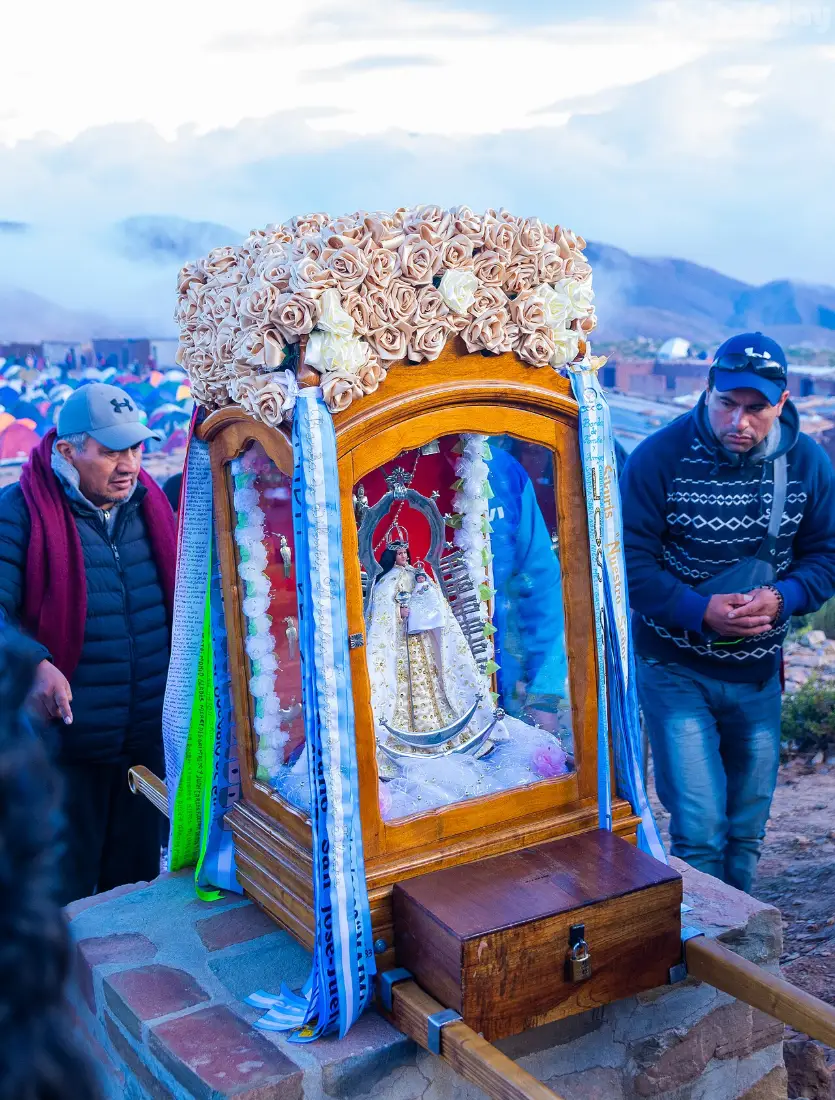
Virgin of Copacabana of Punta Corral surrounded by the faithful
© Fede Tolay / Wikimedia Commons · CC BY 4.0
Festivals & Events

Holy Week 2027 in Tilcara: Punta Corral Pilgrimage and Ermitas

Holy Week 2027 in Tilcara: panpipe bands climb to Punta Corral, the Virgin comes down on 24 March and flower ermitas line Good Friday. Dates and tips.

When
Sunday 21 to Sunday 28 March 2027: climb on Monday 22, the Virgin's descent on Wednesday 24 and the ermitas procession on Good Friday 26 (dates follow Easter)
Where
Tilcara and the Abra de Punta Corral sanctuary, Quebrada de Humahuaca, Jujuy
See the Jujuy festival calendar

In Tilcara, in northern Argentina's Quebrada de Humahuaca, Holy Week revolves around the Virgin of Copacabana of the Abra de Punta Corral. On Holy Monday, thousands of pilgrims and more than 80 bands of sikuris, Andean panpipe players, hike up to her mountain sanctuary at over 3,500 m (11,500 ft). On Holy Wednesday they carry her back down to town, where she arrives after dark amid waving handkerchiefs, flowers and firecrackers. On Good Friday, the Stations of the Cross procession passes the ermitas, huge pictures made from flowers, seeds and coloured earth. In 2027, Palm Sunday is 21 March, the climb is on Monday 22, the descent on Wednesday 24, Good Friday on 26 and Easter Sunday on 28 March.

Here is the day-by-day programme, what the hike involves, what to bring if you want to walk up and how to enjoy the week from town without making the climb.

In this guide

Holy Week 2027 in Tilcara: the calendar

Easter Sunday 2027 falls on 28 March, which sets the dates for the whole week. The parish and Jujuy's Ministry of Culture and Tourism publish exact 2027 times a few weeks in advance; the times below are from 2026, for reference:

  • Early March: the Virgin leaves Tilcara's church and is carried up to her sanctuary, about two weeks before Palm Sunday. In 2026 this happened on Saturday 14 March at 5 am, after a novena with processions through the neighbourhoods.
  • Sunday 21 March, Palm Sunday: blessing of palms and a procession with sikuri bands to the church. The blessing of the bands begins.
  • Monday 22 March: Mass and blessing of musicians and pilgrims from 9 am, and the climb to the sanctuary through the day and night.
  • Tuesday 23 March: Stations of the Cross up to the Cerro de la Cruz in the morning, the main Mass at the sanctuary in the afternoon and a draw to decide which bands carry the Virgin on the way down.
  • Wednesday 24 March: at 5 am, blessing and descent of the Virgin; she reaches Chilcaguada around 11 am, the Usina neighbourhood around 5:30 pm and the church forecourt for Mass at about 8:30 pm.
  • Thursday 25 March, Maundy Thursday: Mass of the washing of the feet.
  • Friday 26 March, Good Friday: in the evening, Christ is taken down from the cross and the Stations of the Cross procession passes the ermitas.
  • Saturday 27 March: Easter Vigil and a serenade to the Virgin outside the church.
  • Sunday 28 March, Easter: Mass and a procession with the Virgin and the risen Christ, accompanied by panpipe bands.

Note that in 2027 Wednesday 24 March is a national public holiday (Day of Remembrance), Thursday 25 is an optional non-working day and Friday 26 is a public holiday. That makes for a very long break in Argentina, and Tilcara will be full.
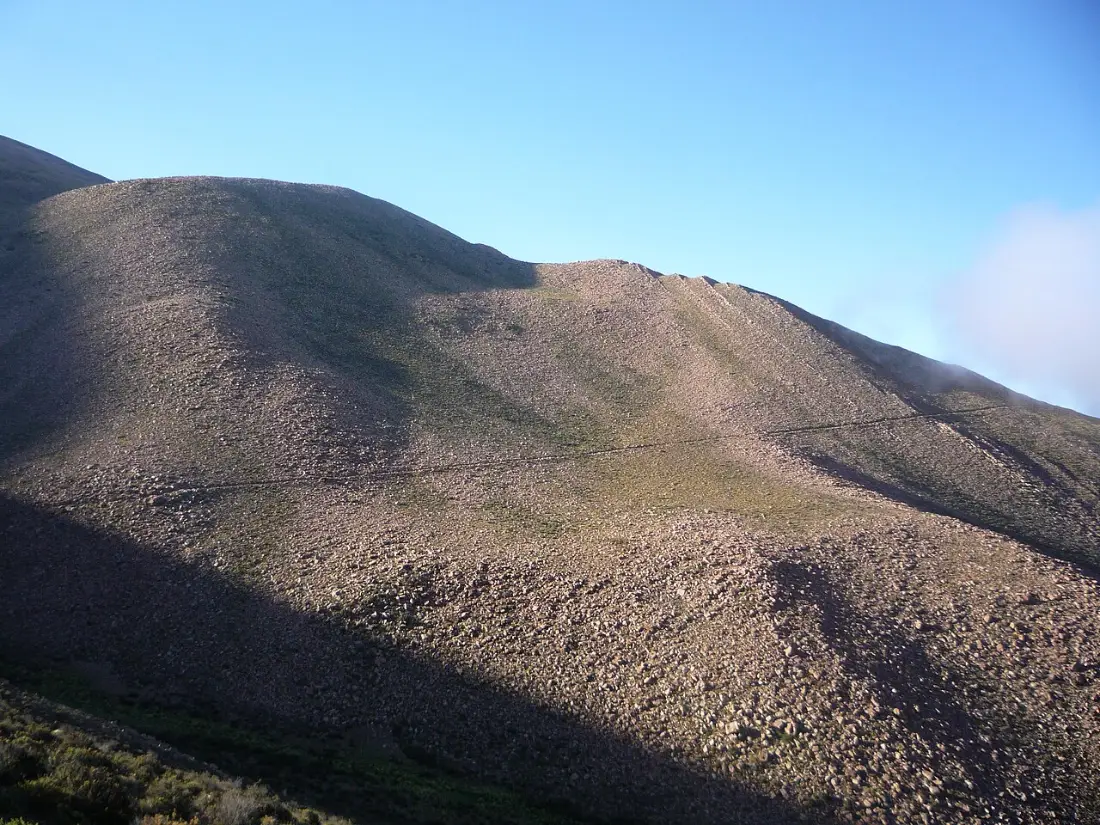
Mountain trail to the Punta Corral pass from Tilcara
Photo: paulojuy™ / Wikimedia Commons · CC BY-SA 3.0

The Virgin of Copacabana of the Abra de Punta Corral

Devotion to the Virgin of Copacabana of Punta Corral goes back more than a century in the Quebrada. Her original sanctuary is at Punta Corral, in the neighbouring district of Tumbaya, and for decades the image was carried down to Tilcara. Around 1970, after disagreements with the people of Tumbaya, the celebration split in two: a new chapel with a replica of the image was built at the Abra de Punta Corral, a mountain pass within Tilcara's district.

Since then there have been two sanctuaries to the same Virgin and two pilgrimages. Tumbaya's comes down to its village on Palm Sunday; the Abra's, by far the larger, comes down to Tilcara on Holy Wednesday. Argentina's national Ministry of Culture lists it in its survey of Jujuy's intangible cultural heritage.

In Tilcara she is known as the Mamita del Cerro, the little mother of the mountain, and she is patron of the sikuri bands. She spends the year in the church of Nuestra Señora del Rosario in central Tilcara, returning to the mountain only during Lent.

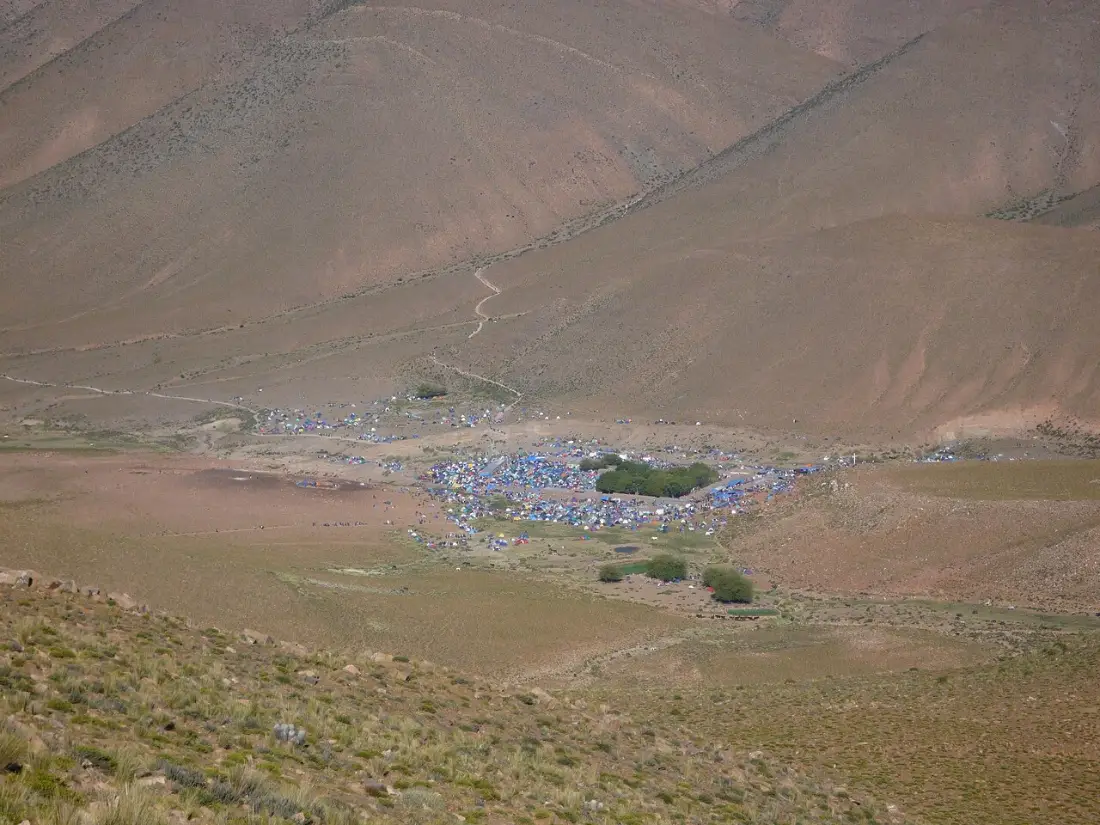
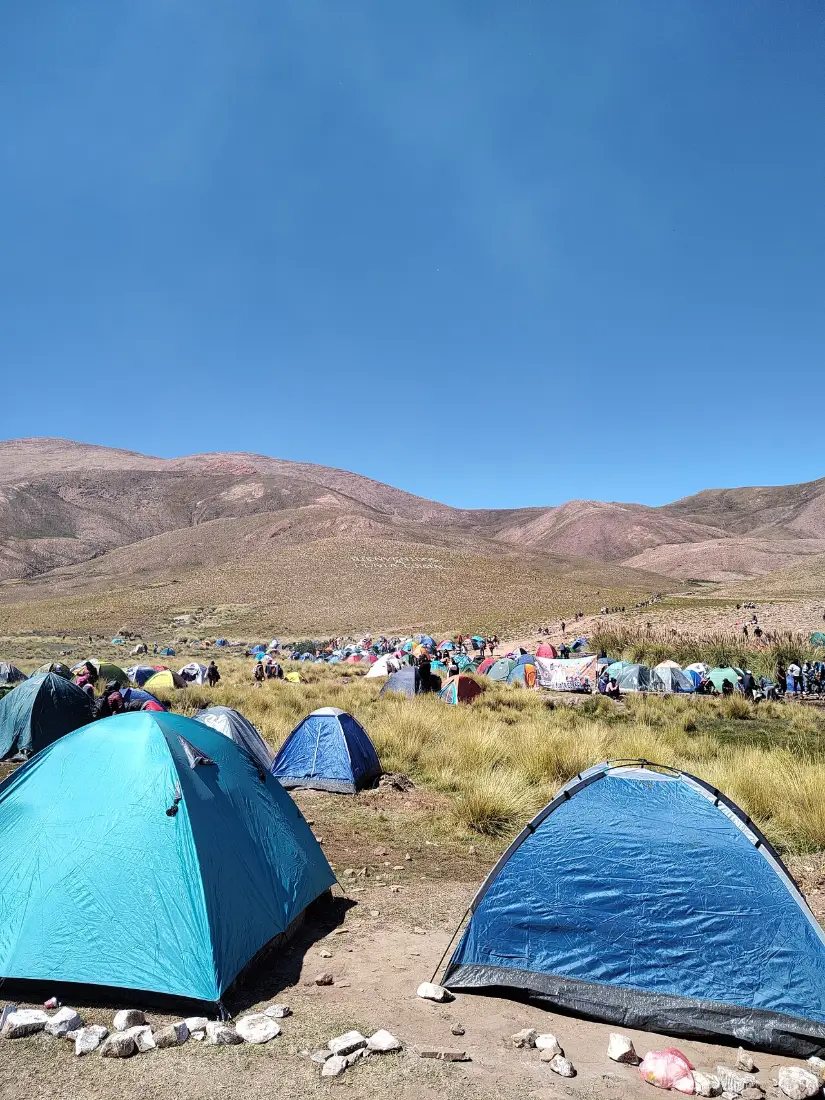
Pilgrims' tents on the way to Punta Corral
Photo: Luisfff2812 / Wikimedia Commons · CC BY-SA 4.0

The sikuri bands, the soul of the pilgrimage

Without sikuris there is no Punta Corral. In 2026, 84 bands registered, each with 30 to 50 members, according to El Tribuno de Jujuy. They come from Tilcara, Maimará, Huacalera, Humahuaca, El Aguilar, Perico and San Salvador de Jujuy, as well as from rural mountain communities.

  • Instruments: sikus, cane panpipes played by two rows of musicians answering each other, plus bass drums, snares, cymbals and wooden rattles.
  • Repertoire: dianas, marches, adoraciones (hymns of worship), morenadas, huaynos and boleros.
  • Organisation: every band has a captain, a uniform and a banner. When the band is blessed in the church, the captain receives an identifying ribbon and the rules for the climb, the stay and the descent.
  • Who plays: there are mixed bands, men's bands, women's bands and youth bands. The women's band María Rosa Mística celebrated its 25th anniversary in 2026.

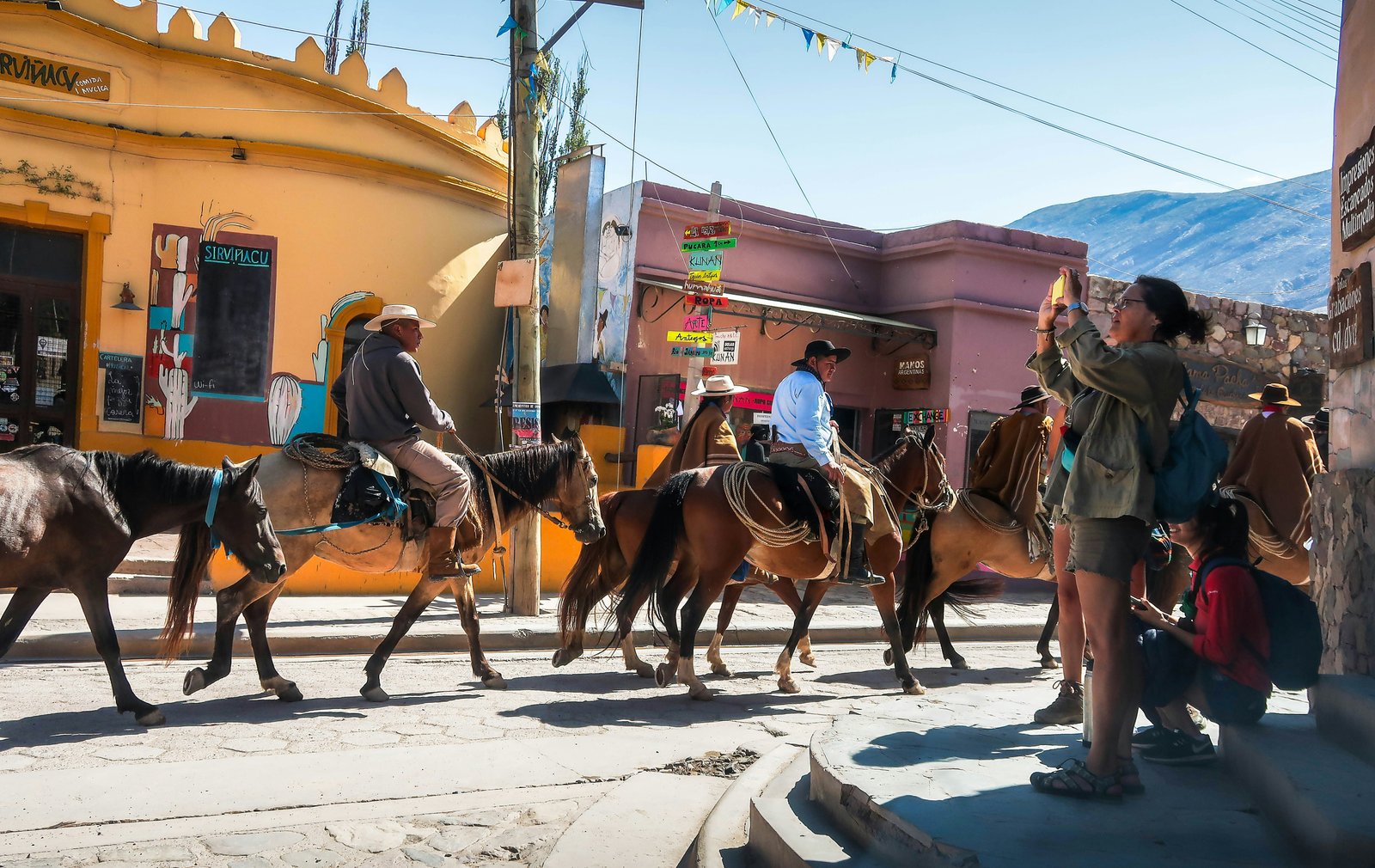
People in Tilcara say that climbing the mountain outside a band is like not climbing at all. Many families have several generations of sikuri players, and vows to the Virgin are often fulfilled by making the pilgrimage several years in a row.

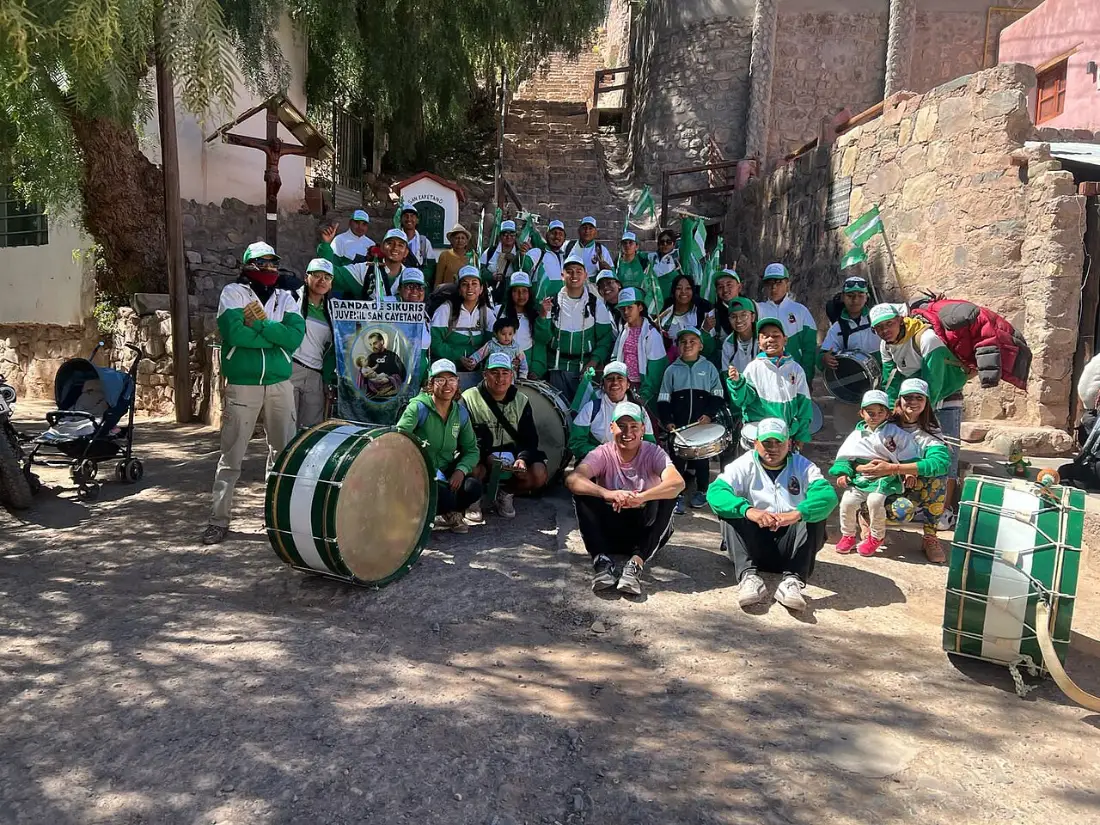
San Cayetano youth sikuri band on the Punta Corral pilgrimage
Sikuri bands escort the Virgin with panpipes and drums for hours on the climb.Photo: Ceciliatilcara / Wikimedia Commons · CC BY 4.0

The climb: distance, hours and altitude

The trail starts in Tilcara, at 2,465 m (8,090 ft), and climbs to the Abra sanctuary at more than 3,500 m (11,500 ft). Reports put the route at between 20 and 27 km (12 to 17 miles) of mountain path, depending on where you start counting. According to the newspaper Página/12, locals walk it in five to seven hours, while visitors can take up to ten.

What to expect along the way:

  • Las Siete Vueltas (the Seven Bends): the first section, a steep zigzag and the hardest part of the climb.
  • Chilcaguada: the spot generally considered the halfway point.
  • Nine calvaries: stone altars where the Virgin rests on the way down and where bands stop to play.
  • Food stalls: vendors haul supplies up by mule and sell lamb, soups, spicy stews and drinks. When a mule train comes through, step aside.
  • Little water: the lack of water on the trail is one of the difficulties most often mentioned.

Many pilgrims set off on Monday afternoon and walk through the night by torchlight while the bands play non-stop. Most spend two nights at the top, in tents or wherever they can, and the small hours are bitterly cold. On Tuesday morning there is a Stations of the Cross walk up to the Cerro de la Cruz, at nearly 4,000 m (13,100 ft).

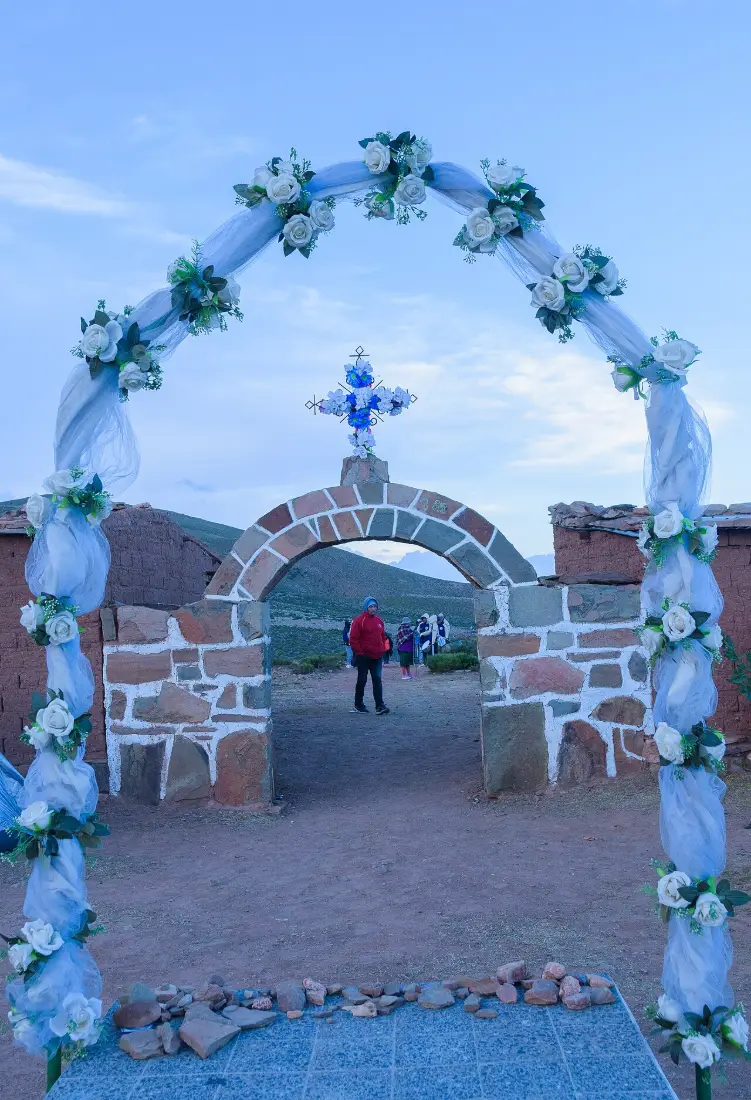
Entrance arch to the Punta Corral sanctuary
Photo: Fede Tolay / Wikimedia Commons · CC BY 4.0

The Virgin's descent on Holy Wednesday

Holy Wednesday is the most striking day, and you can experience it from town. At 5 am the bands are blessed at the sanctuary and the Virgin sets off, covered, on the shoulders of the bearers chosen in the previous day's draw. The bands march ahead, taking turns to play, and firecrackers go off at every calvary.

In the afternoon the column nears Tilcara; in 2024 El Tribuno reported the bands passing the area of the Garganta del Diablo gorge. The trail ends in the Usina neighbourhood, where the image is uncovered and greeted with handkerchiefs held high. In 2026, from Usina the procession went down Avenida Huasamayo and along Casanova, Rivadavia, Belgrano and Alverro streets to the church.

That last stretch is very slow. Residents decorate their house fronts with flowers and put up flower arches where the Virgin pauses to bless them, and some set out ermitas. In 2026 the image reached town after 10 pm, in light rain, for the welcome Mass.

To watch, find a spot on Avenida Huasamayo or Calle Rivadavia from mid-afternoon. Bring a warm layer: once the sun drops, it gets cold fast.

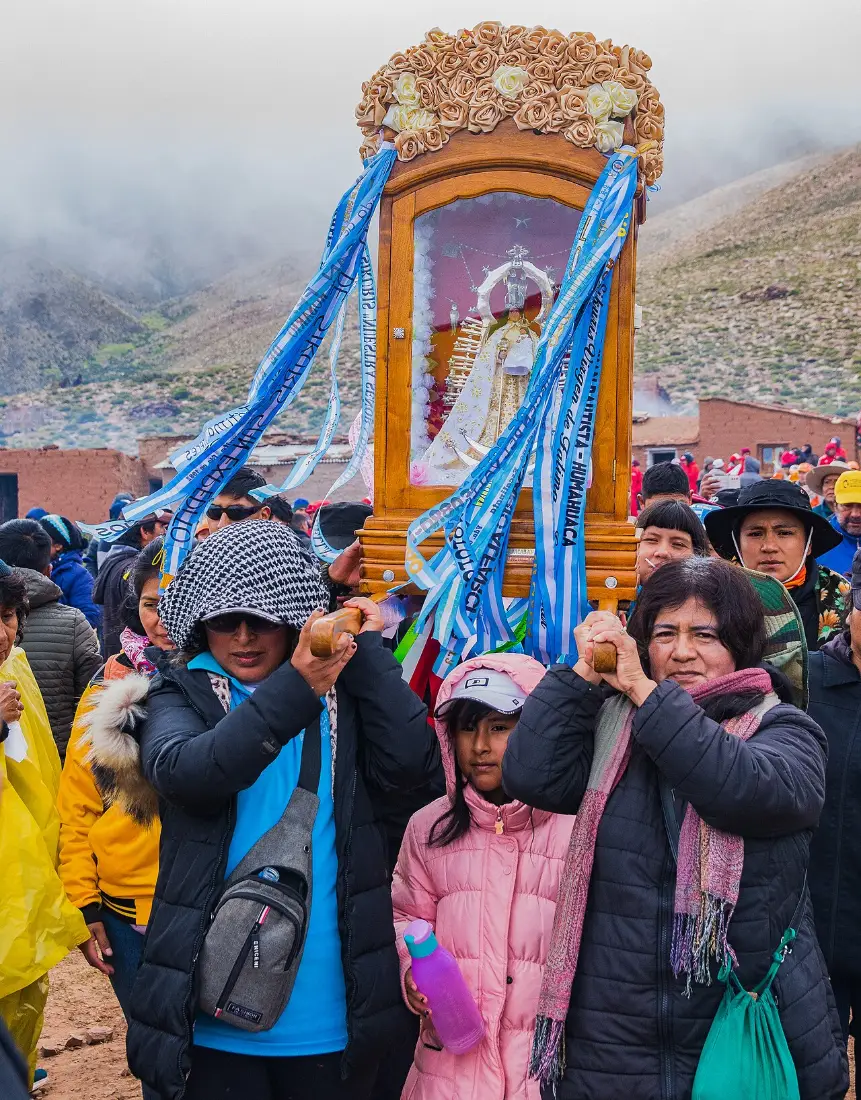
The Virgin of Copacabana carried on a litter before entering the sanctuary
Photo: Fede Tolay / Wikimedia Commons · CC BY 4.0

The ermitas and the Good Friday procession

The ermitas are the other great image of Holy Week in Tilcara. These large pictures depict the 14 Stations of the Cross and are made from flowers, seeds, coloured earth, leaves, stems, bark and stones on framed panels. Fine details are picked out with quinoa, chia, sunflower seeds or peppercorns.

  • Who makes them: local families, who pass the tradition down the generations and work on them for weeks. Designs are kept secret until Good Friday.
  • How old they are: a researcher from CONICET, Argentina's national research council, dates their first appearance to 1885. They began as small shrines of flowers and aromatic herbs.
  • When to see them: they are set up in the streets of the centre on Good Friday and, according to the local site Todo Jujuy, stay on display until Easter Sunday.

On Good Friday evening, in front of the church, Christ is taken down from the cross. Then the procession of the dead Christ sets off, followed by the Virgin of Sorrows, stopping at each ermita in turn to pray. In 2026 it began at 7:30 pm. On Saturday, the women of the town hold their own procession with the Virgin of Sorrows.

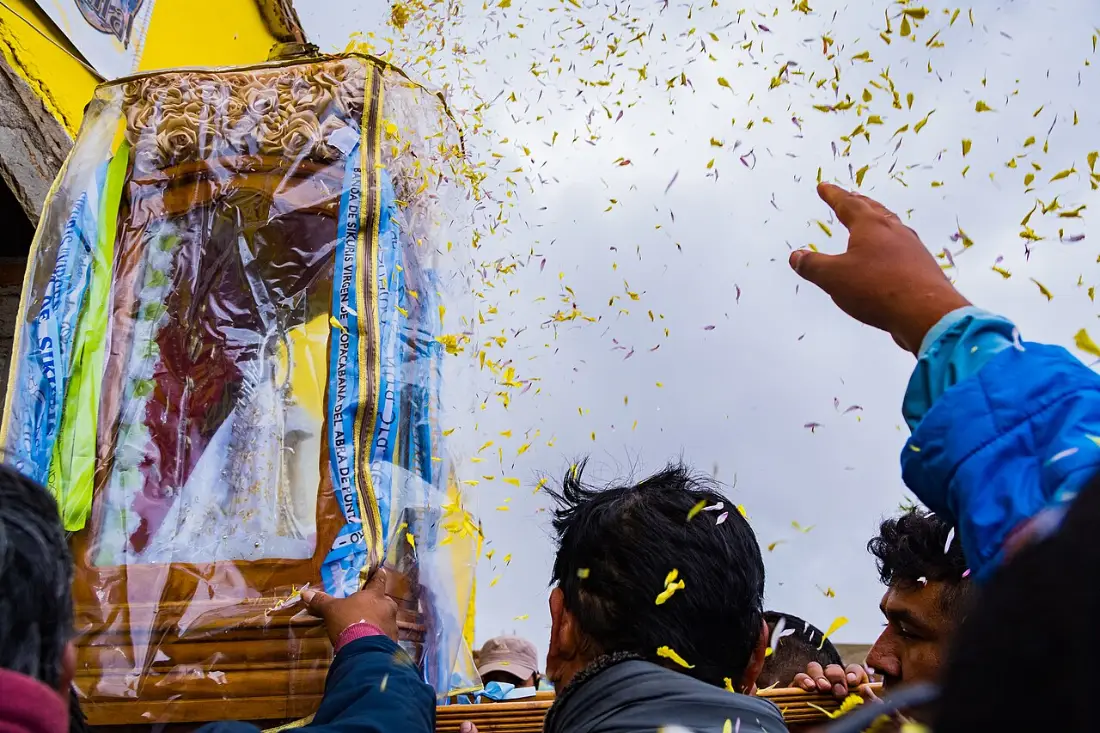
The Virgin entering the Punta Corral sanctuary amid confetti
Photo: Fede Tolay / Wikimedia Commons · CC BY 4.0

If you want to walk to Punta Corral: what to know and pack

The climb is not a tourist trek: it is a demanding religious pilgrimage. If you decide to do it, go with respect and, ideally, with someone local.

  • Acclimatise first: spend at least two or three days in the Quebrada before Monday. Read our tips on adjusting to altitude in Jujuy.
  • Water and food: carry enough water and high-energy snacks; there's little water on the trail.
  • Warm gear: a down jacket, hat, gloves and a sleeping bag. Nights at the top are very cold even when it's mild autumn weather down in the valley.
  • Rain: pack a waterproof jacket, as March still brings showers.
  • A head torch, sunscreen, sunglasses and trekking poles.
  • Don't go alone, tell your accommodation your plans and stay on the marked trail.

If you don't climb, on Wednesday you can walk a short way up from the Usina neighbourhood to meet the Virgin. In March, Tilcara's averages show highs of 24 °C (75 °F), lows of 7 °C (45 °F) and about 18 mm of rain; see our Tilcara weather guide for more.

View of the Punta Corral sanctuary among the hills
Photo: paulojuy™ / Wikimedia Commons · CC BY-SA 3.0

Getting there and where to stay at Easter

Tilcara is 84 km from San Salvador de Jujuy on Ruta Nacional 9: about 1 hour 15 minutes by car, or 1 hour 30 minutes to 2 hours by bus from the capital's terminal.

Holy Week is high season, and in 2027 the public holidays on 24 and 26 March will make it even busier. Book at least four to six weeks ahead, or earlier if you want a boutique hotel or a large cabin. To see the Virgin's arrival and the Good Friday procession, stay in the centre or the upper streets, a short walk from the church. Compare areas and options in our guide on where to stay in Tilcara.

Other celebrations nearby:

  • Maimará, 8 km away: a living Stations of the Cross on Good Friday morning, a tradition held since 1983.
  • Huacalera: on Good Friday 2026, at 6 am, pilgrims set off carrying the Virgin of Sixilera up to her sanctuary.
  • Tumbaya: its Punta Corral pilgrimage comes down to the village on Palm Sunday.

If you're visiting in summer, add the Enero Tilcareño festival or the Candelaria festival in Humahuaca, and check all the dates in our festival calendar.

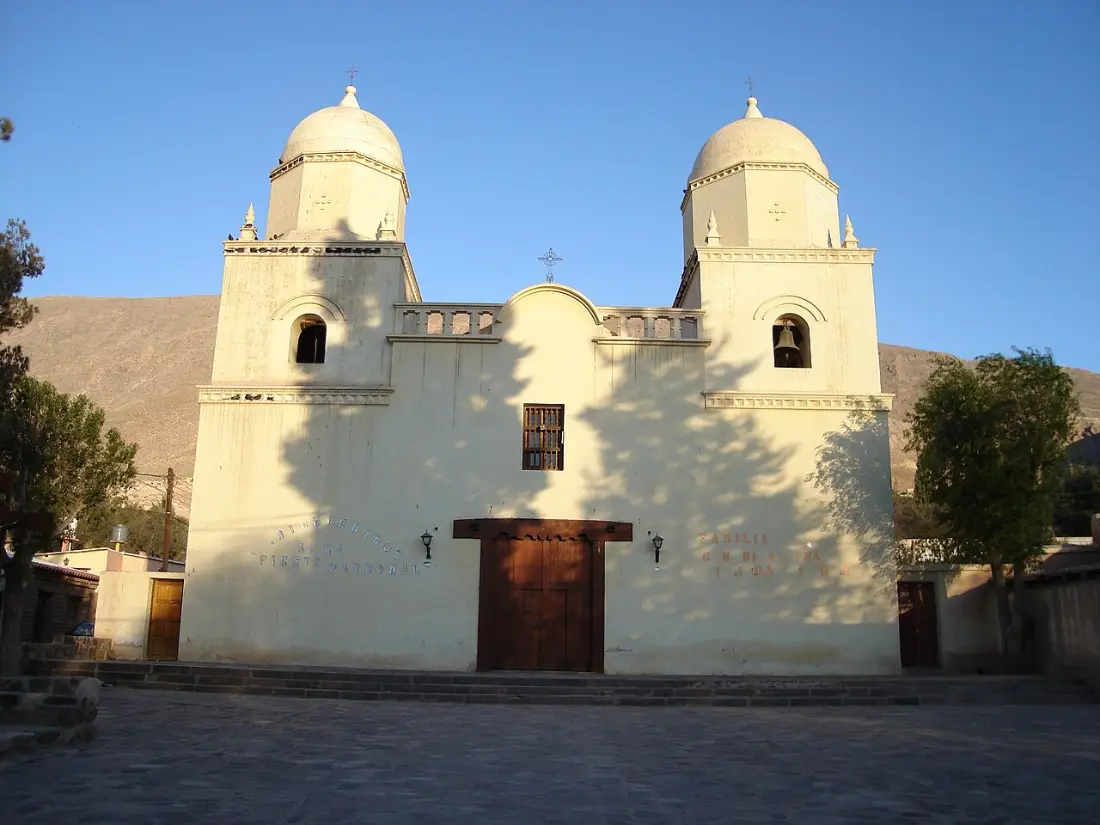
Our Lady of the Rosary church in Tilcara
Photo: Galio / Wikimedia Commons · CC BY-SA 3.0

Frequently Asked Questions

When is Holy Week 2027 in Tilcara?

From Palm Sunday, 21 March, to Easter Sunday, 28 March 2027. The climb to Punta Corral is on Monday 22, the Virgin comes down on Wednesday 24 and the ermitas procession is on Good Friday, 26 March.

What day does the Virgin of Punta Corral come down to Tilcara?

On Holy Wednesday, which in 2027 is 24 March. She leaves the sanctuary at 5 am and reaches Tilcara's church after dark, usually between 8 and 10 pm.

How long is the hike to Punta Corral?

Locals take five to seven hours, while visitors can need up to ten. Sources put it at 20 to 27 km of mountain trail with a steep climb from Tilcara.

How high is the Punta Corral sanctuary?

More than 3,500 m (11,500 ft) above sea level, compared with 2,465 m in Tilcara. The Cerro de la Cruz, climbed on Tuesday, is close to 4,000 m.

What are the ermitas of Tilcara?

They are large pictures of scenes from the Passion made from flowers, seeds and coloured earth. Local families create them for the 14 Stations of the Cross on Good Friday.

Can tourists join the Punta Corral pilgrimage?

Yes, the trail is open to all, but it is a religious pilgrimage and a tough high-altitude hike. Acclimatise first, carry water, warm clothes and a sleeping bag, and don't go alone.

Do I need to book accommodation in Tilcara for Easter?

Yes, at least four to six weeks ahead. In 2027, 24 and 26 March are national public holidays, so demand will be high.

Ready to travel?

Compare hotels, car rentals and tours in Jujuy.