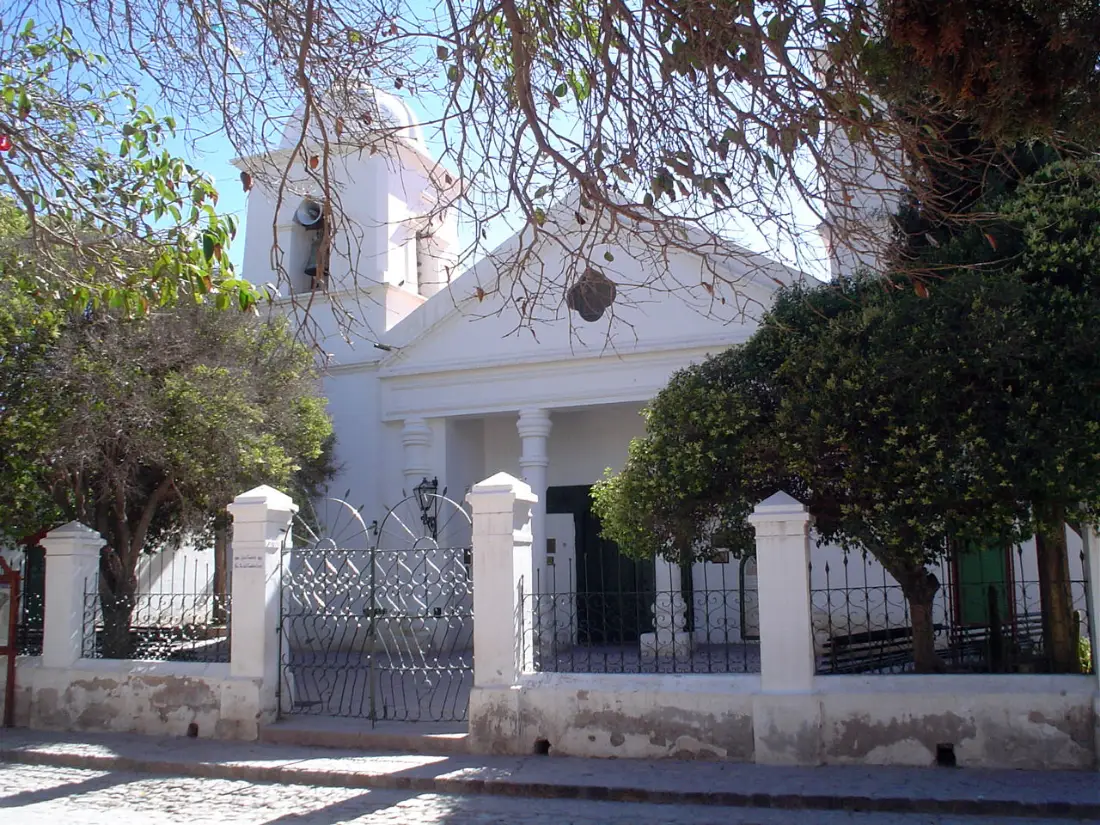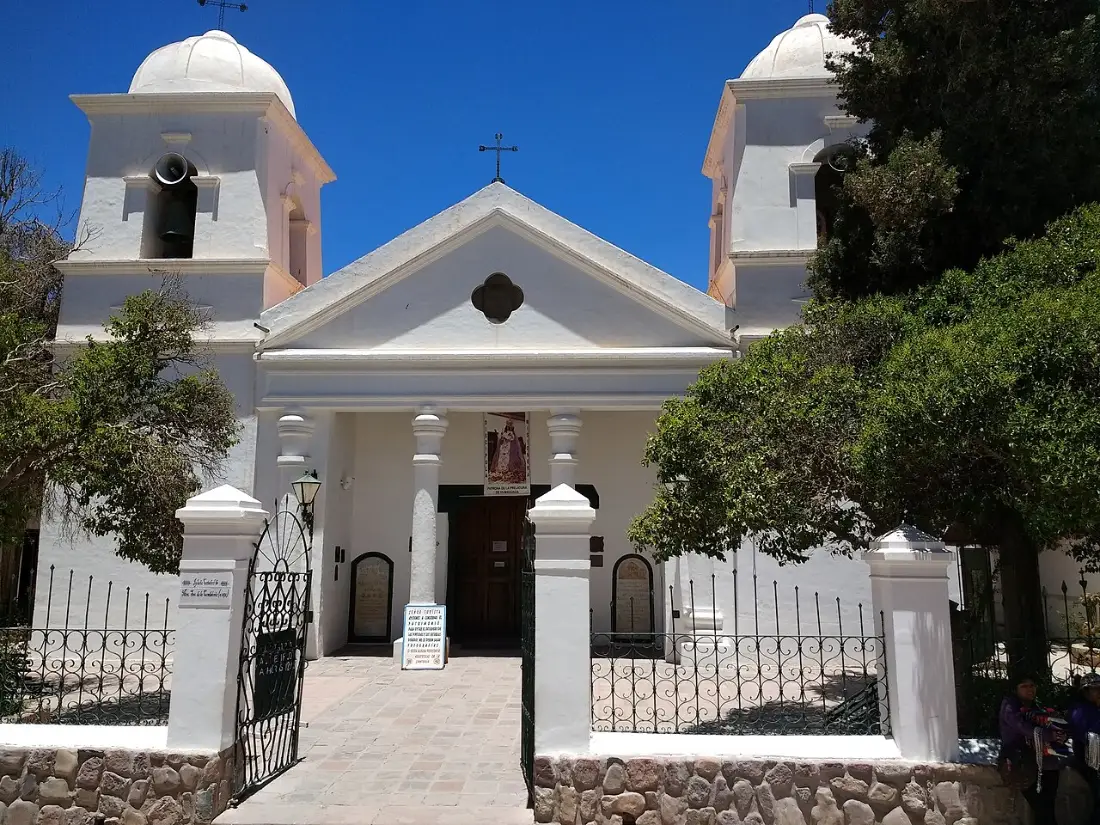
Candelaria cathedral facing Humahuaca's main square
© Mx. Granger / Wikimedia Commons · CC0
Festivals & Events

Candelaria Festival in Humahuaca: 2 February 2027 Guide

Humahuaca's Virgin of Candelaria festival on 2 February 2027: dawn bells, open-air Mass, a procession with feathered dancers and panpipes, plus Carnival tips.

When
2 February 2027, with the eve on 1 February (every year on 2 February)
Where
Humahuaca, Quebrada de Humahuaca, Jujuy
See the Jujuy festival calendar

The Festival of the Virgin of Candelaria is the patron saint's day of Humahuaca, in northern Argentina, and takes place every year on 2 February (Candlemas); in 2027 it falls on a Tuesday. The main day begins before dawn with church bells, continues with a solemn open-air Mass below the town's Independence Monument and peaks in the afternoon with a procession lasting several hours through the cobbled streets. The Virgin is escorted by samilantes, dancers dressed in rhea feathers, dozens of Andean panpipe bands known as sikuris and gauchos on horseback. On the eve, 1 February, there is a candle Mass, the dance of the "little bulls" and an evening concert.

The Candelaria is also patron of the Catholic territorial prelature of Humahuaca, based at the cathedral on the main square. And in 2027 the festival falls just four days before the start of Carnival on Saturday 6 February, so you can easily combine both in one trip.

In this guide

Candelaria festival 2027 dates

The date is fixed: 2 February, the feast of the Presentation of the Lord (Candlemas) in the Catholic calendar. In 2027 it falls on a Tuesday. But the celebrations start earlier. For reference, this was the 2026 calendar according to AICA, the Argentine Catholic news agency:

  • From 18 January: the image of the Virgin was carried on pilgrimage to Calete, a nearby hamlet.
  • 24 January to 1 February: novena, nine days of prayer at different times of day.
  • 1 February: the eve, with a celebration of light and the traditional dance of the little bulls.
  • 2 February: the main day, with Masses from before dawn, a solemn Mass and the procession.

In some years there has also been a gaucho ride on horseback from San Salvador de Jujuy to Humahuaca in the second half of January. The prelature and the town council publish each year's programme a few weeks ahead, so check it when you plan your trip, and look out for it in our Jujuy festival calendar.
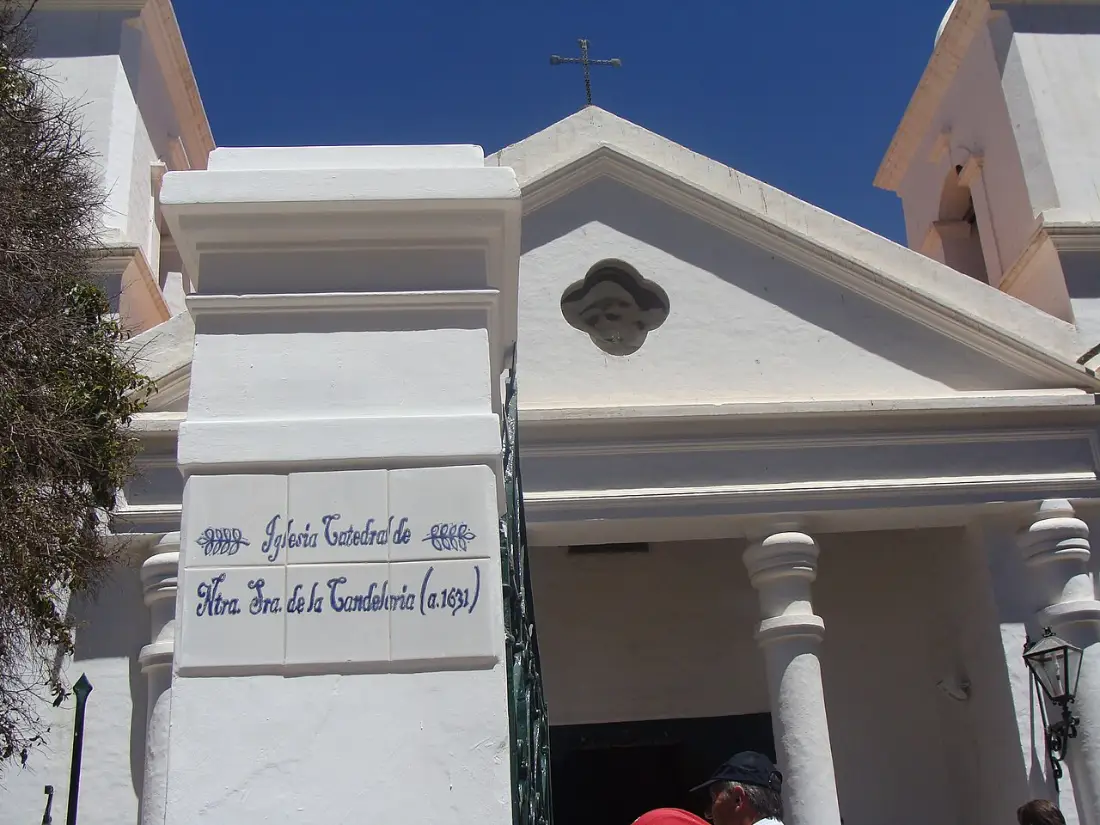
Facade of Humahuaca's Candelaria cathedral
Photo: Diazmerce / Wikimedia Commons · CC BY-SA 3.0

The eve: candles, little bulls and a midnight hymn

On the night of 1 February, Humahuaca gets into festival mode. In 2025 the town's tourism secretary described the eve like this: a candle Mass and then, at 9 pm, the image of the Virgin carried out to the cathedral forecourt. There the toritos appear, dancers carrying bull figures who greet the Virgin, ask her permission and dance around the main square, Plaza Sargento Mariano Gómez.

The party then moves to the esplanade of the Monument to the Heroes of Independence, with a light and sound show and live music. That year's line-up featured Fortunato Ramos on the erke, a long Andean cane trumpet, the singer Tomás Lipán and a choir of more than 60 voices performing the Misa Criolla, the famous Argentine folk Mass. At midnight, the hymn to the Virgin of Candelaria brings the eve to a close.

Performers change from year to year, but the format stays the same: Mass, little bulls, music and the countdown to midnight. Bring a warm layer: Humahuaca sits at 2,939 m (about 9,640 ft) and February nights are cool.

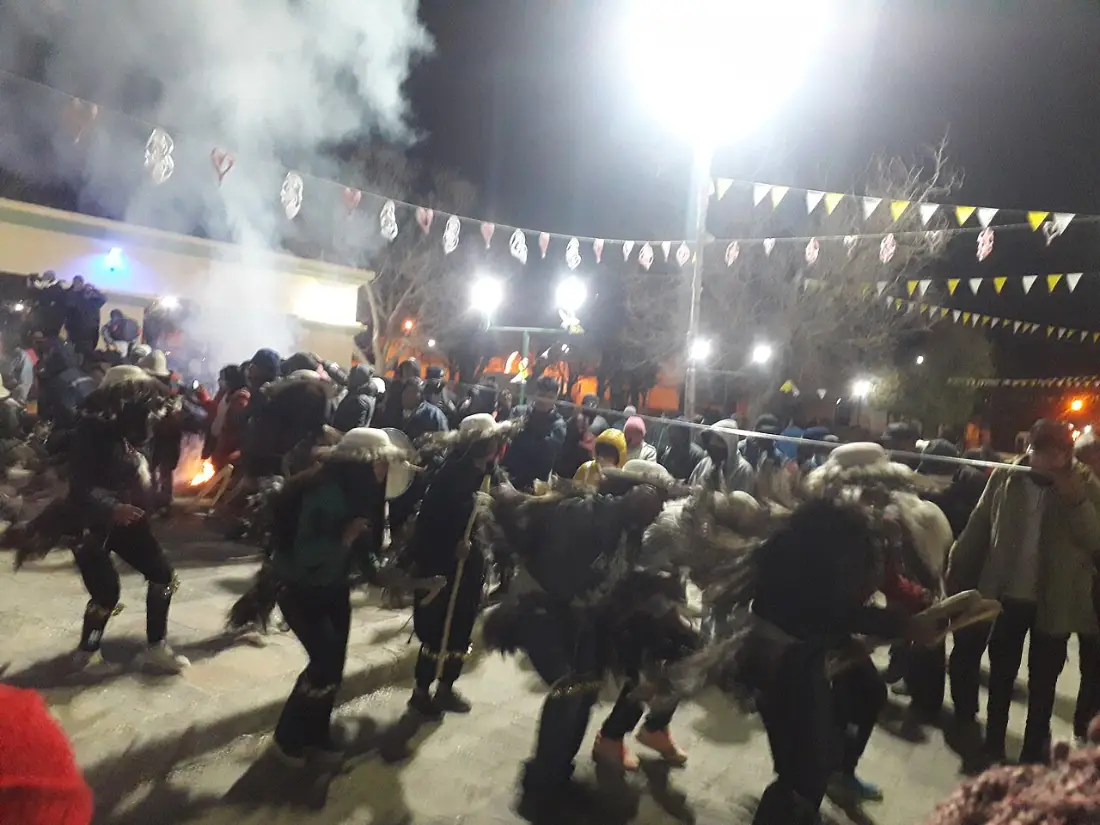
Samilantes (suri dancers) at a patron saint festival
Samilantes dance in suri (rhea) feathers at patron festivals in the Quebrada and the Puna.Photo: Valeria Patagua / Wikimedia Commons · CC BY-SA 4.0

2 February, hour by hour

This was the timetable for the main day in 2026, as published by AICA and the newspaper El Tribuno de Jujuy. It gives you a good idea of how the day unfolds:

  • 4:30 am: church bells ring out to announce the festival.
  • 5:00, 6:30 and 7:30 am: Masses at the youth centre.
  • 9:00 am: official ceremony and flag-raising in Plaza Sargento Gómez.
  • 9:30 am: main Mass on the esplanade of the Independence Monument, led by the bishop-prelate, Florencio Félix Paredes Cruz.
  • 3:00 pm: procession with the image of the Candelaria and visiting statues of saints.
  • Afterwards: the pilgrims' Mass and a final salute to the Virgin by the sikuri bands and gaucho groups.
  • Evening: a concert in honour of the patron saint.

Images and misachicos from across the prelature come to the main Mass. Misachicos are small family processions that bring a saint's statue from their home community. In 2025, groups were announced from Susques, Iruya, Abra Pampa and La Quiaca, among others, so the esplanade fills with the flags and banners of the Quebrada and the Puna, the high Andean plateau.

Our Lady of Candelaria Cathedral in Humahuaca
Photo: Yurdacomar / Wikimedia Commons · CC BY-SA 3.0

The procession: feathered dancers, panpipes and gauchos

The procession is the high point. The image is carried for hours through the streets, and the route can change from year to year. In 2026 it left the youth centre along Córdoba, Buenos Aires and Catamarca streets, continued down Avenida Belgrano and Tierra del Fuego and returned along Buenos Aires to the cathedral forecourt.

Here's what you'll see:

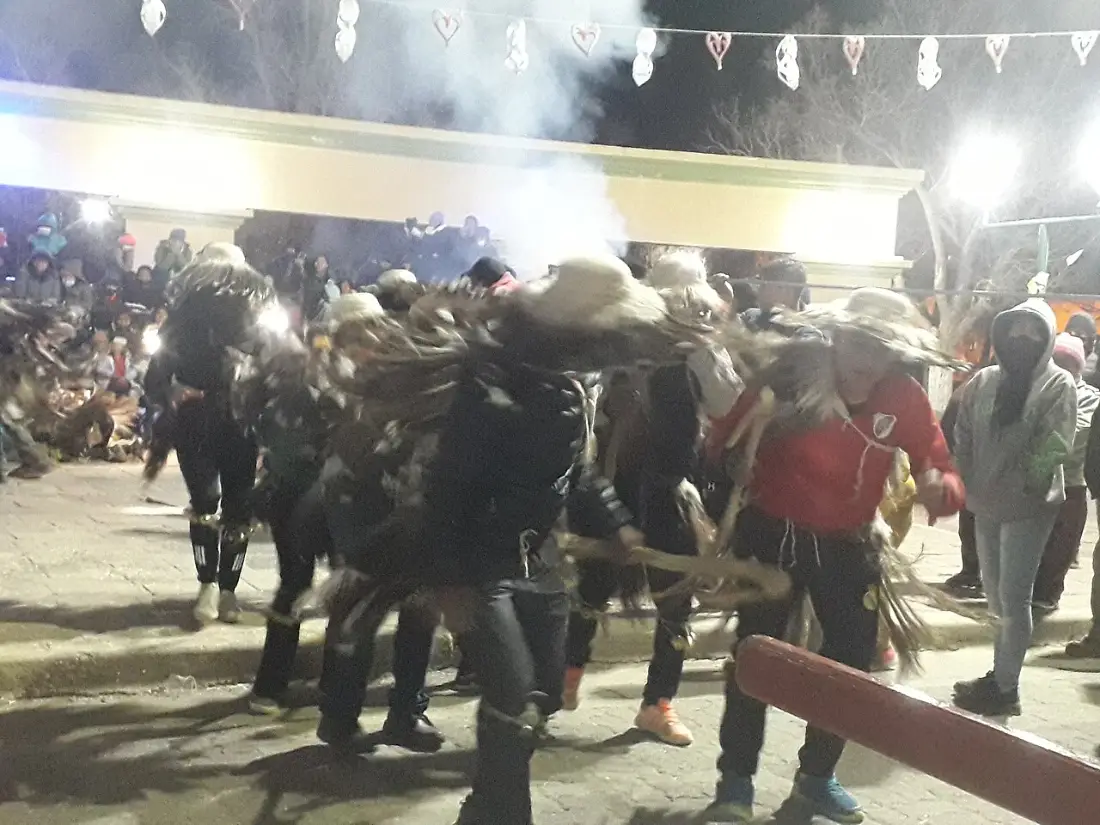
  • Samilantes, also called suris: male devotees fulfilling a vow, covered in the feathers of the suri, the lesser rhea of the Andes, with bells or tin rattles tied to their knees and ankles. They dance facing the Virgin, imitating the bird's movements as an act of worship. Sometimes they carry cuartos, halves of a lamb offered to the image.
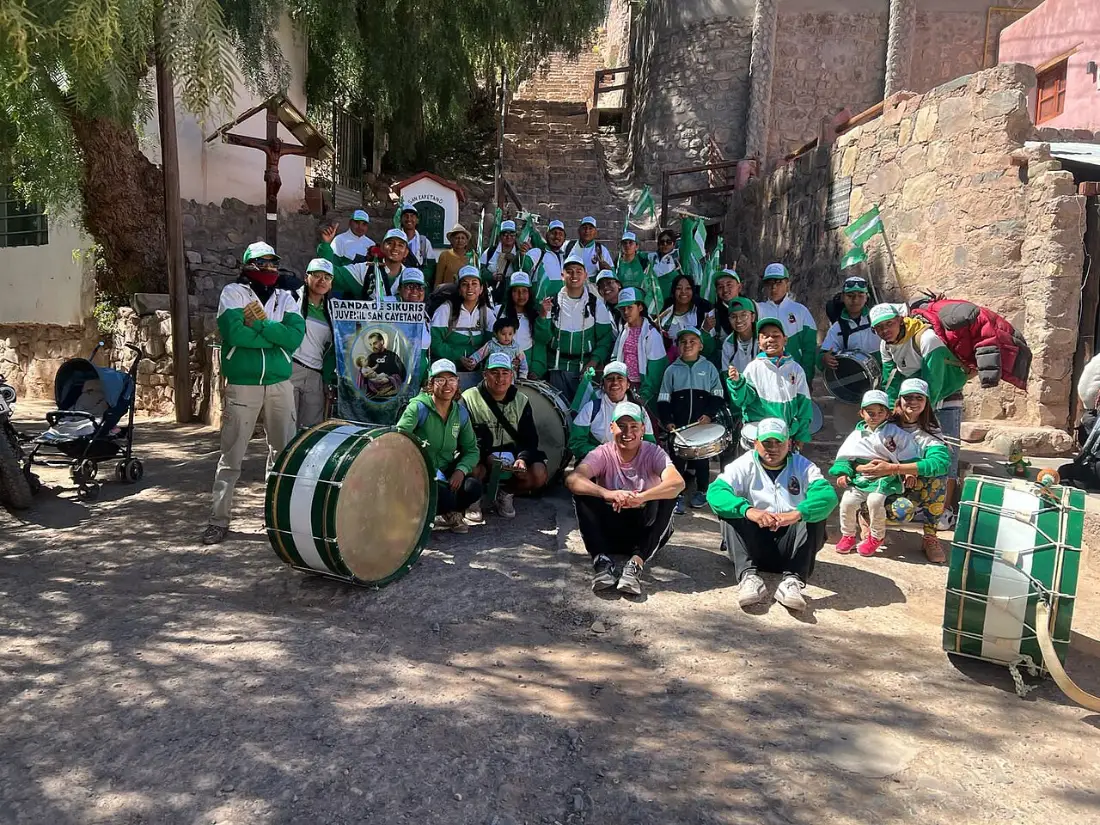
  • Sikuri bands: groups playing sikus, Andean cane panpipes, with bass drums and snares. They march ahead of the Virgin, each band keeping up its own tune.
  • Gauchos on horseback, who escort the procession and bring up the rear.
  • Petals, confetti and streamers thrown by residents as the image passes, and loud firecrackers at every stop.

The image pauses at street corners and neighbourhood boundaries to bless the crowd. At the end it enters the cathedral backwards, facing the townspeople, while everyone waves handkerchiefs in the air. It's one of the most moving moments of the day.

San Cayetano youth sikuri band on the Punta Corral pilgrimage
Sikuri bands escort the Virgin with panpipes and drums for hours on the climb.Photo: Ceciliatilcara / Wikimedia Commons · CC BY 4.0

The cathedral and its 1640 statue of the Virgin

The festival revolves around the Cathedral of Our Lady of Candelaria and Saint Anthony, on the main square of Humahuaca at Calle Buenos Aires 383. Saint Anthony of Padua is the town's patron, while the Candelaria is patron of the church and of the whole prelature.

According to Argentina's national register of historic monuments:

  • Around 1631 a new parish church, similar in size to today's, was built at the initiative of the priest Pedro de Abreu and the indigenous chief and governor Pedro Socompa, with labour from the local indigenous community.
  • The image of the Virgin of Candelaria of Copacabana dates from 1640. Several sources describe it as carved from cardón cactus wood and finished in plaster.
  • In 1680 the great gilded main altarpiece was commissioned; with some changes, it survives today.
  • In 1880 and 1881 the priest Carlos Pinilla redesigned the forecourt and the façade, with its two bell towers.
  • It was declared a National Historic Monument in 1941.

Inside, look for the series of prophets painted by Marcos Sapaca in 1764 and the Calvary altarpiece by Cosme Duarte, from 1790. The church became a cathedral when Pope Paul VI created the Prelature of Humahuaca in 1969, and in 1971 the Candelaria was declared its principal patron. It is steps from the Cabildo (the old town hall) and the stairway up to the Independence Monument.

Samilantes dancing at night during a patron festival
Photo: Valeria Patagua / Wikimedia Commons · CC BY-SA 4.0

Fair, concert and other Candelaria festivals in Jujuy

Once the procession is over, the party continues in the streets. A few blocks from the centre there are usually stalls and tents with music, food and drink, and in the evening a concert in honour of the patron saint, first held in 2025. It's a good time to try empanadas, humitas or a tamal from the stands.

The Candelaria is celebrated in other Jujuy villages too. For 2 February 2026, El Tribuno de Jujuy listed festivities in:

  • Tumbaya, in the Quebrada: Mass, procession, a civic, military and gaucho parade and a roping contest.
  • Maimará, also in the Quebrada.
  • Cochinoca and Cieneguillas, on the Puna.
  • Abra Mayo, a hamlet in the highland valleys.

But Humahuaca's is the biggest, because it honours the patron of the entire prelature.

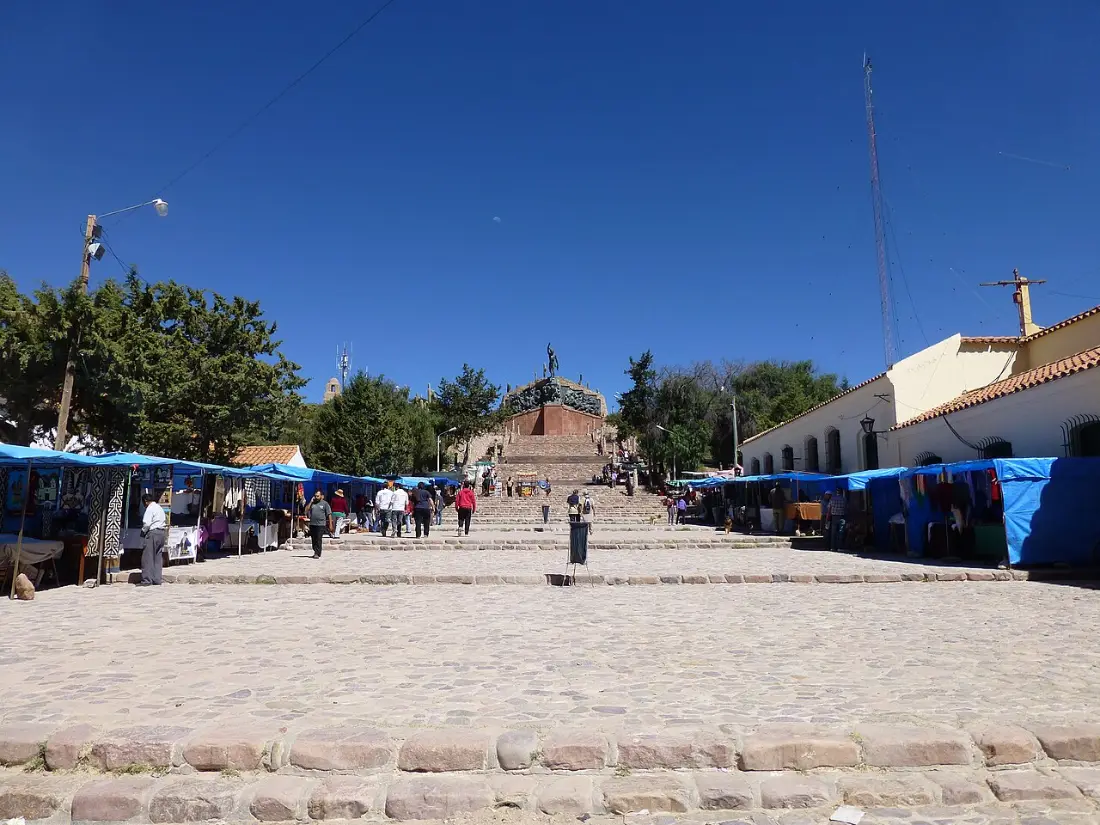
Steps of the Independence Monument and the craft market in Humahuaca
The monument stairway is long: at almost 3,000 m you will feel it.Photo: Galio / Wikimedia Commons · CC BY-SA 3.0

Combining the Candelaria with Carnival 2027

In 2027 the calendar works in your favour: the Candelaria falls on Tuesday 2 February and Carnival in the Quebrada begins on Saturday 6 with the desentierro, the unearthing of the carnival devil. A well-planned week could look like this:

  • Sunday 31 January: arrive in Humahuaca and acclimatise.
  • Monday 1 February: the eve, with the little bulls and the midnight hymn.
  • Tuesday 2: main Mass and procession.
  • Wednesday 3: trip to Hornocal, the Mountain of 14 Colours, best in the afternoon light.
  • Thursday 4: Jueves de Comadres, when women sing coplas in the streets.
  • Saturday 6: the desentierro, start of Carnival.
  • Monday 8 and Tuesday 9: Carnival public holidays.
  • Sunday 14: the burial of Carnival.

If you arrive earlier, Tilcara's month-long Enero Tilcareño festival is wrapping up about 42 km south. The full Carnival calendar, with tips, is in our Jujuy Carnival 2027 guide. Bear in mind that room rates rise and availability shrinks as Carnival approaches, so book months ahead.

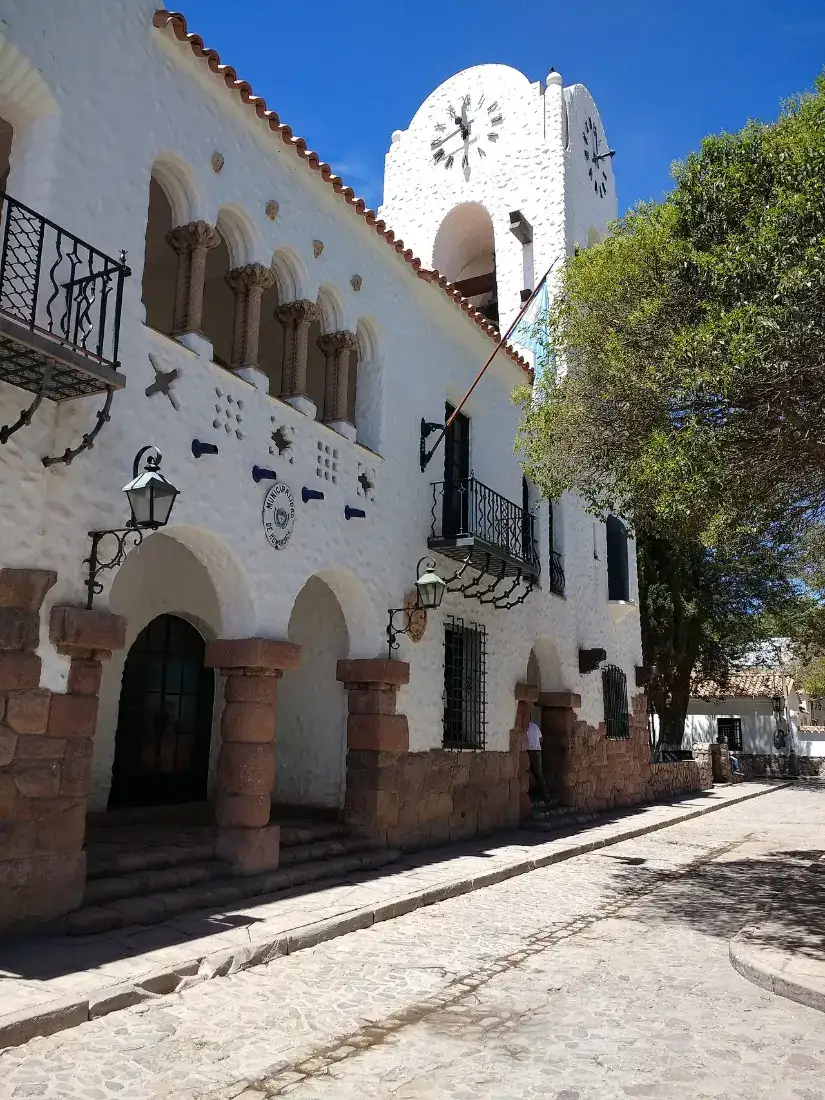
Humahuaca town hall (Cabildo) and its clock tower
At noon a figure of Saint Francis Solano appears from the Cabildo tower.Photo: Mx. Granger / Wikimedia Commons · CC0

Getting there and where to stay

Humahuaca is about 126 km from San Salvador de Jujuy on Ruta Nacional 9 and about 42 km from Tilcara.

  • By car: around 1 hour 45 minutes from the capital, on paved road.
  • By bus: frequent departures from the San Salvador de Jujuy bus terminal, taking 2 to 2.5 hours.
  • By air: Jujuy airport, in Perico, has flights from Buenos Aires; you can also fly into Salta and continue by road.

On 2 February the centre is packed and streets are closed for the procession, so it's easiest to stay in town and get around on foot. Humahuaca has guesthouses, hostels and cabins, and there are more characterful hotels nearby in Uquía and Huacalera. Compare areas and options in our guide on where to stay in Humahuaca. If you're combining the festival with Carnival, book all your nights in one go.

Tips for enjoying the festival respectfully

  • It's a religious festival: the Masses and the procession are public and free, but they are not a show. Dress comfortably and modestly, stay out of the procession itself and make way for those carrying the statues.
  • Photos: ask before taking close-ups of dancers, musicians or worshippers, and avoid flash inside the cathedral.
  • Where to stand: for the Mass, get to the monument esplanade early; for the procession, pick a corner on the route and wait there, because it moves very slowly.
  • Weather: February is Humahuaca's wettest month, with about 48 mm of rain on average, highs of 23 °C (73 °F) and lows of 9 °C (48 °F). Pack a rain jacket, a hat and sunscreen. More in our Humahuaca weather guide.
  • Altitude: at 2,939 m, it's best not to arrive straight from sea level on the same day. Read our Jujuy altitude guide.
  • Noise: firecrackers are part of the celebration, something to keep in mind if you're travelling with young children.

Frequently Asked Questions

When is the Virgin of Candelaria festival in Humahuaca?

Every year on 2 February; in 2027 it falls on a Tuesday. On the eve, 1 February, there is a candle Mass, the dance of the little bulls and a concert.

What time is the Candelaria procession in Humahuaca?

In 2026 it started at 3 pm and lasted several hours; in 2025 it began at 2:30 pm. The main Mass is in the morning, at 9:30 am, on the Independence Monument esplanade.

What are samilantes?

They are male devotees who dance in costumes made of rhea feathers, imitating the bird's movements in front of the image of the Virgin. They appear in processions at several festivals in the Quebrada and the Puna.

Why is the Virgin of Candelaria Humahuaca's patron?

Her image, dating from 1640, has been venerated in the town's church since colonial times. When the Prelature of Humahuaca was created in 1969 the church became a cathedral, and in 1971 the Candelaria was named the prelature's principal patron.

Do you need a ticket for the Candelaria festival?

No. The Masses and the procession are public and free. You may only need to pay for separately organised evening concerts.

Can I combine the Candelaria festival with Carnival in Humahuaca?

Yes. In 2027 the Candelaria is on Tuesday 2 February and Carnival starts on Saturday 6 February, so a one-week stay lets you experience both.

Where is Humahuaca cathedral?

On the main square at Calle Buenos Aires 383, a few steps from the Cabildo and the stairway to the Monument to the Heroes of Independence.

Ready to travel?

Compare hotels, car rentals and tours in Jujuy.