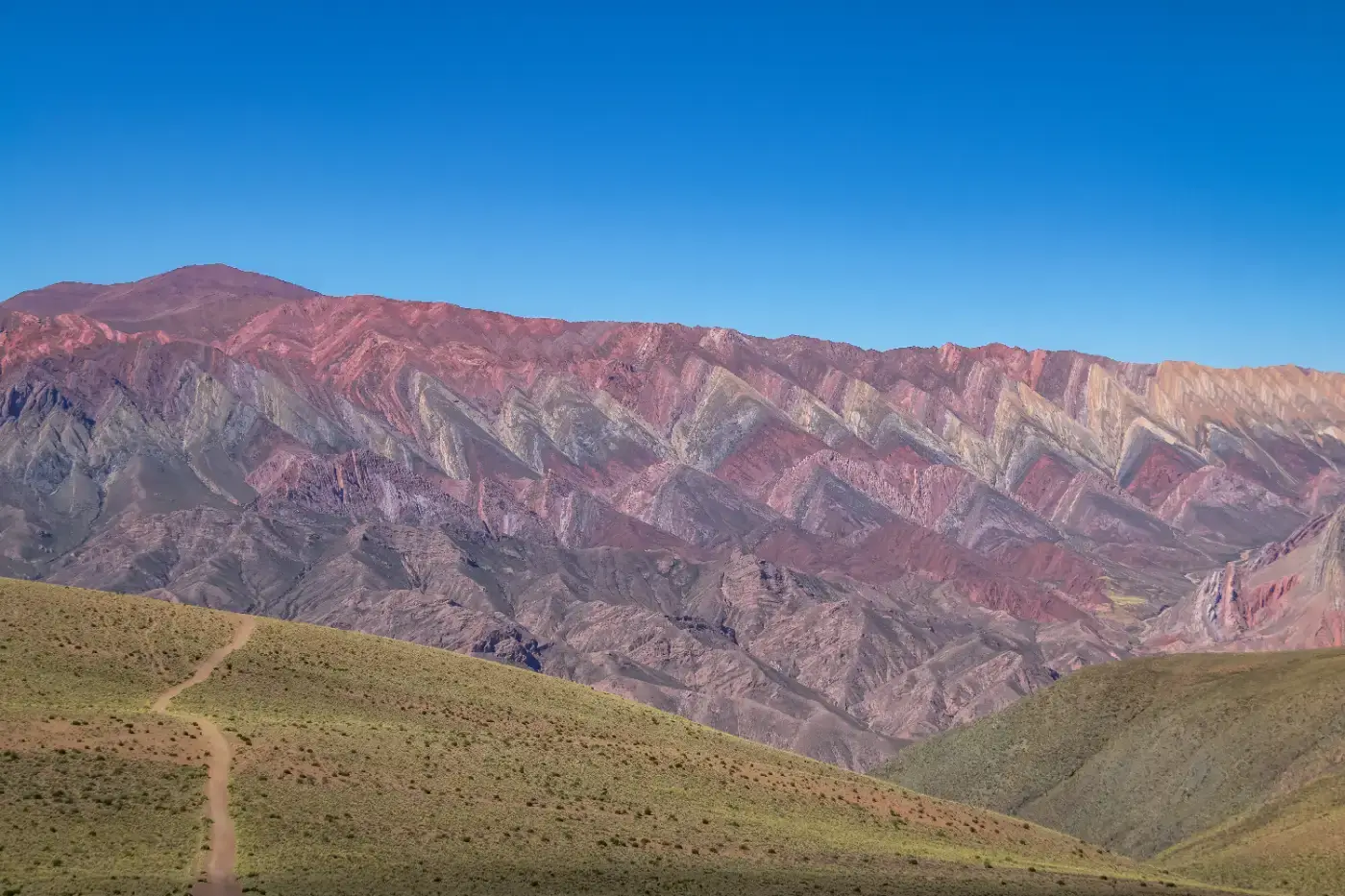
Hornocal is a mountain range in the northern Quebrada de Humahuaca, inside the area listed as a UNESCO World Heritage Site in 2003. What makes it special is the shape: dozens of triangular peaks lined up like saw teeth, striped in ochre, yellow, green, white, purple and deep red.
As geologist José Salfity explained to the Argentine newspaper La Nación, those bands belong to the Yacoraite Formation, a limestone laid down at the end of the Cretaceous period, around 75 million years ago, when the last dinosaurs were still around. That pale limestone is sandwiched between heavily oxidized red layers. Millions of years later, the rise of the Andes folded and fractured the whole sequence, and erosion carved the zigzag you see today. If you have already seen the Hill of Seven Colors in Purmamarca, Hornocal will surprise you with its sheer scale. It is much larger, much higher, and you look at it head-on from across a valley, like a giant painted backdrop.