Quebrada de Humahuaca Jujuy Argentina, multicolored mountains of the UNESCO valley
Destinations

Quebrada de Humahuaca: Complete 2026 Guide — What to See, How to Get There & Where to Stay

Updated guide to the Quebrada de Humahuaca. UNESCO Heritage, towns, routes, accommodation and practical tips for your Jujuy trip.

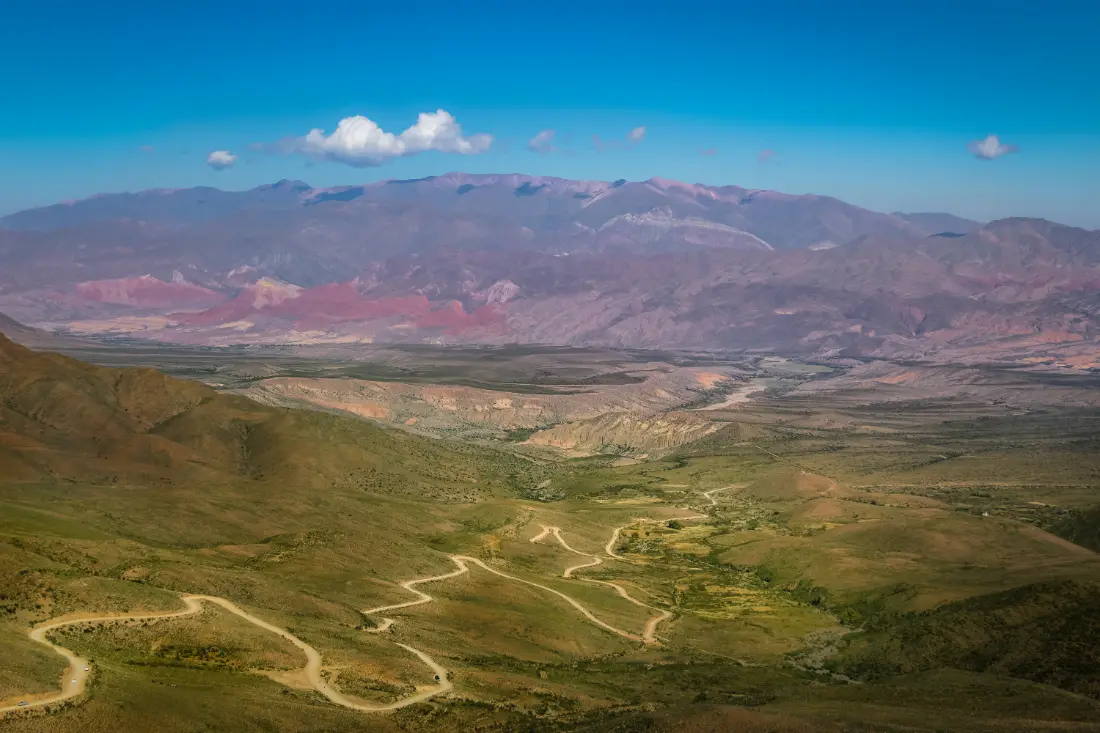
The Quebrada de Humahuaca is a valley about 155 km (96 miles) long in northern Jujuy, Argentina, followed end to end by Route 9 (RN 9) and listed as a UNESCO World Heritage Site in 2003. To see it properly you need three to five days: base yourself in Purmamarca or Tilcara, 65 and 84 km from San Salvador de Jujuy, and work your way through the villages from south to north, from Volcán to Humahuaca, adding two high-altitude side trips, Salinas Grandes and the Hornocal range. This guide covers every town in order, why UNESCO listed it, how many days to spend, where to stay, getting around, weather and altitude, and the best routes.

To plan your trip, see also things to do in Jujuy, our 3–4 day itinerary and the altitude of each town.

In this guide

The towns from south to north: Volcán, Tumbaya and Purmamarca

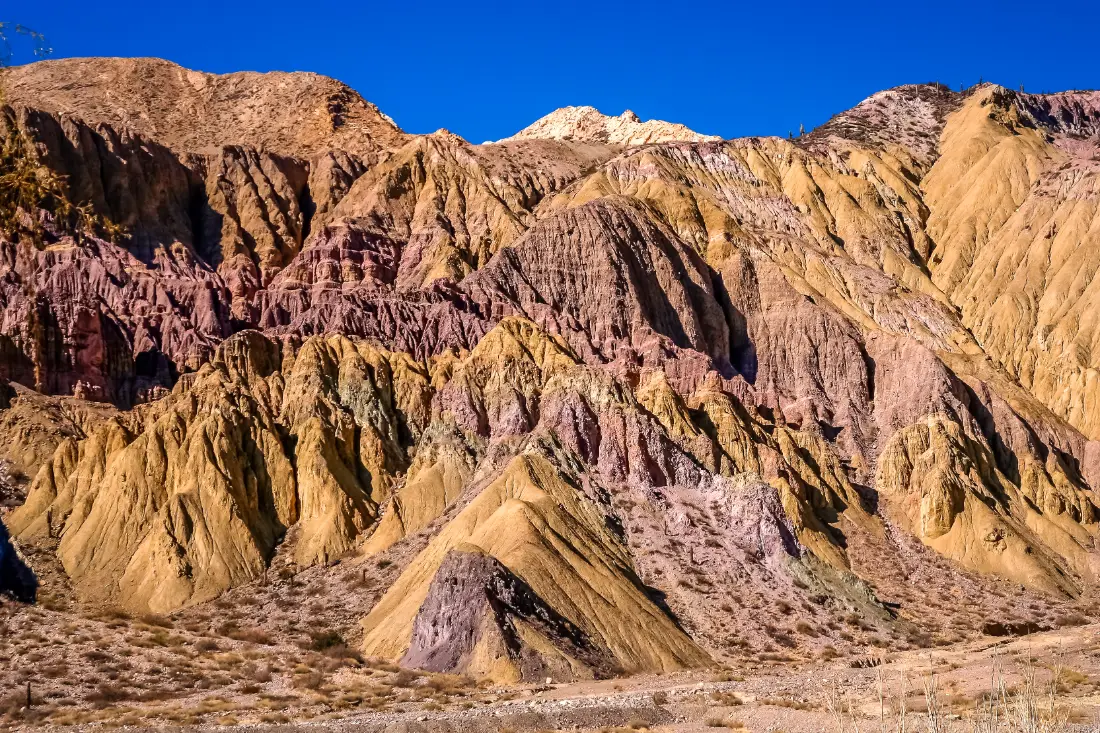
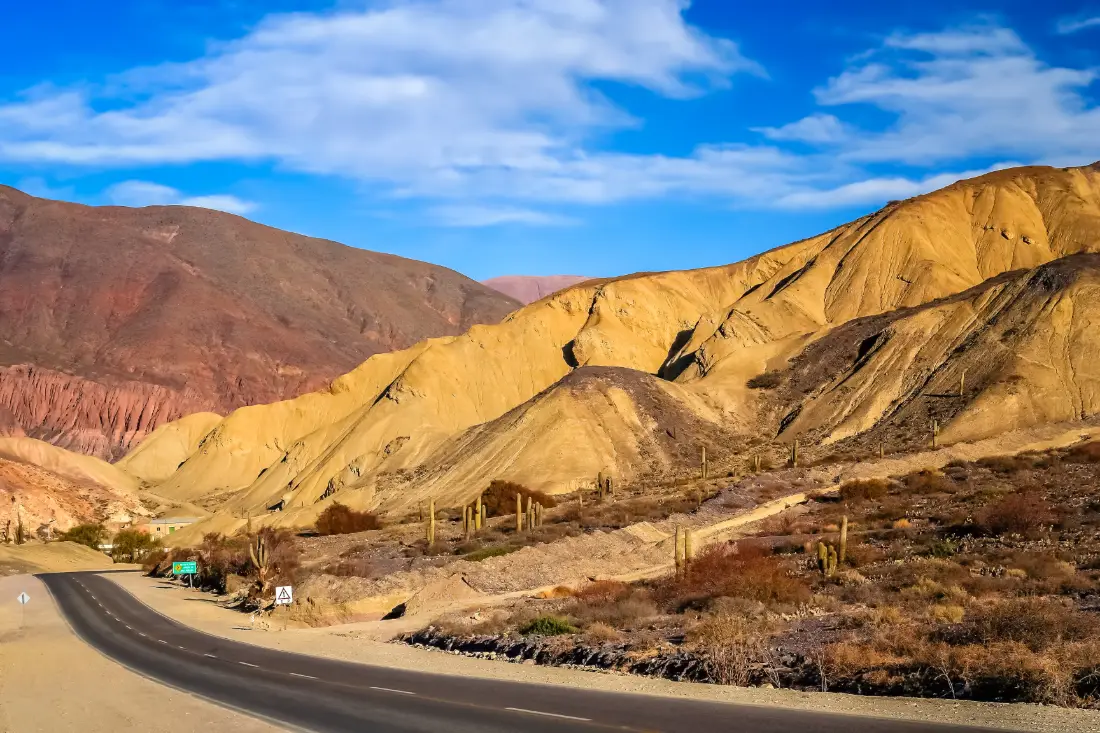
Driving north from San Salvador de Jujuy on RN 9, the green valleys suddenly give way to ochre mountains. That change marks your entry into the Quebrada de Humahuaca.

Volcán, about 40 km from the city, is the southern gateway. Most people drive straight through, but it is the starting station of the Tren Solar de la Quebrada, a solar-powered train that runs 42 km to Tilcara alongside the road.

Tumbaya, a little further up, is a quiet hamlet with a late 18th-century church listed as a National Historic Monument. It's a good leg-stretch stop before Purmamarca.

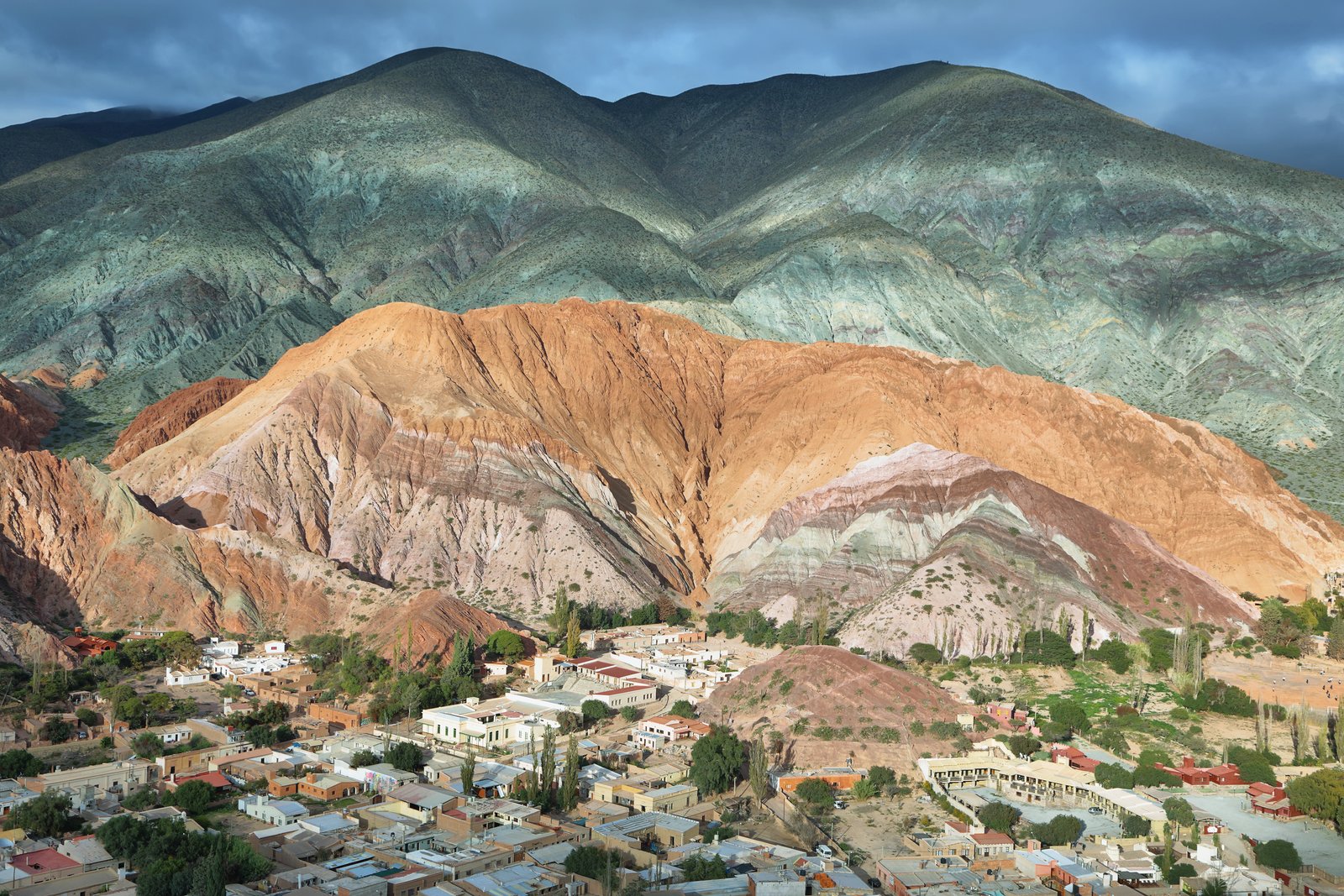
Purmamarca sits 3 km west of RN 9 on Route 52. It is the region's most photographed village thanks to the Hill of Seven Colors, best seen in morning light. It also has a 1648 adobe church, a craft market on the square and the Paseo de los Colorados, a dirt trail behind the village. More in our guide to Purmamarca and the Hill of Seven Colors.
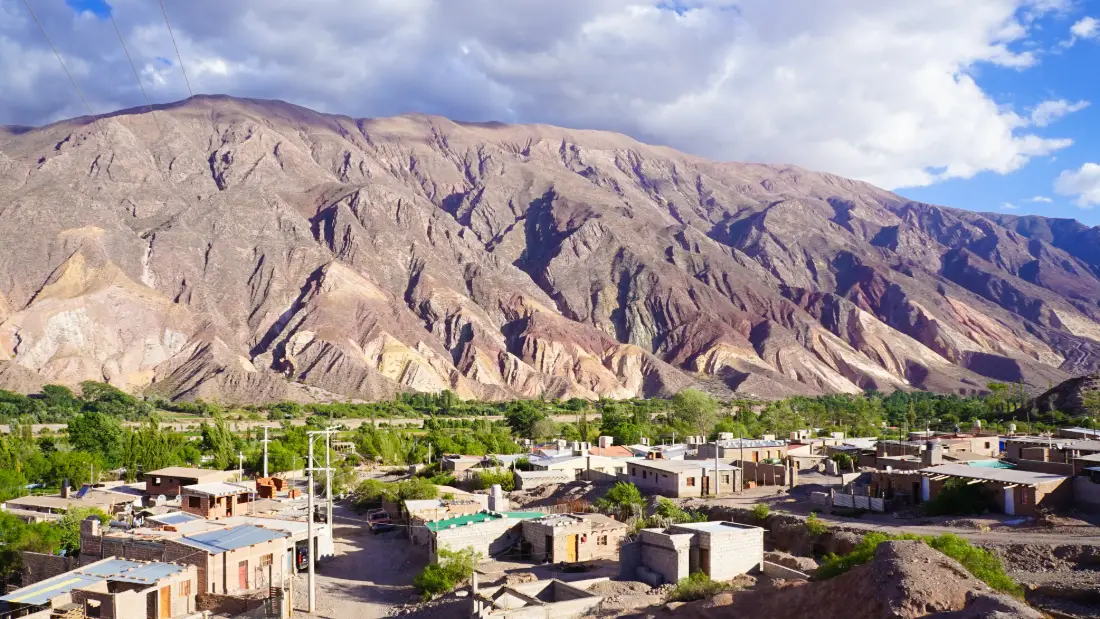
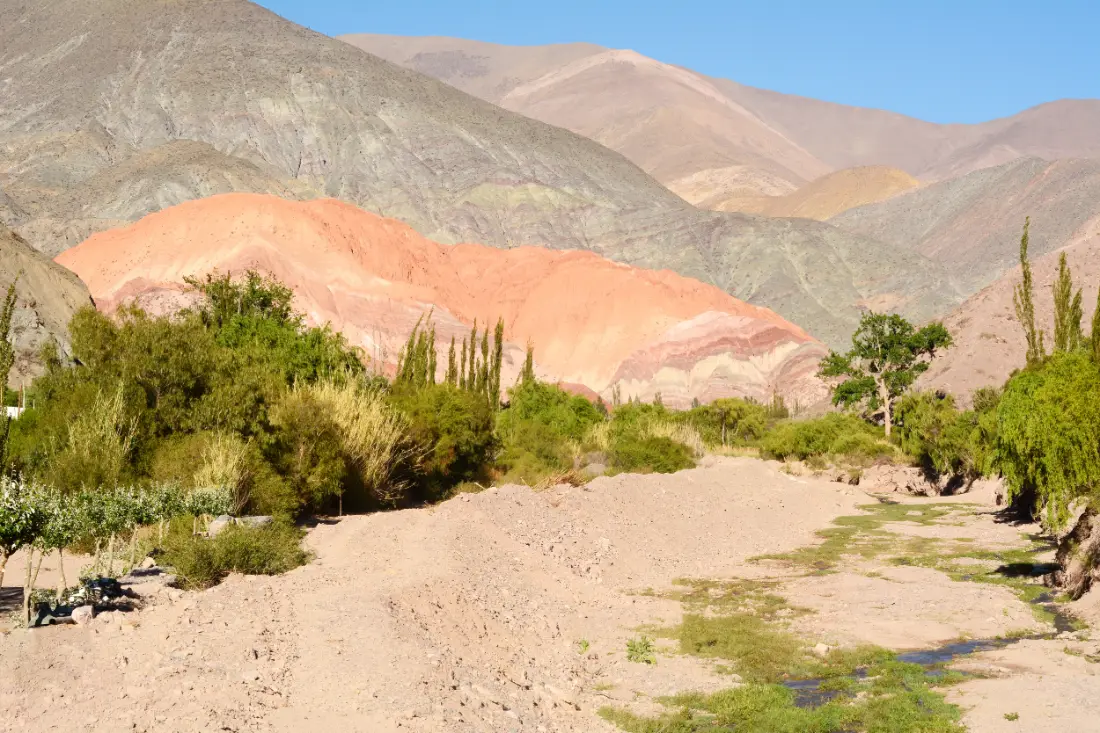
Quebrada de Humahuaca village beneath coloured mountains

The heart of the valley: Posta de Hornillos, Maimará and Tilcara

Posta de Hornillos, on RN 9 just 2 km south of Maimará, is an old relay station on the colonial Royal Road to Peru, founded in 1772. During the wars of independence it served as a fort, and General Manuel Belgrano stayed here in 1813. Today it's a free museum, open Tuesday to Sunday from 9:00 to 18:00, with archaeological finds, weapons and period carriages.

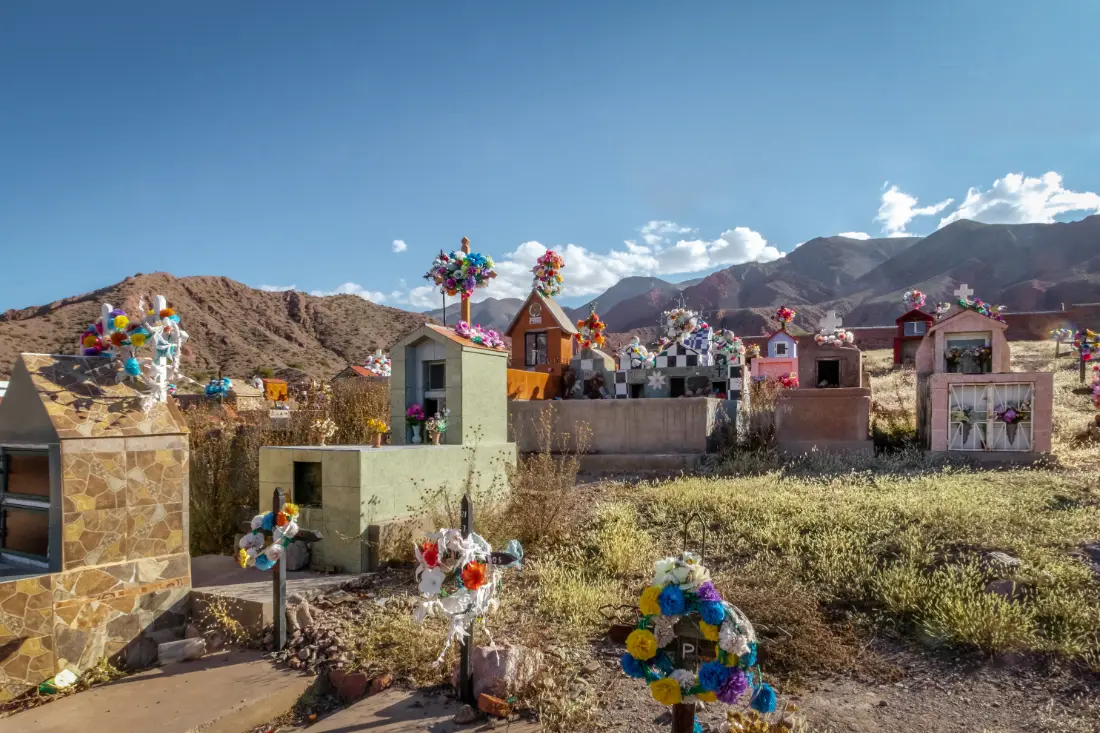
Maimará, at 2,383 meters, is home to the Paleta del Pintor (Painter's Palette), a striped hillside you can see from a roadside viewpoint, and a colorful hilltop cemetery. In 2025 UN Tourism named it one of its Best Tourism Villages. It's smaller and quieter than its neighbors, with high-altitude wineries nearby. More in Maimará and the Painter's Palette.

Tilcara, 8 km on and 84 km from the city, is the liveliest town in the Quebrada. The Pucará, a partly rebuilt pre-Hispanic hilltop settlement, opens Tuesday to Sunday; in October 2026 general admission was ARS 12,000 and included the high-altitude botanical garden. Add the University of Buenos Aires archaeology museum, folk music venues, good regional food and the hike to the Garganta del Diablo gorge. See things to do in Tilcara and our Pucará de Tilcara guide.

Valley with coloured hills and greenery in the Quebrada de Humahuaca

Private transfer · JUJ Airport

From Jujuy Airport to your hotel, door to door

  • We meet you in the arrivals hall with a sign bearing your name.
  • Private car with driver: Toyota Etios 1.5 XLS or Fiat Mobi.
  • San Salvador, Purmamarca, Maimará, Tilcara, Huacalera and Humahuaca.

Heading north: Huacalera, Uquía, Humahuaca and Tres Cruces

Huacalera, about 16 km north of Tilcara, sits on the Tropic of Capricorn: a roadside monolith marks the line, and every June 21 the village celebrates Inti Raymi, the Andean sun festival. It's a very peaceful base with only a few places to stay.

Uquía, about 11 km before Humahuaca, has a late 17th-century church holding one of the best-known series of arquebusier angels, Cusco School paintings that show angels dressed as soldiers. It's worth a half-hour stop.

Humahuaca, at 2,939 meters and 126 km from the city, gives the valley its name. Expect cobbled streets, the Candelaria church, the town hall clock where a figure of Saint Francis Solano appears at noon, and the Independence Monument towering over town at the top of a long stairway. From here you can drive to the Hornocal, the 14-colored mountain, the Coctaca farming terraces and the road to Iruya. More in things to do in Humahuaca.

Tres Cruces, about 57 km further north at 3,693 meters, is the end of the Quebrada and the gateway to the high Puna plateau. Few visitors go this far unless they're heading to La Quiaca on the Bolivian border.

Multicoloured mountains of the Quebrada de Humahuaca

World Heritage: what UNESCO recognized in 2003

UNESCO added the Quebrada de Humahuaca to its World Heritage List in 2003, at the 27th session of its committee, as a cultural landscape. The listing isn't only about colorful mountains; it recognizes how people used and shaped the valley over some 10,000 years, when it was a trade route between the Andean highlands and the plains to the south.

On the ground, that means layers of history side by side:

  • Pre-Hispanic hill forts (pucarás) such as Tilcara's, and the Coctaca farming terraces, still in use.
  • Traces of the Inca Empire and the colonial Royal Road, like the Posta de Hornillos.
  • 17th and 18th-century adobe churches in Purmamarca, Tumbaya, Uquía and Humahuaca.
  • Living villages with festivals such as Carnival, the Pachamama offerings in August and Inti Raymi.

The protected area includes the communities who live in it, so historic centers have building rules, and at archaeological sites you're asked to stay on the trails and never take stones or pottery fragments.

Colourful cemetery in Uquía with crosses and flowers

How many days you need and where to stay

One day is enough for a whirlwind tour of Purmamarca, Tilcara and Humahuaca from Salta or San Salvador de Jujuy, but you'll mostly see it through a window. With more time, the experience changes completely:

  • Two days: Purmamarca and Salinas Grandes on day one; Tilcara, Uquía and Humahuaca on day two.
  • Three or four days: add the Hornocal, a relaxed visit to the Pucará and the Garganta del Diablo hike. This is what we recommend for a first trip.
  • Five days or more: add Iruya or combine with Salta, as in our Salta and Jujuy 5-day itinerary.

Distances are short, so you don't need to move every night:

A combination that works very well is one night in Purmamarca and two or three in Tilcara.

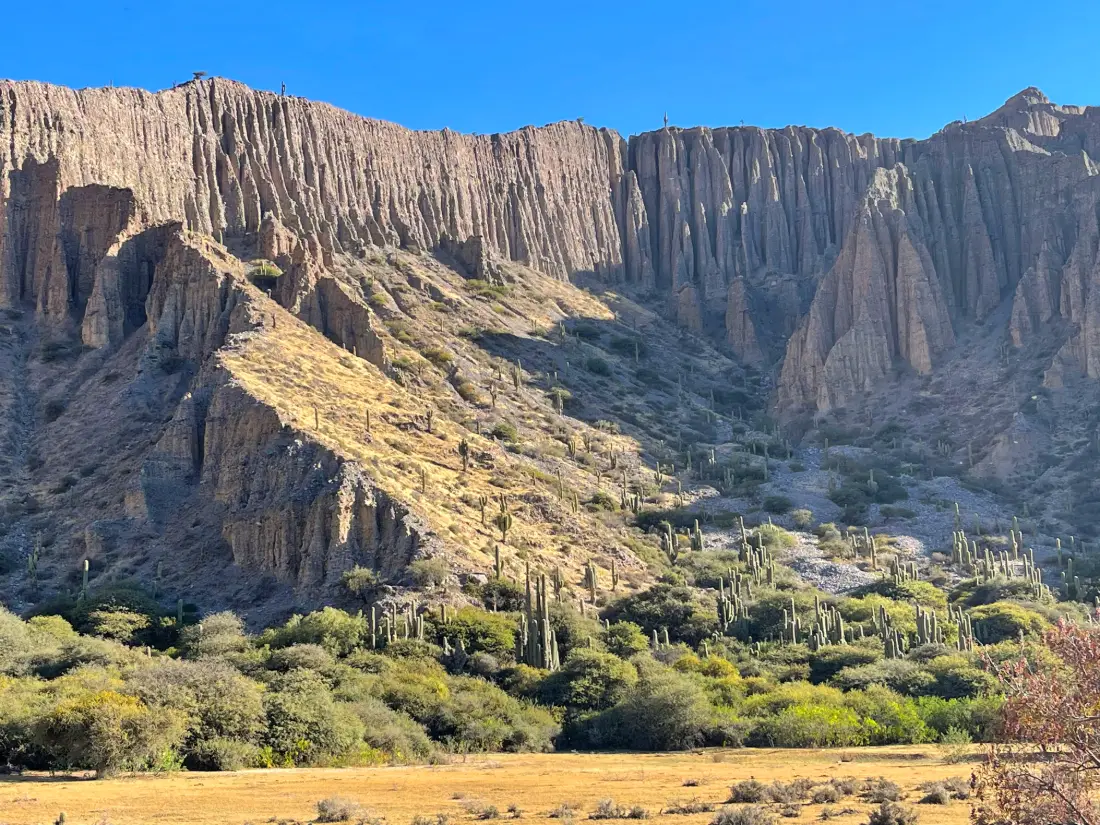
Eroded mountains covered with cardón cacti in Jujuy

Getting there and getting around

Jujuy airport (JUJ) is in Perico, 33 km south of the city, with direct flights from Buenos Aires. Many international travelers fly into Salta instead and drive about 120 km to San Salvador de Jujuy. All the flight, bus and road options are in how to get to Jujuy.

Once in the Quebrada, you have three ways to get around:

  • By car: RN 9 is paved through the whole valley, and San Salvador de Jujuy to Humahuaca takes about two hours without stops. It's the easiest way to reach viewpoints in good light. Compare rates on our car rental page.
  • By bus: services leave San Salvador de Jujuy's bus terminal throughout the day for Purmamarca, Tilcara and Humahuaca, and hops between towns are short. Some buses drop you at the Purmamarca junction, 3 km from the village.
  • On a tour: most useful for Salinas Grandes and the Hornocal, which have no practical public transport. Browse departures on our Jujuy tours page.

Fill up in San Salvador de Jujuy, Tilcara or Humahuaca: there is no gas station in Purmamarca.

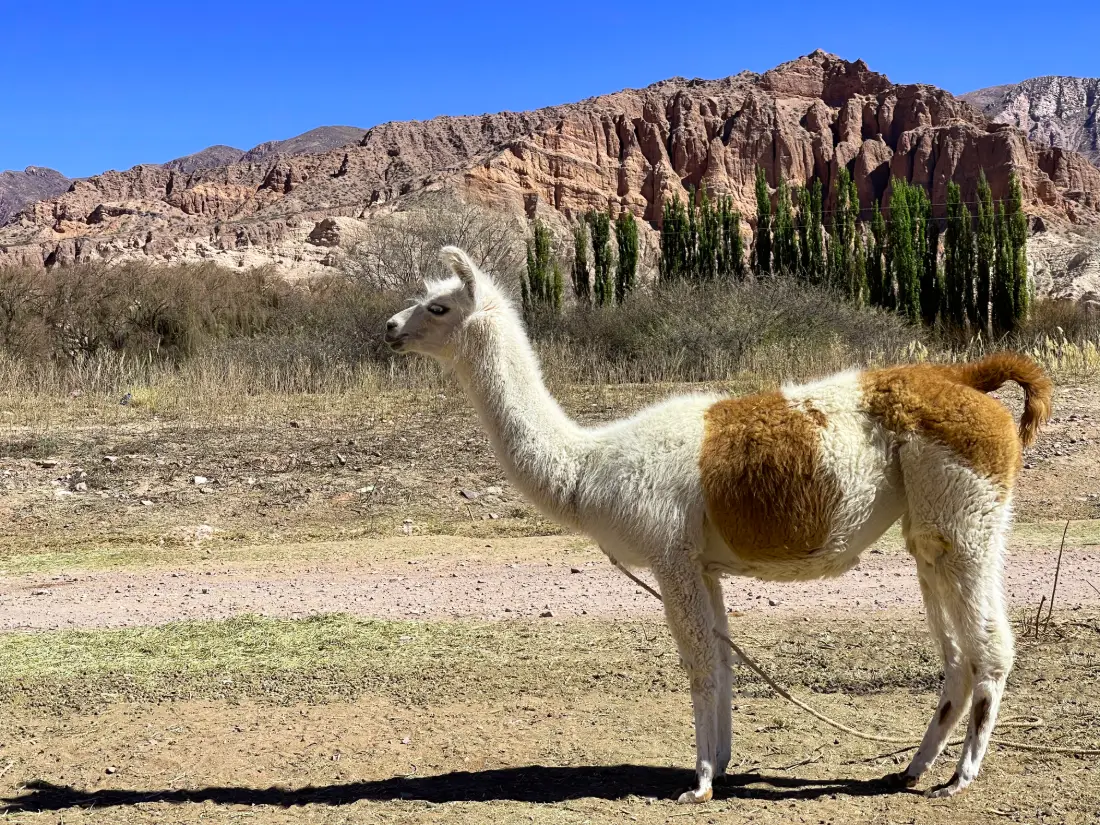
Llama in front of coloured hills in the Quebrada

Weather and altitude: when to go and how to acclimatize

The valley climbs steadily northward, so altitude varies a lot from town to town:

  • San Salvador de Jujuy: 1,259 m (4,130 ft)
  • Purmamarca: 2,324 m (7,625 ft)
  • Maimará: 2,383 m (7,818 ft)
  • Tilcara: 2,465 m (8,087 ft)
  • Humahuaca: 2,939 m (9,642 ft)
  • Salinas Grandes: 3,450 m (11,319 ft), with the Cuesta de Lipán pass at 4,170 m (13,681 ft)
  • Hornocal viewpoint: 4,350 m (14,272 ft)

The rule for avoiding altitude sickness is simple: sleep in the lower towns first and visit the highest spots on day trips once you've spent at least one night in the Quebrada. Drink plenty of water and eat light for the first couple of days. More advice in our guide to adjusting to altitude.

The climate is dry and very sunny. From April to November it barely rains and gravel roads are firm; December to March brings summer storms, greener hills and the occasional flash flood that can cut roads. Winter means mild days and freezing nights. Month-by-month details are in the best time to visit Jujuy.

Road between coloured hills in the Quebrada de Humahuaca

Routes and side trips from the Quebrada

Beyond the towns along RN 9, these are the trips most worth your time:

  • Salinas Grandes via the Cuesta de Lipán: 66 km from Purmamarca on paved Route 52 to a salt flat at 3,450 m. See our Purmamarca to Salinas Grandes drive guide.
  • Hornocal: about 25 km of gravel road from Humahuaca to the viewpoint over the 14-colored mountain. Afternoon light is best.
  • Iruya: a village clinging to the mountainside, just over the border in Salta province, reached from Humahuaca on a gravel road. Plan to stay the night. See our Iruya travel guide.
  • Garganta del Diablo: a hike from Tilcara to a waterfall in a narrow gorge. See the Garganta del Diablo hike.
  • Tren Solar de la Quebrada: a train ride between Volcán and Tilcara, a nice break from driving.
  • Coctaca: pre-Hispanic farming terraces a few kilometers from Humahuaca.

Traveling in summer? Check the dates of the Quebrada Carnival first: it's the biggest festival of the year and rooms sell out weeks ahead.

Panorama of the Humahuaca valley and mountain tracks

A quiet base in the Quebrada

Cabañas 4 Elementos, in Huacalera

If you would rather sleep away from the bustle, Huacalera sits in the middle of the Quebrada, between Tilcara and Humahuaca.

Four new cabins for 4 or 5 people, with a kitchen, heating, a porch facing the mountains and breakfast included, 300 metres from the Tropic of Capricorn. Run by the owners, Lili and Luis.

Frequently Asked Questions

Where is the Quebrada de Humahuaca?

In Jujuy province, in northwest Argentina. It's a valley about 155 km long that follows the Río Grande and Route 9 from just outside San Salvador de Jujuy to Tres Cruces.

Which towns are in the Quebrada de Humahuaca?

From south to north, the main ones are Volcán, Tumbaya, Purmamarca, Maimará, Tilcara, Huacalera, Uquía, Humahuaca and Tres Cruces. Purmamarca, Tilcara and Humahuaca get the most visitors.

How many days do you need for the Quebrada de Humahuaca?

Three or four days is ideal, enough to add Salinas Grandes and the Hornocal without rushing. A single day only allows a quick tour of the main towns.

Why is the Quebrada de Humahuaca a UNESCO World Heritage Site?

UNESCO listed it in 2003 as a cultural landscape, recognizing some 10,000 years of human use of the valley as a route between the Andean highlands and the plains.

Is it better to stay in Purmamarca, Tilcara or Humahuaca?

Tilcara is the most practical base thanks to its central location and services. Purmamarca suits an early start to Salinas Grandes, and Humahuaca is best for the Hornocal and Iruya.

Can you visit the Quebrada de Humahuaca without a car?

Yes. Frequent buses link San Salvador de Jujuy with Purmamarca, Tilcara and Humahuaca, and tours cover Salinas Grandes and the Hornocal, which lack practical public transport.

When is the best time to visit the Quebrada de Humahuaca?

April to November, the dry season, with clear skies and firm roads. July and Easter week are the busiest periods.

Ready to travel?

Compare hotels, car rentals and tours in Jujuy.