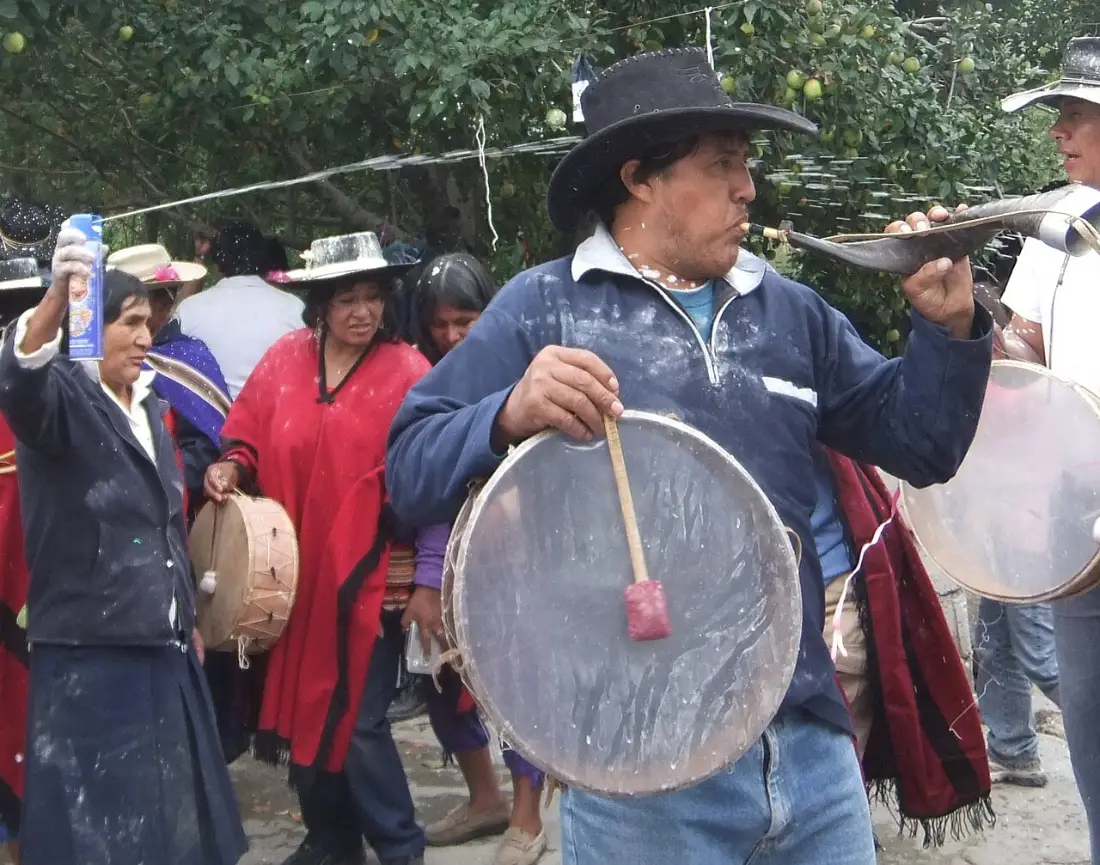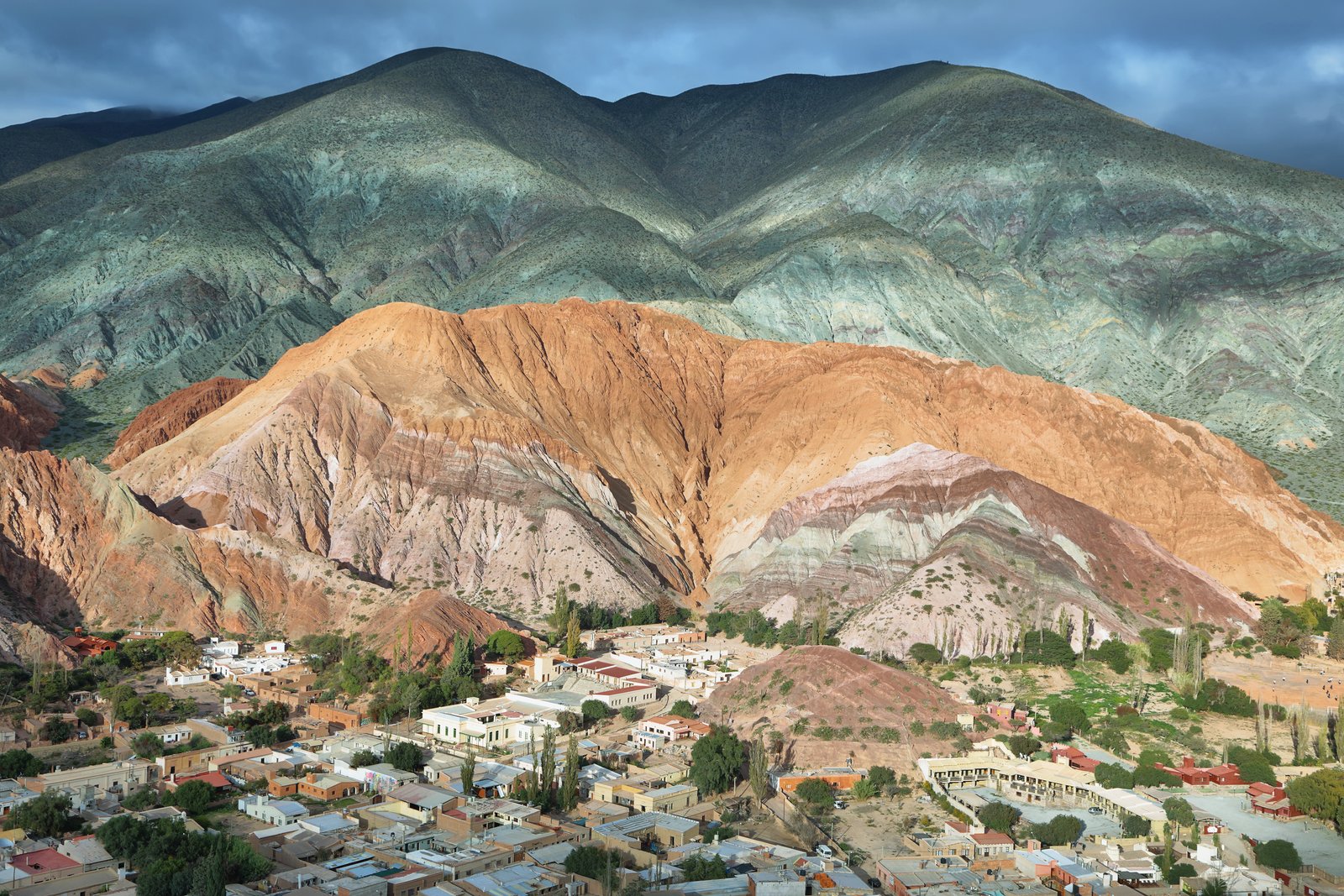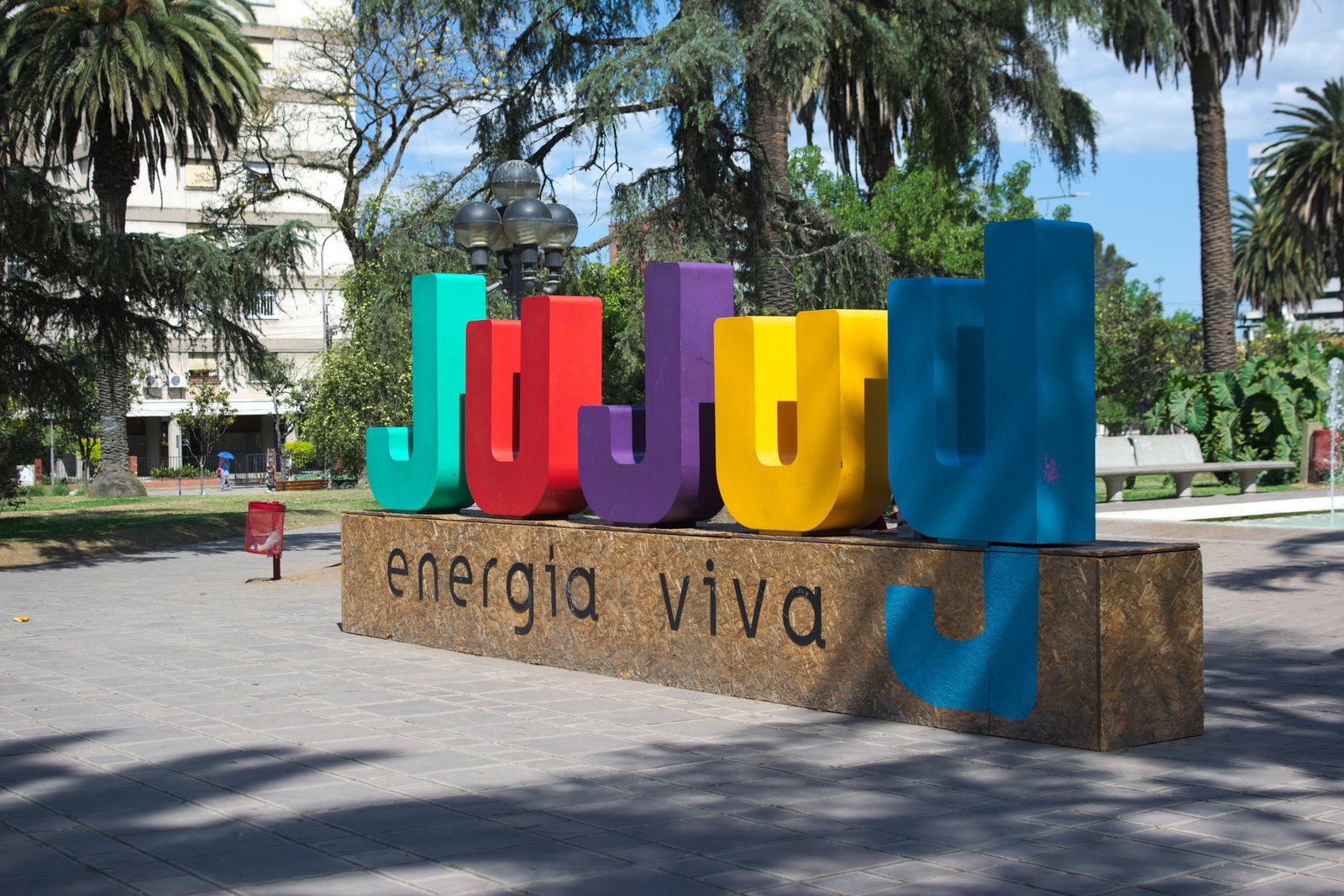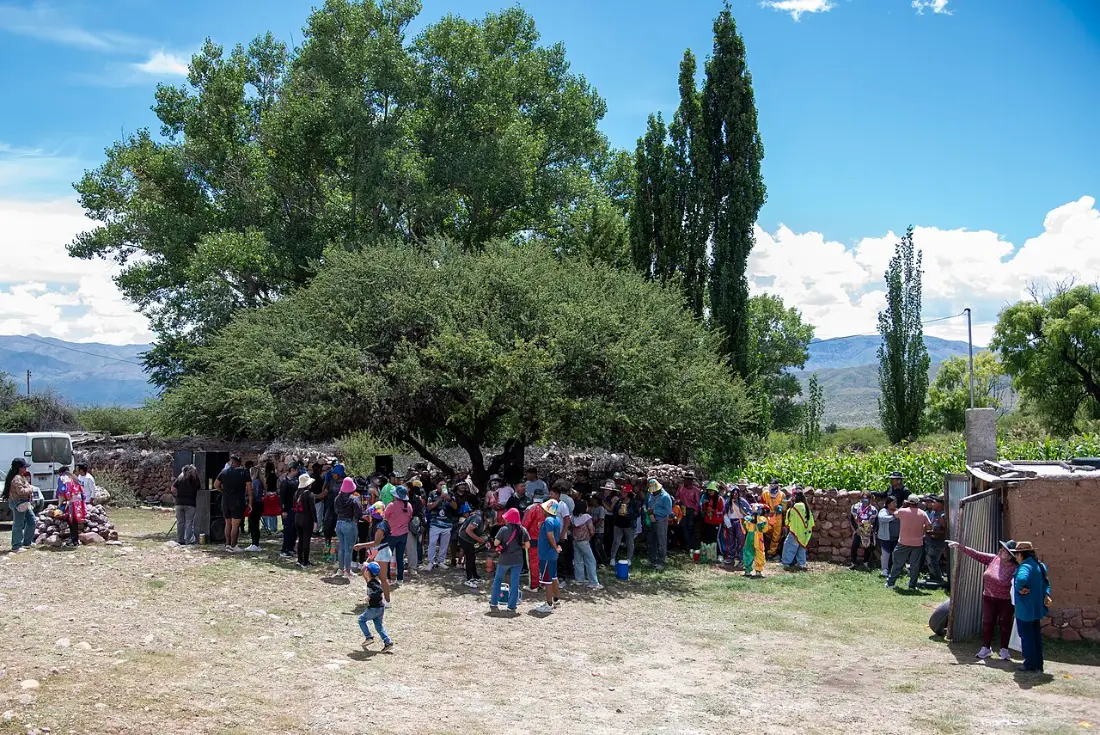
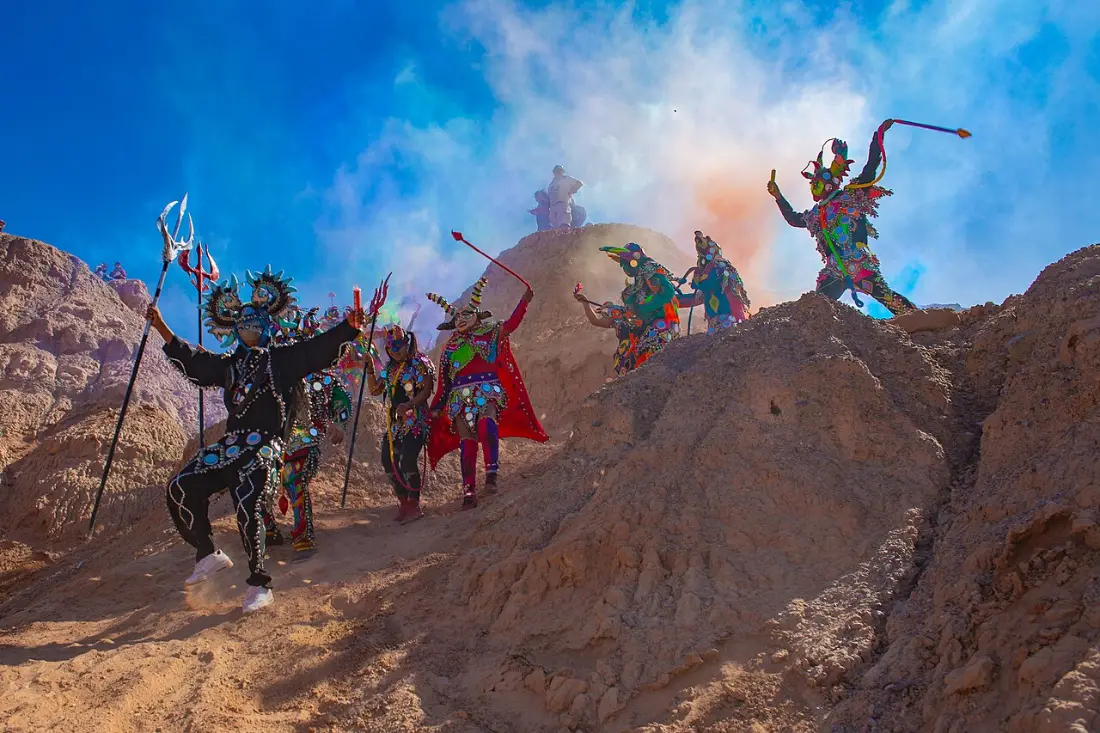
Los Alegres de Valiazo troupe at the Tuesday chaya unearthing, Humahuaca
© GuilleTito3 / Wikimedia Commons · CC BY 4.0
Festivals & Events

Jujuy Carnivals 2027 Town by Town: Quebrada, Puna and Yungas

Jujuy carnivals 2027 town by town: devils' descents, Puna copla singing, San Pedro's parades and the Guaraní Arete Guasu. Dates, tips and where to go.

When
Thursday 4 (Jueves de Comadres) to Sunday 14 February 2027; desentierro on Saturday 6 and burial on Sunday 14
Where
Across the province: Quebrada de Humahuaca, Puna, Valleys and Yungas of Jujuy
See the Jujuy festival calendar

Jujuy doesn't have one carnival: every town has its own, with its own mojón (the stone cairn where the carnival devil is buried), its own comparsas (troupes) and its own style. In 2027 the main Carnival runs from Saturday 6 February, when the devil is dug up (the desentierro), to Sunday 14 February, Domingo de Tentación, when it is buried again. Argentina's Carnival public holidays are Monday 8 and Tuesday 9 February. The build-up starts earlier: Jueves de Compadres falls on 28 January and Jueves de Comadres on 4 February.

Broadly, the Quebrada de Humahuaca is devil country, with costumed dancers running down the hills; the high Puna celebrates with sung verses called coplas, hand drums and white flags; the Valleys add street parades and the ticketed Carnaval de Los Tekis; and the subtropical Yungas have the parades of San Pedro and the Guaraní Arete Guasu. The rituals themselves are explained in our guide to Jujuy Carnival 2027 in the Quebrada. This guide goes town by town: what makes each one different, when the key moments happen, and which suits you.

In this guide

The 2027 calendar every town shares

Each troupe publishes its own schedule only a few days ahead, but the backbone is shared. Following the pattern of the official 2026 calendar from Jujuy's Ministry of Culture and Tourism, the 2027 dates are:

  • Thursday 14 and 21 January: Jueves de Padrinos and Jueves de Ahijados (godparents' and godchildren's Thursdays).
  • Thursday 28 January: Jueves de Compadres, the men's gathering.
  • Thursday 4 February: Jueves de Comadres, the women's gathering.
  • Saturday 6 February: desentierro in most towns.
  • Sunday 7: Carnival Sunday; some troupes dig up their devil today.
  • Monday 8 and Tuesday 9: public holidays; Tuesday is Martes de Chaya, a day of thanks to Mother Earth.
  • Sunday 14: Domingo de Tentación and the burial.

Some troupes carry on with the Carnaval Chico, Carnaval de Flores and Carnaval de Remache on the following Saturdays (21 and 28 February and 7 March in 2026). Times are confirmed at the last minute, so follow our Jujuy festivals calendar and each town's social media.
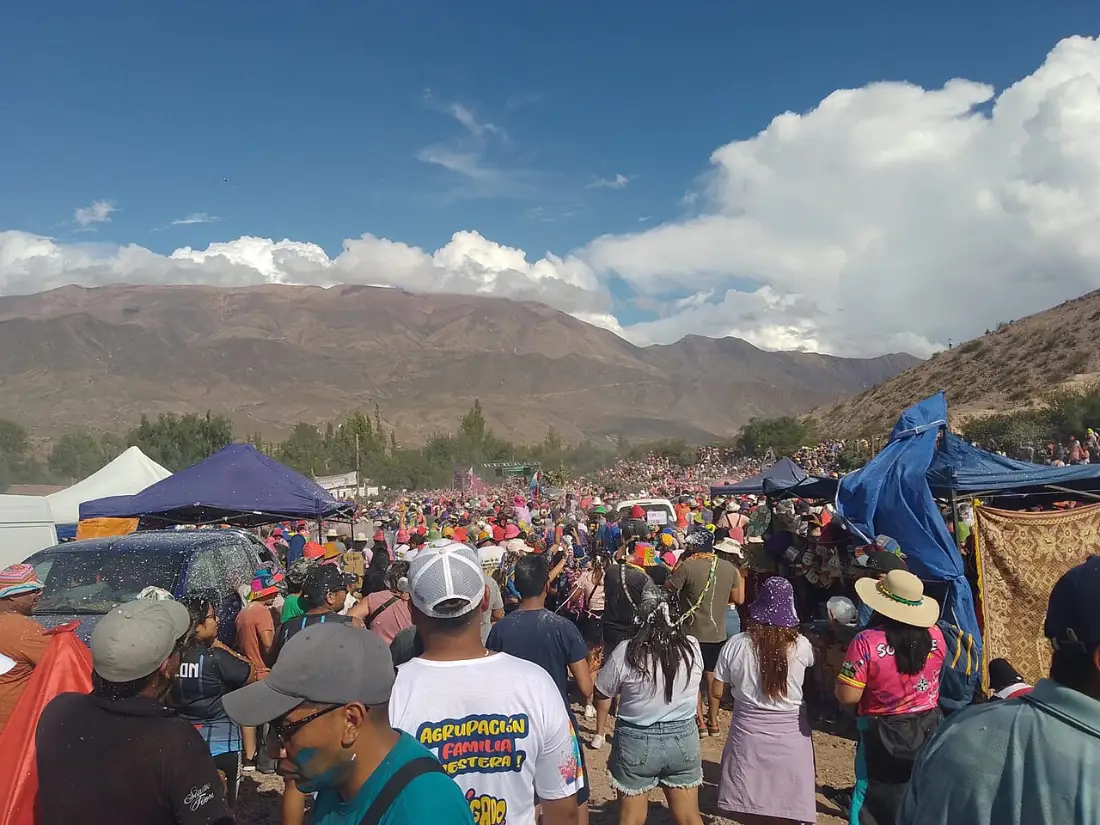
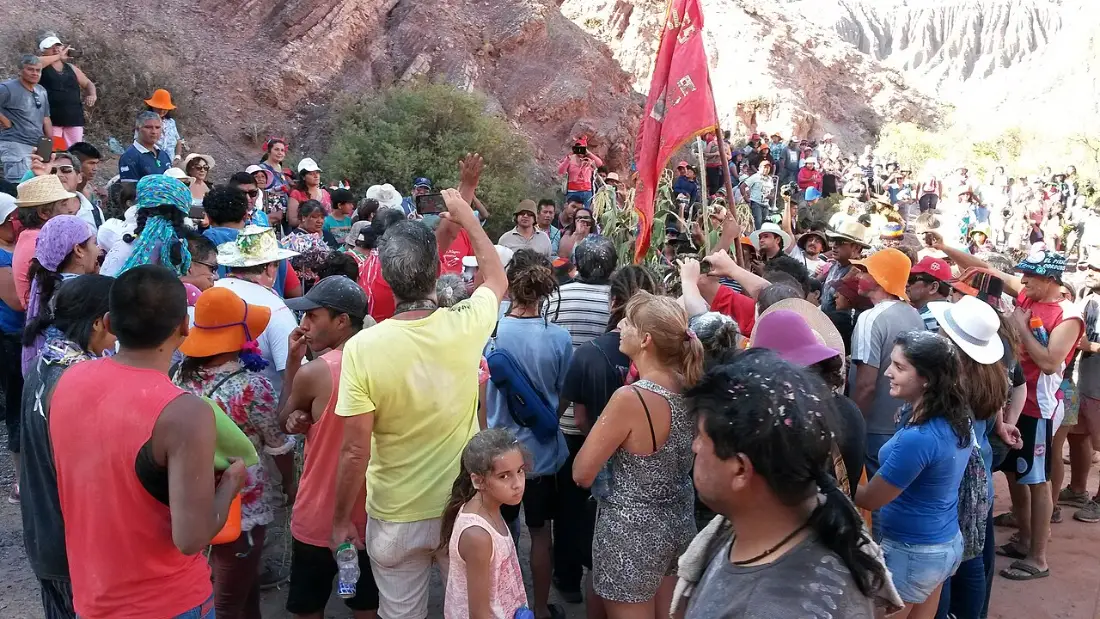
Carnival 2025 in Uquía, with the troupe gathered at the foot of the hills
Photo: Panda1505 / Wikimedia Commons · CC BY-SA 3.0

Humahuaca: the Quebrada's biggest carnival

Humahuaca is the benchmark for Quebrada carnival and has the most troupes, including Rosas y Claveles, Juventud Alegre, Los Picaflores and La Unión. Desentierro Saturday opens with a morning Mass (10 am in 2026), then the first formal invitation to the troupes, and through the afternoon each troupe visits its cairn. The day ends with the Topamiento de los Cholos around 7 pm, when troupes meet head-on in the street amid talc and streamers.

  • What sets it apart: scale, the number of troupes and a historic centre taken over by devils.
  • Tip: sleep in town; with Route 9 jammed, getting back elsewhere at night is slow.

In 2027 you can combine it with the Candelaria feast on 2 February. For the wider valley, see our Quebrada de Humahuaca guide.

Devils coming down the hill in dust and coloured smoke in Maimará
Photo: Fede Tolay / Wikimedia Commons · CC BY 4.0

Tilcara, La Banda and Juella: party halls, coplas and night walkers

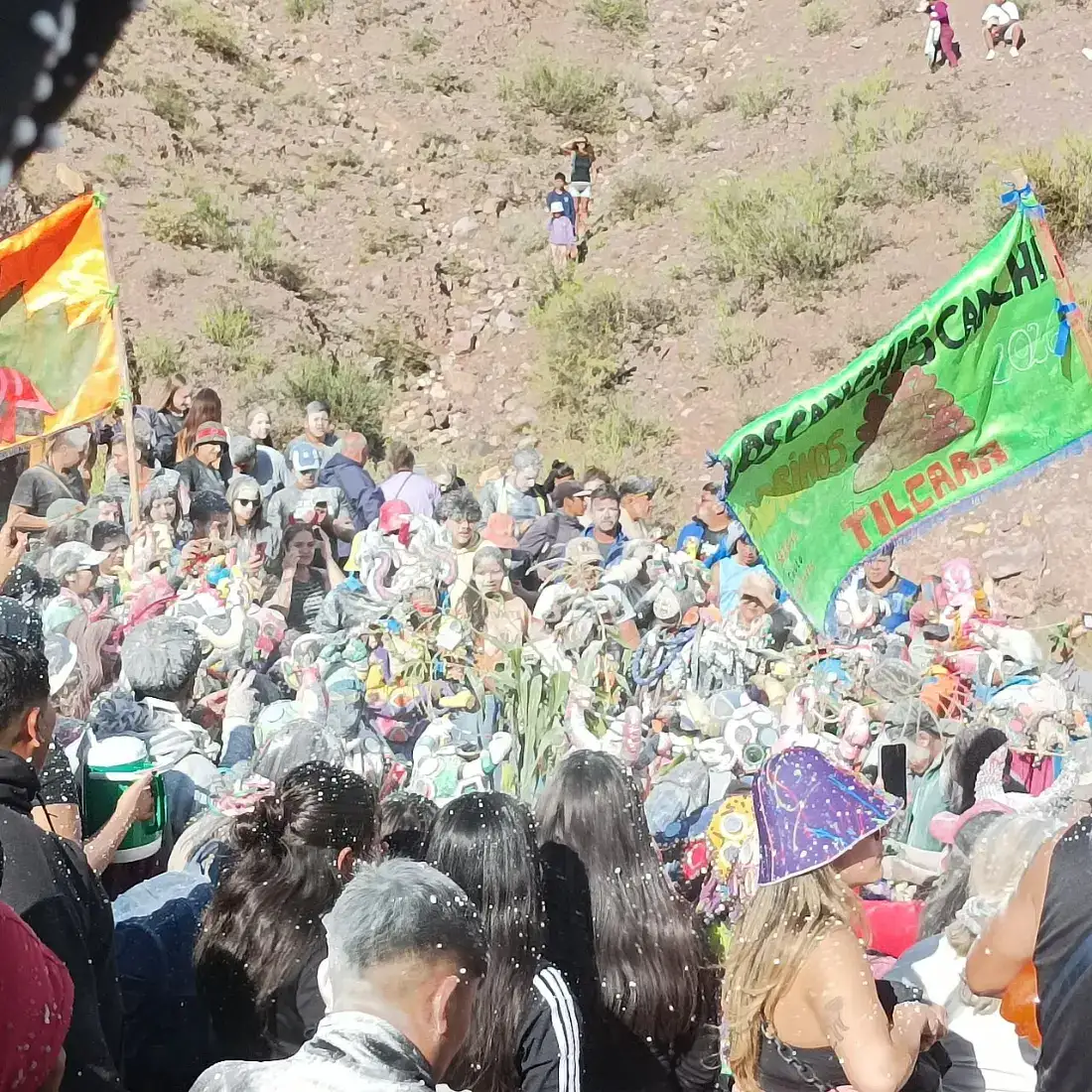
Tilcara has the youngest, most touristy carnival, with lots of troupes, fortines (open-air party venues) and dancing day and night. In 2026 Saturday began at 11:30 am with the fortineros' desentierro at the Mojón del Matadero; from 2 pm the other troupes dug up their devils, and at 10 pm there was a dance in the halls. Los Caprichosos, founded in 1983 and listed as intangible heritage by Argentina's Ministry of Culture, is an open troupe that welcomes anyone who wants to join.

In La Banda, about 4 km north, Unión Alegre de La Banda digs up its devil on the Wednesday before Jueves de Comadres, the first desentierro in the Quebrada. If it keeps the custom, in 2027 that would be Wednesday 3 February.

Juella, a few kilometres away, is a different world. Los Paseanderos de Juella, all men, visit the homes that invite them at night on the Monday, Wednesday and Friday before Carnival, with drums, the long erquencho horn and verses sung only on those nights, and dig up their devil on Saturday afternoon. The Flor del Durazno copla troupe has no costumed devils at all: its carnival is all singing, flute and horn.

Tilcara beds go fast, so check our guide on where to stay in Tilcara early.

Unearthing of the carnival in Tilcara with the Los Canchis Canchis troupe
The desentierro opens the carnival: the Pujllay is dug up at the mojón amid talc, streamers and basil.Photo: 1985Idea / Wikimedia Commons · CC BY-SA 4.0

Maimará, Uquía and Huacalera: devils running down the hills

If the shot you want is devils charging down a mountainside, these are your towns.

In Maimará the troupes dig up their devils on Saturday, but the highlight is the descent of the Cerro Negro troupe, the town's most traditional. In 2026 it happened on Carnival Sunday afternoon: between 250 and 300 devils came down beside Route 9, with the striped Paleta del Pintor hills behind them. If the custom holds, in 2027 it would be Sunday 7 February. Traffic crawls, so arrive early. At night troupes such as Casastchok, founded in 1970, take over.

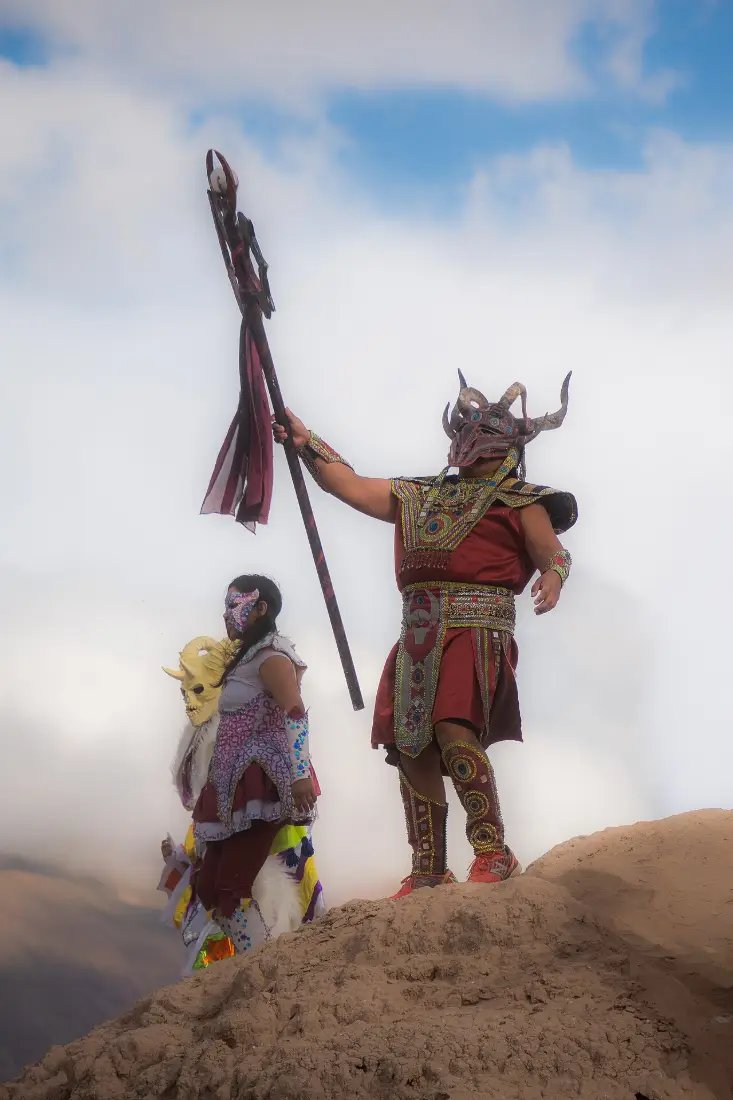
Uquía holds its devils' descent on desentierro Saturday at the foot of Cerro Blanco (4 pm in 2026). The village fills up that day and calms down the rest of the week, with troupes such as Los Alegres de Uquía and Los Corazones de Puya Puya. Don't miss the church: see our guide to Uquía and its arquebusier angels.

Huacalera, the village on the Tropic of Capricorn, has a tiny family carnival: in 2026 Los Alegres de Huacalera buried their devil only at the Carnaval de Remache.

Uquía carnival devil on top of the hill
Photo: CHARLYJUY / Wikimedia Commons · CC BY-SA 4.0

Purmamarca, Tumbaya and Volcán: the southern Quebrada

Purmamarca celebrates with smaller crowds. In 2026 Los Chanca Chanca dug up their devil on Saturday at 3 pm at the foot of the Hill of Seven Colours, and La Salamanca did so at El Chapacal. Copla singing is very much alive: singers walk into courtyards and the party moves from house to house. Several troupes only say goodbye at the Carnaval de Flores.

Tumbaya is ideal for a small-town carnival with all the rituals. In 2026 Jueves de Comadres ended with the women's meeting in the square. On Saturday Los Alegres de Tumbaya dug up their devil on Cerro Pilacunca, Los Corazones Alegres in the Horno Huaico ravine and Los Cachafaces in Tumbaya Grande, with a devils' descent and meeting of troupes at 3 pm.

Volcán, the gateway to the Quebrada, hosted the 2026 launch of Estación Carnaval, a programme that brings troupes and copla singers to the Tren Solar stations before the long weekend.

People celebrating carnival in Purmamarca
Photo: AsterixCBA / Wikimedia Commons · CC BY-SA 4.0

The Puna: coplas, drums and white flags

Above 3,400 metres the mood changes. In rural villages, carnival belongs to groups of copla singers with the caja (hand drum), the anata flute and the erquencho horn, white flags and circles where verses are traded back and forth. There are fewer devils and more ponchos and hats, because it turns cold late in the day. People eat roast lamb and sopa majada, a hearty local soup, and on Martes de Chaya they give thanks to the Pachamama in homes, corrals and fields. As elsewhere, the cycle opens with Jueves de Compadres and Jueves de Comadres.

  • Abra Pampa (3,484 m): a copla and verse-duel festival takes place on the Friday before the desentierro (23rd edition in 2026); in 2027 it would fall on Friday 5 February. The town's parade runs in the afternoon, led by copla groups.
  • La Quiaca (3,442 m): a night parade with Bolivian influence, tinku and caporales dancers and guest delegations such as Sococha.
  • Casabindo: its troupes, such as Alegres del Norte and Flor de Lirio, often come to celebrate in Abra Pampa.
  • Yavi: the devil is dug up from a stone apacheta.
  • Susques and the remotest villages: community celebrations with hardly any outsiders; watch first and ask before joining in.

To explore the area, read our guide to Yavi, La Quiaca and the Puna and arrive acclimatised.

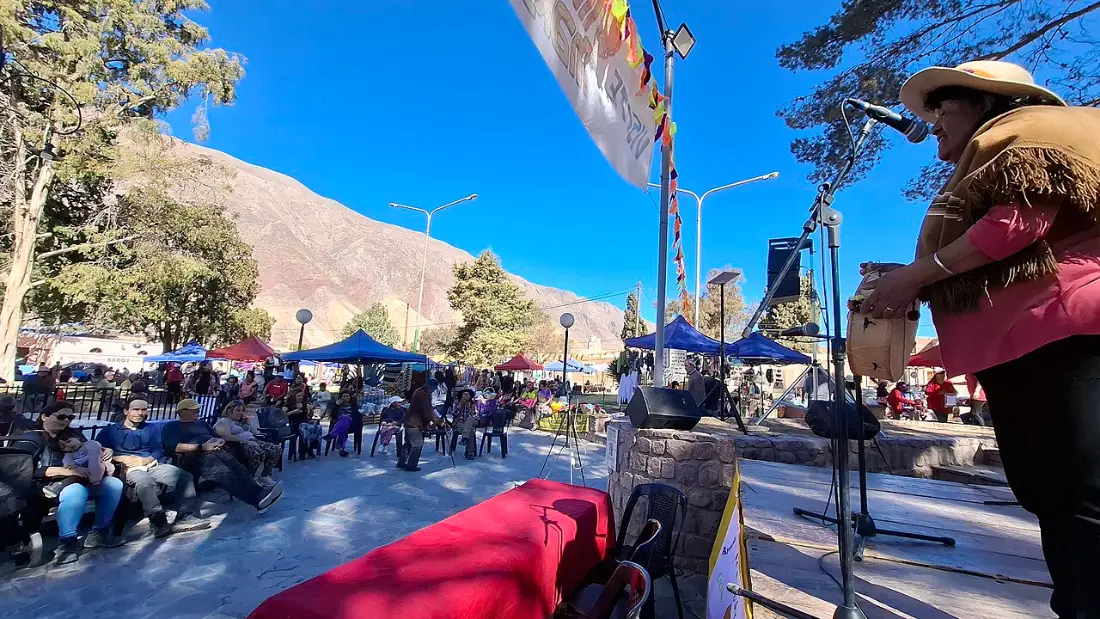
Copla singer with caja drum on a stage in Maimará
Photo: AnnRio / Wikimedia Commons · CC BY-SA 3.0

The Valleys: parades, Los Tekis and comadres

In the Valleys carnival is more urban.

  • San Salvador de Jujuy: in 2026 the city parades ran on the weekends before Carnival along Avenida General Savio and Avenida Forestal, and Jueves de Compadres had its party at the Mercado 6 de Agosto market (Alvear and Balcarce).
  • Carnaval de Los Tekis: the big ticketed show, run by the folk band Los Tekis. In 2026 it was four nights, Friday 13 to Monday 16 February, at Ciudad Cultural in Alto Padilla, and opening night drew 30,000 to 40,000 people. By day, at the Carnavalódromo, the band comes down dressed as devils with its troupe No Somos Nada. Tickets are sold online; talc and foam are banned inside.
  • Perico: desentierro at the cairn in the Centro district and free parades (in 2026 you only paid for a chair). Its Jueves de Comadres is huge.
  • El Carmen: four nights of free parades on Calle San Martín in 2026.
  • Yala and Palpalá: a meeting of compadres in Yala and the Pecha Pecha troupe's comadres dance in Palpalá.

If the Quebrada is full, the capital has far more beds and lets you do the desentierros as day trips.

Copla singers with caja drum and erque horn at the Bárcena carnival
Coplas sung to the caja drum are the soundtrack of the Quebrada carnival.Photo: Roblespepe / Wikimedia Commons · CC BY-SA 3.0

The Yungas: San Pedro's parades and the Arete Guasu

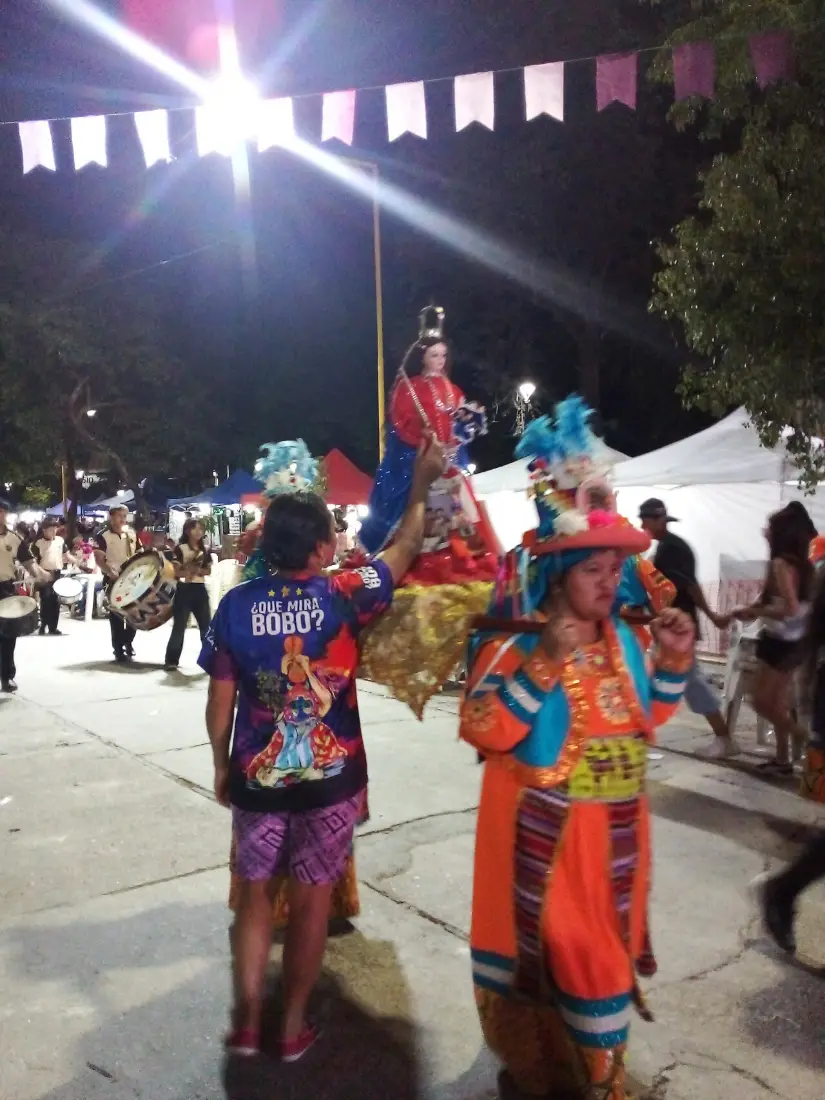
San Pedro de Jujuy puts on the province's biggest parades: in 2026 between 40 and 50 troupes performed over about ten February nights on a circuit of roughly eight blocks around Plaza Belgrano. Entry is free; you pay only for a chair or a seat in the stands. Expect artistic, folk and Indigenous troupes, saya and caporales dancers, tinkus and the Guaraní pim pim. Libertador General San Martín also holds night parades.

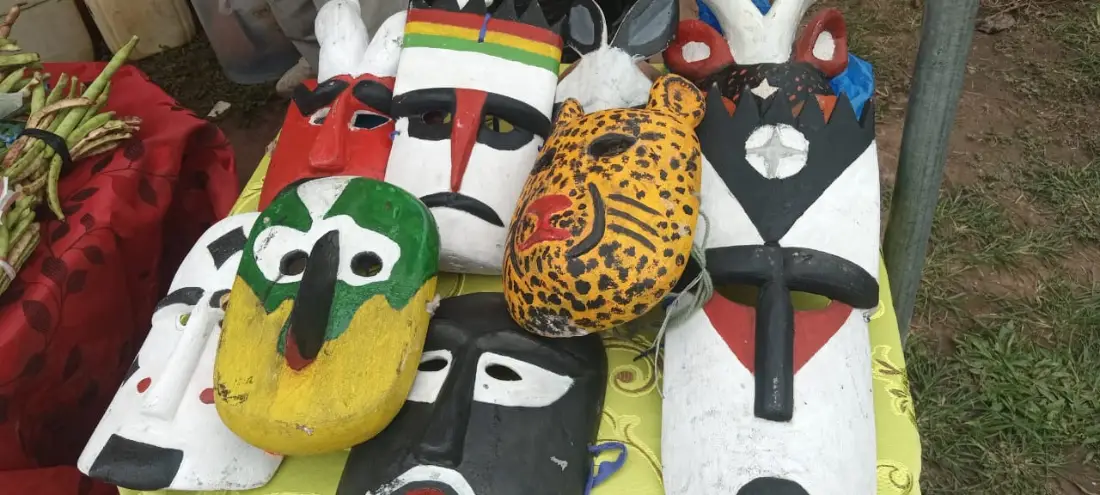
The Arete Guasu, also written Arete Guazú, is the Great Festival of the Guaraní people of Jujuy and Salta, listed as intangible heritage by Argentina's Ministry of Culture. Today it is held at Carnival time and coincides with the ripening of the corn: the ancestors return in the form of masks, people dance in circles and share caguï or kawi, a fermented corn drink. According to the provincial Culture Secretariat, the yellow taperiguá flower signals its start. In Libertador the ceremony takes place at the foot of a tree, with offerings of basil, chicha and cigarettes. It is a community ceremony: if you're invited to an open gathering, watch respectfully and ask before taking photos.

Add some rainforest time with our guide to the Yungas and Calilegua.

Carnival in San Pedro de Jujuy, in the Yungas
Photo: Floripondio26 / Wikimedia Commons · CC BY-SA 4.0

Which town to choose for your travel style

  • First carnival and up for a party: Tilcara or Humahuaca.
  • Photos of devils running downhill: Uquía on Saturday and Maimará on Sunday.
  • Tradition and coplas: Juella, Purmamarca or Abra Pampa.
  • Families or quiet nights: Purmamarca, Tumbaya or Huacalera.
  • Big-stage concert: the Carnaval de Los Tekis.
  • Sequins-and-feathers parades: San Pedro de Jujuy.
  • Guaraní culture: the Arete Guasu in the Yungas.
  • Last-minute booking: base yourself in the capital and do day trips.

A possible 2027 plan: Thursday 4, comadres in the capital or Tumbaya; Saturday 6, desentierro in Uquía or Humahuaca; Sunday 7, the descent in Maimará; Monday 8 and Tuesday 9, invitations and chaya in Tilcara. Book with free cancellation, since February brings rain and road closures, and compare options in our Jujuy hotels section.

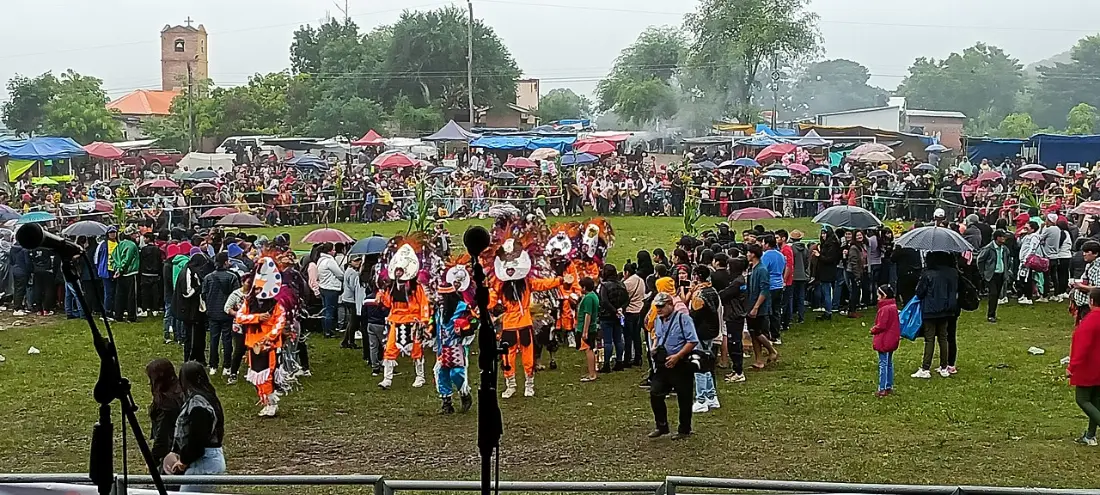
Arete Guasu, the Guaraní people's Great Festival, in the Yaku-Igua area
In the Yungas, carnival coincides with the Guaraní communities' Arete Guasu.Photo: Mamaguasu / Wikimedia Commons · CC BY-SA 4.0
Wooden masks worn at the Guaraní Arete Guasu
Photo: Naturalmente bella / Wikimedia Commons · CC BY-SA 4.0

Frequently Asked Questions

When is Jujuy Carnival 2027?

It runs from Saturday 6 February (desentierro) to Sunday 14 February 2027 (burial), with public holidays on Monday 8 and Tuesday 9. Jueves de Compadres is on 28 January and Jueves de Comadres on 4 February.

Where can I see the devils come down the hills?

The best known descents are in Uquía, on desentierro Saturday at the foot of Cerro Blanco, and in Maimará, with the Cerro Negro troupe on Carnival Sunday.

Which Quebrada town has the quietest carnival?

Purmamarca, Tumbaya and Huacalera have smaller, family-style celebrations. Juella, near Tilcara, keeps a copla-singing carnival with few tourists.

What is carnival like in the Puna?

It revolves around coplas sung to hand drums, flutes and horns, with white flags and few devils. Abra Pampa holds a copla festival on the Friday before the desentierro.

What is the Arete Guasu?

It is the Great Festival of the Guaraní communities of the Yungas, now held at Carnival time and tied to the corn harvest, with ancestor masks, circle dances and corn chicha.

Do you have to pay to attend Jujuy Carnival?

The desentierros and most parades are free; you only pay for a chair. The Carnaval de Los Tekis is a ticketed show sold online.

Can I get to the Quebrada carnival without a car?

Yes. Frequent buses run up Route 9 from the San Salvador de Jujuy terminal to Purmamarca, Tilcara, Uquía and Humahuaca; on the main days, leave extra time.

Ready to travel?

Compare hotels, car rentals and tours in Jujuy.