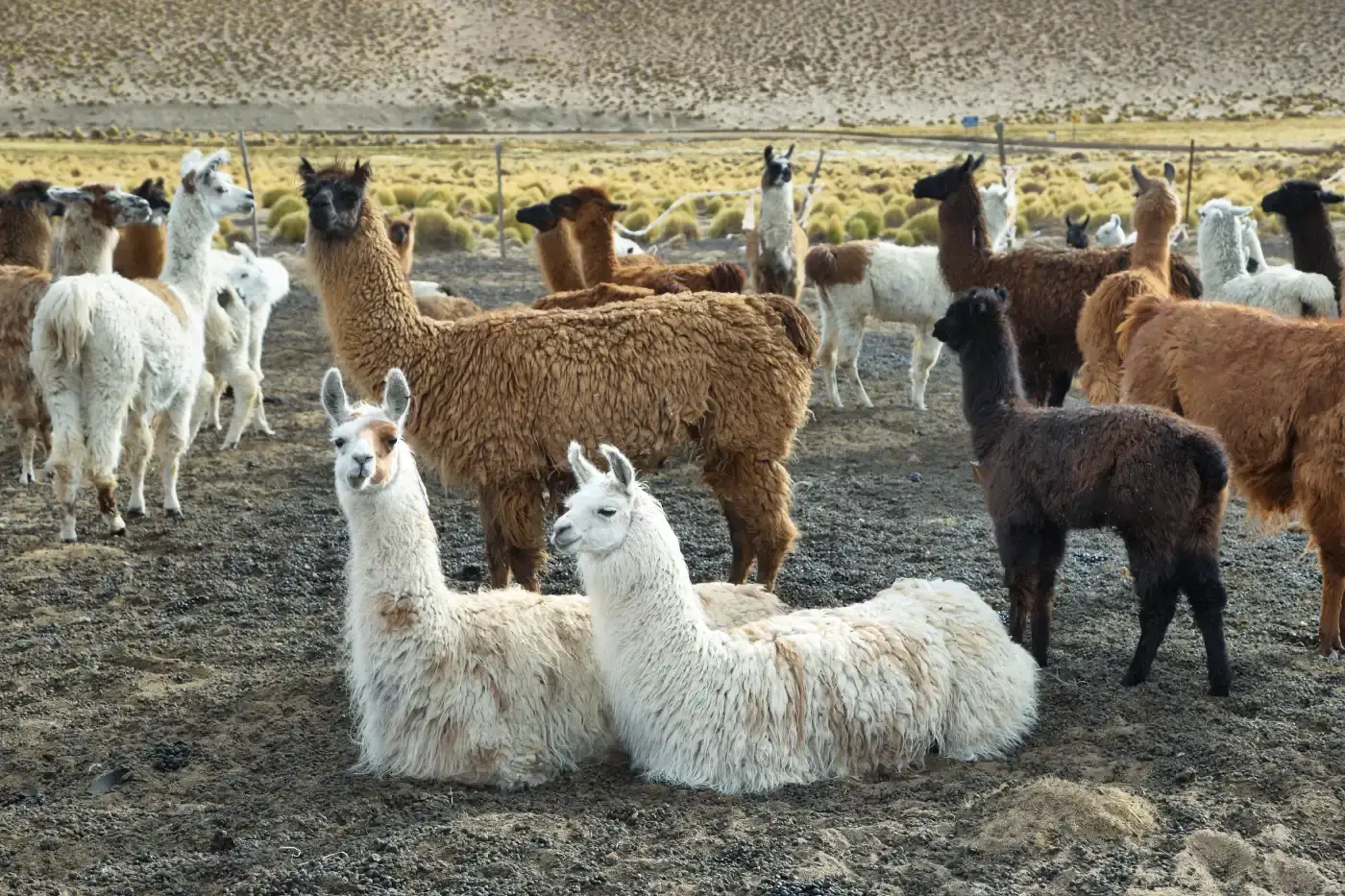
Yavi is a colonial village on Jujuy's Puna, the high Andean plateau of far-northern Argentina, about 16 km (10 miles) east of the Bolivian border town of La Quiaca and 3,516 m (11,535 ft) above sea level. From San Salvador de Jujuy it is roughly 300 km (186 miles) up Ruta Nacional 9: about five hours by bus to La Quiaca, then 20 minutes on provincial road 5. Travelers come for the church of San Francisco, completed in 1690, whose windows are fitted with thin slabs of translucent onyx instead of glass, and for the house of the Marquis of Tojo, seat of the only marquisate ever created in what is now Argentina. This guide covers the whole far north of Jujuy: Yavi and its rock art, La Quiaca and the border with Villazón, the flamingos of Laguna de los Pozuelos, Abra Pampa and Casabindo, plus how to plan the trip around the altitude.
Getting to Yavi and La Quiaca on Route 9
Ruta Nacional 9 is the spine of the whole trip. It climbs the Quebrada de Humahuaca, passes Humahuaca and runs across the Puna until it ends at the international bridge in La Quiaca. It is paved all the way. Approximate distances from San Salvador de Jujuy:
• Humahuaca: about 126 km (78 miles).
• Abra Pampa: about 220 km (137 miles).
• La Quiaca: about 290 km (180 miles).
• Yavi: a further 16 km (10 miles) from La Quiaca on provincial road 5.
By bus, Balut and Evelia sell several daily departures between the provincial capital and La Quiaca on online booking platforms, with journey times of 4 h 25 min to 5 h 20 min depending on the service. El Quiaqueño, Panamericano and Jama Bus also run from the San Salvador de Jujuy terminal.
From La Quiaca to Yavi you can take a remís (a local pre-booked taxi), drive or use local transport; Yavi's tourism office says provincial road 5 is open all year. In summer, though, heavy rain can cut roads very quickly, so check conditions before setting off. If you want to link Pozuelos, Casabindo and Yavi on your own schedule, the easiest option is to rent a car in Jujuy and fill up whenever you get the chance.
Yavi: the church of San Francisco and its onyx windows
Yavi, a village of adobe houses and dirt streets, was declared a National Historic Site in 1975. Its great treasure is the church of Nuestra Señora del Rosario y San Francisco de Asís, a National Historic Monument that served as the private chapel of the marquises, where they held their weddings and funerals.
Work began in the late 17th century, and an inscription above one of the doors dates its completion to 1690. Its adobe walls are up to 1.2 m (4 ft) thick, and the interior is a surprise:
• Three carved Baroque altarpieces covered in gold leaf, one of them in the side chapel of the Ánimas.
• A carved, gilded pulpit.
• Cusco-school oil paintings, several attributed to the 18th-century painter Mateo Pizarro.
• A tabernacle lined inside with Venetian mirrors.
• The onyx windows: slabs of translucent stone 4 to 5 cm (about 2 in) thick that stand in for glass, which was unobtainable at the time, and bathe the nave in amber light.
Opening hours are short, partly because of past thefts, and a caretaker usually unlocks the church. The simplest approach is to ask at the tourist information booth at the entrance to the village, which also runs guided walks around the historic center.
The House of the Marquis of Tojo, now a museum
Across from the church stands the main house of the old estate, known as the Casa del Marqués. It belonged to the Fernández Campero family: Juan José Fernández Campero was made Marquis of the Valle de Tojo in 1708, the only marquisate ever created in present-day Argentina. Local tradition holds that independence heroes Mariano Moreno, Manuel Belgrano and Juan Martín de Pueyrredón all stayed here.
The smooth-walled adobe building is arranged around a courtyard roughly 30 m (100 ft) on each side. It became a National Historic Monument in 2001 and was restored as a provincial history museum. Its seven rooms tell the story of the marquisate and of life on the Puna, with period furniture, religious objects, farming tools and mining artifacts.
According to Jujuy's Culture Department, the museum opens Monday to Friday from 8:30 am to 1 pm and 2 pm to 7 pm, and on weekends from 8:30 am to 7 pm. Admission is inexpensive and paid on site.
Petroglyphs and rock paintings around Yavi
What many visitors miss is the landscape around the village, a small valley with surprising patches of green in the middle of the Puna. Two classic outings take you to ancient rock art:
• Yavi Chico: about 4 km (2.5 miles) away, with natural rock walls carved with petroglyphs. Following the river you will find caves and a few small waterfalls.
• Laguna Colorada and the Ocho Hermanos ridge: a circuit of about 8 km (5 miles) on a gravel track, with rock paintings of human figures, llamas and scenes from the daily life of the region's early inhabitants. It ends at a lagoon inside an archaeological and natural protection zone.
The sites are not always signposted and some cross community land, so it is best to hire a local guide at Yavi's tourist booth. Carry water and a warm layer, and never touch the paintings, because skin oils damage them.
La Quiaca (3,442 m) and the border with Villazón, Bolivia
La Quiaca is the largest town on Jujuy's Puna and the overland gateway to Bolivia. It sits at 3,442 m (11,293 ft), separated from Villazón only by the La Quiaca River, which you cross on the international bridge on foot or by car. It is a working border town rather than a beauty spot, but it has one big festival:
• Manka Fiesta, the pottery festival: held every year between the third and fourth Sunday of October, it is a barter and ceramics fair that draws producers from Argentina, Bolivia, Peru and Chile, and is protected by Jujuy law as living cultural heritage.
To cross into Villazón you need your passport (Argentine citizens use their national ID). Argentina's National Migration Directorate lists the crossing as open from 7 am to midnight. Lines can be long, especially on weekends and public holidays, so cross early in the day. If you plan to continue to the world's largest salt flat, we have a step-by-step guide on getting from Jujuy to the Uyuni salt flat via La Quiaca and Villazón.
Laguna de los Pozuelos Natural Monument: flamingos on the Puna
Laguna de los Pozuelos is a high-altitude wetland at about 3,600 m (11,800 ft), protected as a Natural Monument by Argentina's National Parks service. It is also a Ramsar site and a UNESCO Biosphere Reserve, and it hosts some 130 bird species, including all three flamingos found in Argentina: the Chilean flamingo and the Andean and James's (puna) flamingos. At its best it can gather more than 100,000 birds.
How to get there, according to the National Parks Administration:
• From Abra Pampa: 50 km (31 miles) of gravel on provincial road 7 to the Río Cincel ranger station at the entrance.
• From the ranger station: a 7 km (4.3 mile) dirt track to the parking area, then about 2 km (1.2 miles) on foot to the shore. In winter the lake shrinks and the walk can stretch to around 3 km.
• Hours: Monday to Friday 8 am to 4 pm, weekends 8 am to 3 pm. You must sign in at the ranger station on the way in and out. Entry is free.
The best birdwatching is in the morning, between 8 and 11 am. From January to March, summer storms often make the access road impassable. There is no drinking water and no licensed guides on site, so bring at least 2 liters (half a gallon) of water per person, food and binoculars. Some agencies in Tilcara sell it as a full-day trip; you can compare options in our Jujuy tours section.
Abra Pampa and Casabindo: dunes and a bloodless bullfight
Abra Pampa, at 3,484 m (11,430 ft) on Route 9, is the second-largest town on the Puna and the jumping-off point for Pozuelos and Casabindo. Its landmark is Cerro Huancar, a rocky hill smothered in sand dunes right at the edge of town.
Casabindo lies about 55 km (34 miles) from Abra Pampa on gravel roads, and its church of Nuestra Señora de la Asunción is so large that locals call it the Cathedral of the Puna. Every August 15, the Feast of the Assumption, it hosts the toreo de la vincha, recognized by Argentina's Ministry of Culture as intangible cultural heritage. It is a bloodless bullfight: the bull is not harmed, and the toreros try to snatch a red headband decorated with silver coins from its horns to offer to the Virgin.
After Mass and a procession with costumed dancers and panpipe bands, the bullfight begins around 2 pm in the village square. Special buses leave the San Salvador de Jujuy terminal in the early hours that day; alternatively, get to Abra Pampa and continue by remís. Bring warm clothes for the morning, sunscreen for midday and plenty of water. August is also the month of the Pachamama ceremony, so it is a great time to see the Puna in celebration.
Altitude and acclimatization: how to avoid altitude sickness
The whole circuit sits above 3,400 m (11,150 ft): La Quiaca at 3,442 m, Abra Pampa at 3,484 m, Yavi at 3,516 m and Pozuelos at about 3,600 m. Coming straight up from the provincial capital (1,259 m / 4,131 ft) or flying in from Buenos Aires and heading north the same day is the surest way to feel awful on your first night.
A sensible plan: spend two or three nights in Tilcara or Humahuaca (2,939 m / 9,642 ft) first, travel up to the Puna by day, drink plenty of water, eat light, skip alcohol for the first nights and walk slowly on the rock-art hikes or the walk to the Pozuelos shoreline.
Cold is the other factor. La Quiaca has very dry winters with average lows below freezing in July, and even in summer the swing between day and night is huge, so pack a warm jacket, hat and gloves in any season. Our Jujuy altitude guide lists the elevation of every town and the basic precautions.
Where to stay in Yavi, La Quiaca and near Pozuelos
Accommodation is limited and simple, so book ahead around the Manka Fiesta or August 15. These are some options listed on Google, Booking and provincial tourism guides:
• Yavi, Posada Tika: a seven-room adobe guesthouse facing the roundabout at the village entrance on provincial road 5, with an inner courtyard and breakfast.
• La Quiaca, Hotel de Turismo: the town's classic hotel, on the corner of República Árabe Siria and San Martín, close to the border.
• La Quiaca, Munay: a guesthouse with brightly colored rooms on Belgrano street, with parking.
• La Quiaca, Hotel Crystal and Hostel Copacabana: central alternatives, the latter aimed at backpackers.
• Near Pozuelos: the National Parks service mentions Hospedaje Telico in Lagunillas de Pozuelos and a rustic farmhouse run by a local family 6 km from the protected area, serving traditional food; book in advance.
If you would rather sleep lower, you can base yourself in Humahuaca and come up for the day; see our guide on where to stay in Humahuaca or compare prices in Jujuy hotels.
Frequently Asked Questions
Ready to travel?
Compare hotels, car rentals and tours in Jujuy.
Related Articles
Altitude Sickness in Jujuy: How to Acclimatize and Not Ruin Your Trip
Practical guide to preventing and treating altitude sickness in Jujuy. Exact altitudes, day-by-day protocol, medications and warning signs.
Read more →
Humahuaca: What to See in the Quebrada's Main Town — Square, Town Hall and Andean Carnival
Guide to Humahuaca: the Cabildo with El Señor de la Sala, Independence Monument, crafts, Andean copla singing and the most authentic carnival in northwest Argentina.
Read more →Where to Stay in Humahuaca: Hotels, Hostels, Cabins and Uquía
Hotels in Humahuaca, cabins and hostels close to the Hornocal. The best areas in town, stays in Uquía and Huacalera, and when to book for Carnival.
Read more →